Source: Fortune
Summary
A new study by researchers at Wesleyan University found that AI-generated political ads are becoming common in the 2026 U.S. midterm elections, with about $80 million spent on nearly 170 unique AI ads. The research, using data from AdImpact and student coders, shows that Republican candidates and groups are more likely to use AI than Democrats. Many of these ads do not disclose the use of AI, despite some state laws requiring it. The study highlights concerns over deepfakes and misleading content, with Republicans using AI more frequently and often without clear disclaimers.
Our Reading
The numbers tell one story.
Republican ads dominate AI use in 2026 midterms, with 80% of tracked ads and 83% of spending.
Deepfakes of politicians like Pelosi and Ocasio-Cortez appear in multiple ads, often without clear disclaimers.
State laws on AI disclosure vary, leading to inconsistent transparency in political ads.
Many ads use AI to enhance visuals, making it hard for viewers to tell what is real.
Author: Evan Null
AI in Political Ads: A New Frontier
The 2026 U.S. midterm elections mark a significant shift in political advertising, with AI-generated content becoming a regular feature on television and social media. Researchers from Wesleyan University have been tracking this trend, noting that over $80 million has been spent on nearly 170 AI-generated political ads. This marks a new era in how campaigns reach voters, with technology playing a central role in shaping public perception.
Deepfakes and Subtle Enhancements
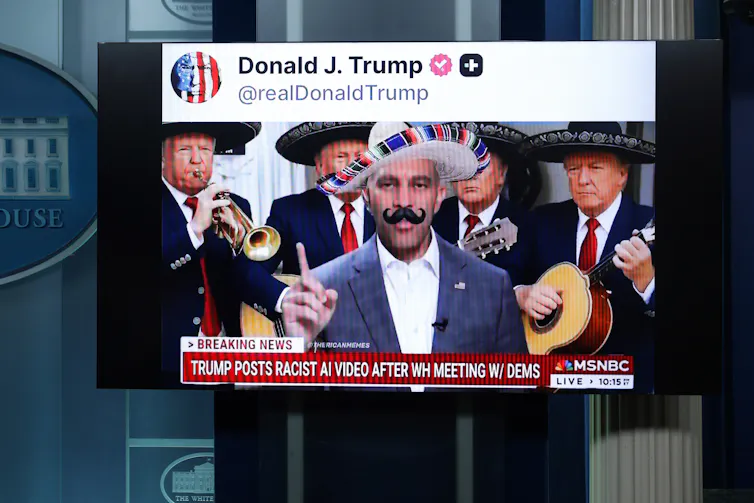
The use of AI in political ads ranges from hyperrealistic deepfakes to subtle visual enhancements. These deepfakes can depict politicians doing things they never actually did, raising concerns about misinformation. For example, deepfakes of Donald Trump, Nancy Pelosi, and Kamala Harris have been used in various ads. Some ads use AI to generate crowds or add visual elements, making it difficult for viewers to distinguish between real and artificial content.
A Partisan Divide in AI Use
Research shows a clear partisan divide in the use of AI in political advertising. Republican candidates and groups are significantly more likely to use AI than their Democratic counterparts. According to the study, 80% of the AI ads tracked were created by Republicans, with 83% of the spending attributed to them. This trend reflects broader ideological differences, with Republicans generally favoring a free-market approach to campaign regulation, while Democrats tend to support more oversight and disclosure requirements.
Disclaimers and State Laws
Despite some state laws requiring disclaimers for AI-generated content, many ads do not include them. Only 31% of the AI ads tracked had disclaimers, and the wording varied widely. Some ads used phrases like “AI-generated images do not depict actual events,” while others simply stated “Political satire.” The lack of consistent disclosure makes it challenging for voters to know when they are seeing AI-generated content, raising concerns about transparency and accountability.
The Challenge of Enforcement
The enforcement of AI-related laws in political advertising remains a significant challenge. Even in states with laws requiring disclaimers, the actual use of disclaimers is inconsistent. Some ads include disclaimers voluntarily, while others ignore them even when required. This lack of uniformity highlights the difficulty in regulating AI in political campaigns and the need for clearer, more enforceable policies to protect voters from misleading content.