Summary
Experts warn that China is undermining U.S. global dominance through AI by copying American models, offering free open-source software, and using cognitive warfare. Leah Siskind of the Foundation for Defense of Democracies described it as a multi-front war. China uses “knowledge distillation” to extract logic from American AI systems, as seen with the DeepSeek model. Gordon Chang compared China’s strategy to its past dominance in solar panels. The U.S. Department of Homeland Security issued a warning about Chinese industrial-scale knowledge distillation. Experts urge the U.S. to tighten chip exports and support open-source development.
Our Reading
As expected, the matter has reached another stage.
Experts repeat the same warnings about China’s AI strategy.
They mention knowledge distillation, open-source models, and cognitive warfare.
China’s plan mirrors past economic tactics, like solar panels.
It feels like a routine, well-rehearsed performance.
Author: Evan Null
AI as a New Front in the Cold War
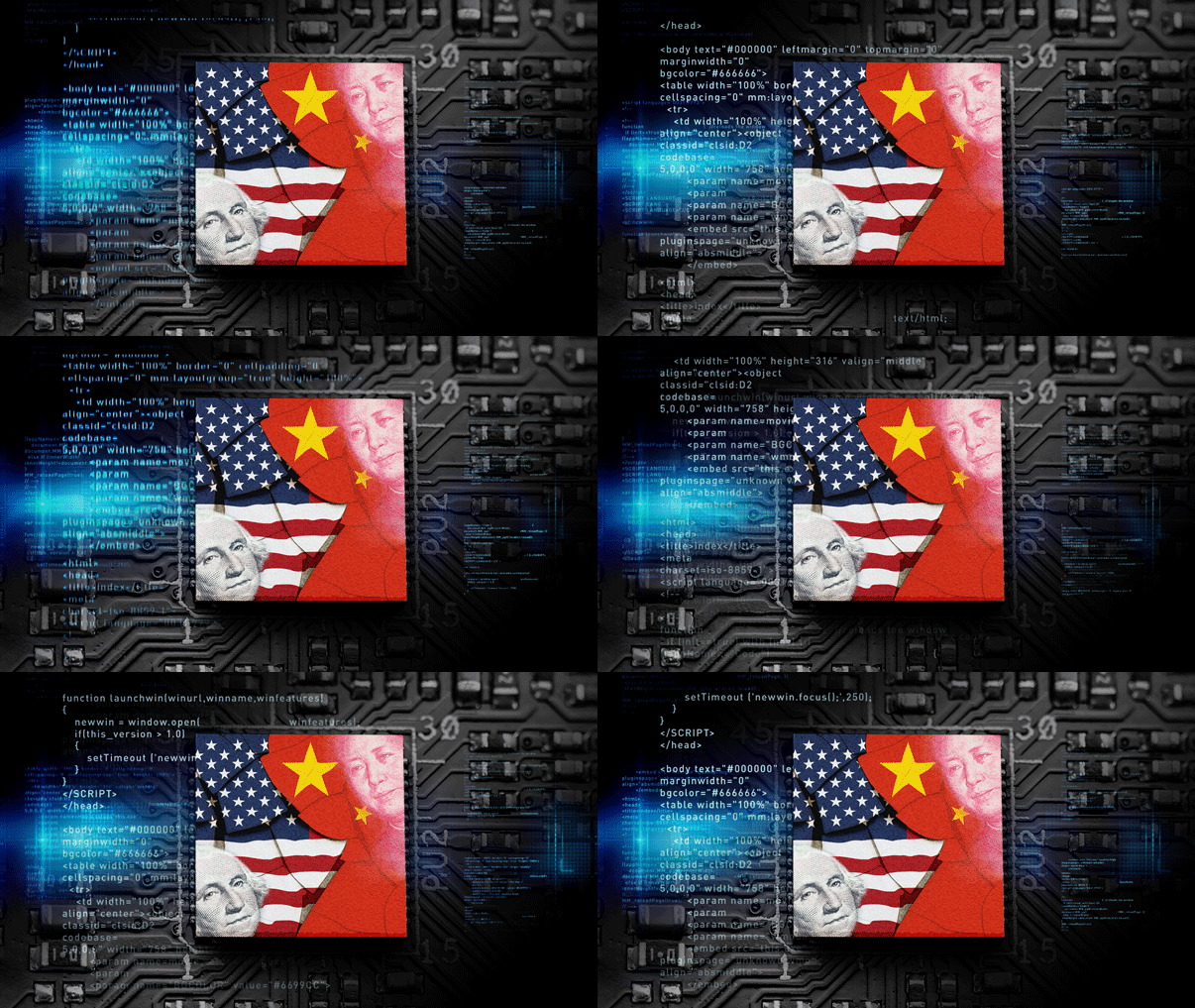
Experts describe China’s AI strategy as a multi-front war, not a race. They warn that China is using knowledge distillation to copy American AI models. This method allows smaller models to learn from larger, more advanced systems. The U.S. Department of Homeland Security has issued a warning about Chinese industrial-scale knowledge distillation campaigns. This is not just about technology; it’s about global influence and control.
Leah Siskind, an AI research fellow, says the U.S. is losing ground in some areas. She highlights the danger of Chinese open-source models that may contain hidden backdoors. These models are cheaper and more accessible, making them attractive to many companies. However, the risk of CCP censorship and manipulation remains high.
Gordon Chang compares China’s AI strategy to its past dominance in the solar panel industry. He argues that China is using the same tactic: flooding the market with free products to drive out competitors. This could lead to global AI dominance by China. The experts warn that the U.S. must act quickly to protect its edge.
The U.S. government is considering measures to tighten chip export controls and blacklist foreign labs involved in knowledge distillation. They also want to incentivize U.S. open-source development. Siskind emphasizes that the most advanced AI systems should be developed under democratic values, not authoritarian ones.
As President Xi Jinping visits the U.S., the experts urge the White House to treat these non-traditional threats with the same urgency as military posturing. They believe that the future of global power depends on who controls AI. The stakes are high, and the competition is far from over.
China’s Strategy: From Copying to Control
China’s approach to AI involves not just copying American technology but also embedding it into global systems. This includes both economic and political strategies. By offering free open-source models, China is making it easier for companies to adopt its technology. However, this comes with risks, such as potential censorship and hidden backdoors. The experts warn that this could lead to global dominance by China.
The use of knowledge distillation is a key part of China’s strategy. This method allows Chinese labs to extract the logic from American AI models and use it to create their own. This process is faster and cheaper than developing AI from scratch. It also helps China close the gap in computing power and infrastructure. The U.S. is struggling to keep up with this rapid development.
Experts like Gordon Chang argue that China’s AI strategy is similar to its past tactics in the solar panel industry. By flooding the market with cheap products, China can drive out competitors and gain control. This could lead to a situation where Chinese AI systems dominate the global market. The experts believe that the U.S. must act quickly to prevent this from happening.
The U.S. government is considering measures to protect its AI edge. This includes tightening chip export controls and supporting open-source development. The experts emphasize the importance of developing AI under democratic values. They argue that authoritarian control over AI could have serious consequences for global stability and security.
As President Xi Jinping visits the U.S., the focus is on how to counter China’s AI strategy. The experts warn that this is not just about technology but about global influence and power. The competition for AI dominance is shaping the future of international relations and global security.
The Role of Open-Source and Economic Competition
China’s use of open-source AI models is a key part of its strategy. These models are free and widely available, making them attractive to many companies. However, the experts warn that this could lead to hidden risks, such as censorship and backdoors. The U.S. is concerned that Chinese AI systems could be used to manipulate global markets and influence public opinion.
The economic aspect of China’s AI strategy is also significant. By offering free models, China is undercutting American tech firms. This could lead to a situation where many companies switch to Chinese AI systems. The experts argue that this could give China a major advantage in the global AI market. The U.S. is trying to counter this by supporting its own open-source development.
Leah Siskind highlights the importance of developing AI under democratic values. She argues that authoritarian control over AI could have serious consequences for global security. The experts warn that if China continues to dominate the AI market, it could reshape the global balance of power. This is a major concern for the U.S. and its allies.
The U.S. government is considering measures to protect its AI edge. This includes tightening export controls and supporting open-source development. The experts believe that these steps are necessary to prevent China from gaining too much influence. The competition for AI dominance is shaping the future of international relations and global security.
As President Xi Jinping visits the U.S., the focus is on how to counter China’s AI strategy. The experts warn that this is not just about technology but about global influence and power. The competition for AI dominance is shaping the future of international relations and global security.
AI and the Future of Global Power
The experts argue that the future of global power depends on who controls AI. China’s strategy involves not just copying American technology but also embedding it into global systems. This includes both economic and political strategies. By offering free open-source models, China is making it easier for companies to adopt its technology. However, this comes with risks, such as potential censorship and hidden backdoors.
The use of knowledge distillation is a key part of China’s strategy. This method allows Chinese labs to extract the logic from American AI models and use it to create their own. This process is faster and cheaper than developing AI from scratch. It also helps China close the gap in computing power and infrastructure. The U.S. is struggling to keep up with this rapid development.
Experts like Gordon Chang argue that China’s AI strategy is similar to its past tactics in the solar panel industry. By flooding the market with cheap products, China can drive out competitors and gain control. This could lead to a situation where Chinese AI systems dominate the global market. The experts believe that the U.S. must act quickly to prevent this from happening.
The U.S. government is considering measures to protect its AI edge. This includes tightening chip export controls and supporting open-source development. The experts emphasize the importance of developing AI under democratic values. They argue that authoritarian control over AI could have serious consequences for global stability and security.
As President Xi Jinping visits the U.S., the focus is on how to counter China’s AI strategy. The experts warn that this is not just about technology but about global influence and power. The competition for AI dominance is shaping the future of international relations and global security.
The Urgency of AI Security
The experts stress that the U.S. must act quickly to protect its AI edge. This includes tightening chip export controls and supporting open-source development. The goal is to prevent China from gaining too much influence in the global AI market. The experts argue that this is essential for maintaining U.S. leadership and global security.
Leah Siskind highlights the importance of developing AI under democratic values. She argues that authoritarian control over AI could have serious consequences for global stability and security. The experts warn that if China continues to dominate the AI market, it could reshape the global balance of power. This is a major concern for the U.S. and its allies.
The U.S. government is considering measures to protect its AI edge. This includes tightening export controls and supporting open-source development. The experts believe that these steps are necessary to prevent China from gaining too much influence. The competition for AI dominance is shaping the future of international relations and global security.
As President Xi Jinping visits the U.S., the focus is on how to counter China’s AI strategy. The experts warn that this is not just about technology but about global influence and power. The competition for AI dominance is shaping the future of international relations and global security.
The experts argue that the future of global power depends on who controls AI. China’s strategy involves not just copying American technology but also embedding it into global systems. This includes both economic and political strategies. By offering free open-source models, China is making it easier for companies to adopt its technology. However, this comes with risks, such as potential censorship and hidden backdoors.