Source: Fox News
Summary
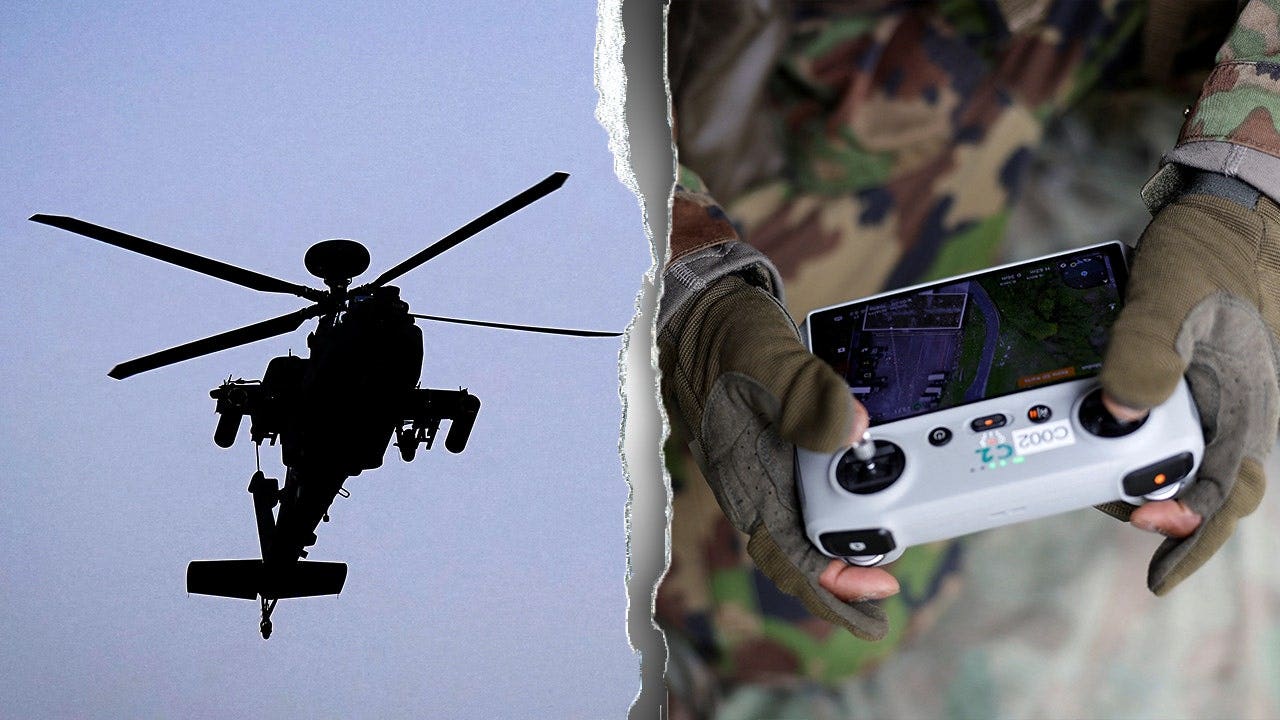
Army leaders are re-evaluating their aviation and missile defense strategy due to the success of drone-heavy warfare in Ukraine and the Middle East. The Army’s fiscal year 2027 budget request reduces funding for helicopter procurement, such as Apache and Black Hawk funding, while increasing investment in drones, autonomy, and low-cost battlefield technologies. This transformation push is also leading to a reduction in aviation positions and a shift towards unmanned systems. The Army is reassessing how traditional manned aircraft fit alongside larger unmanned systems and is launching a rapid competition to develop low-cost interceptors to counter drones and cruise missiles.
Our Reading
As expected, the matter has reached another stage.
Army leaders signal a major shift in aviation strategy towards drone-heavy warfare. The Army’s budget request reflects this shift, with reduced funding for helicopter procurement and increased investment in drones and low-cost technologies. The transformation push extends beyond procurement, with a reduction in aviation positions and a shift towards unmanned systems. The Army is reassessing traditional manned aircraft and launching a competition for low-cost interceptors. The move is driven by the success of drone-heavy warfare in Ukraine and the Middle East, and the need to adapt to changing battlefield conditions.
The Army is trying to dig down deep into the system to change the broken processes that have led to so many bad outcomes over the last 30 years.
Army leaders are cautiously optimistic about their ability to rapidly improve how weapons systems, sensors, and battlefield networks communicate with one another.
Army officials are jailbreaking equipment to empower information to pass between sensors and radars.
The Army is attempting to overhaul decades of broken acquisition practices that left the Army too slow to adapt to rapidly changing battlefield conditions.
Author: Evan Null