Source: Fortune
Summary
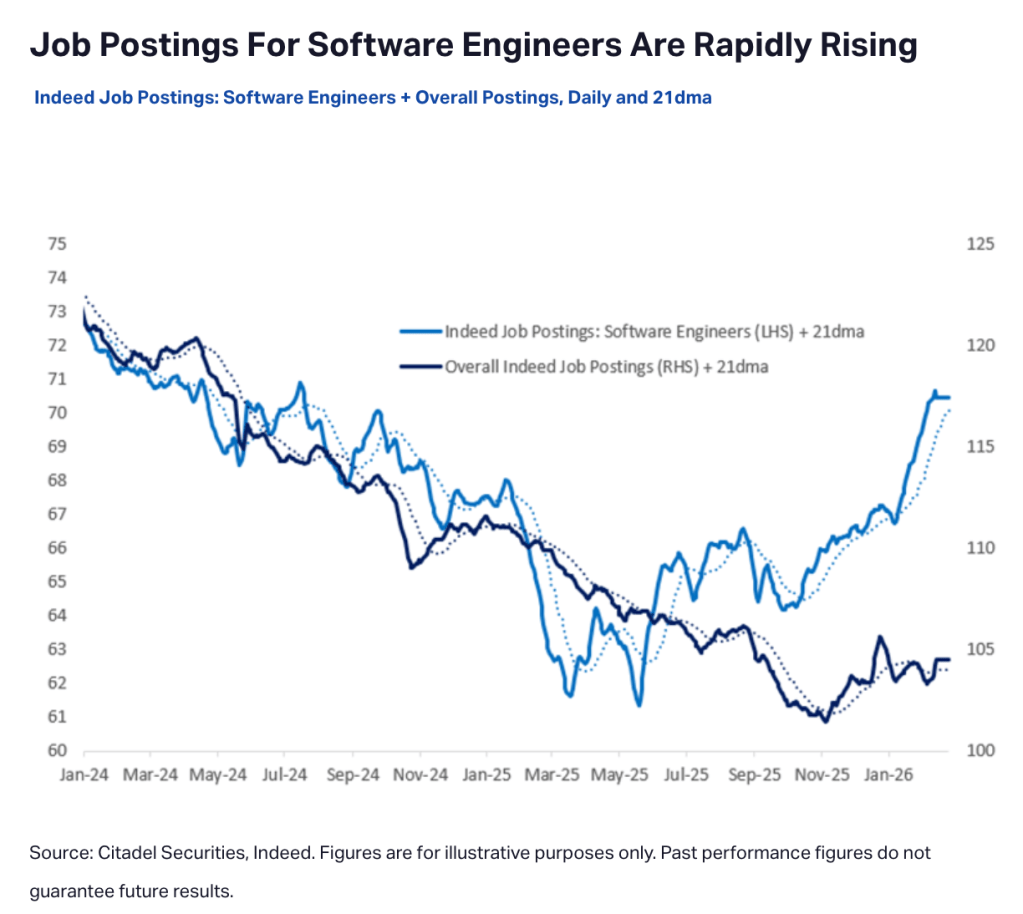
Citrini Research’s viral essay, “The 2028 Global Intelligence Crisis,” predicted a catastrophic economic future due to artificial intelligence. However, Citadel Securities’ macro strategy report debunked the narrative, citing real-time economic data and macroeconomic fundamentals. Citadel argued that Citrini’s scenario is rooted in a misunderstanding of technological adoption curves and the economy’s ability to adapt. The report pointed out that software job demand is rising, AI diffusion is stable, and the economy is not headed for a sci-fi apocalypse.
Our Reading
The numbers tell one story. Citadel Securities swiftly dismantled Citrini’s doomsday scenario, using real-time economic data to prove that the “intelligence crisis” is actually rooted in a profound misunderstanding of macroeconomic fundamentals and technological adoption curves. Citadel’s report pointed out that Citrini’s premise assumes an overnight white-collar wipeout, which is historically false. The economy consists of a vast array of physical, relational, and supervisory tasks fraught with coordination frictions and liability constraints that algorithms cannot easily navigate. Citrini’s error is conflating recursive technology with recursive economic adoption. The economy is not headed for a sci-fi apocalypse; it is simply experiencing the next great, manageable wave of human productivity. The announcement sounds familiar – a tale of technological disruption and economic upheaval.
Author: Evan Null