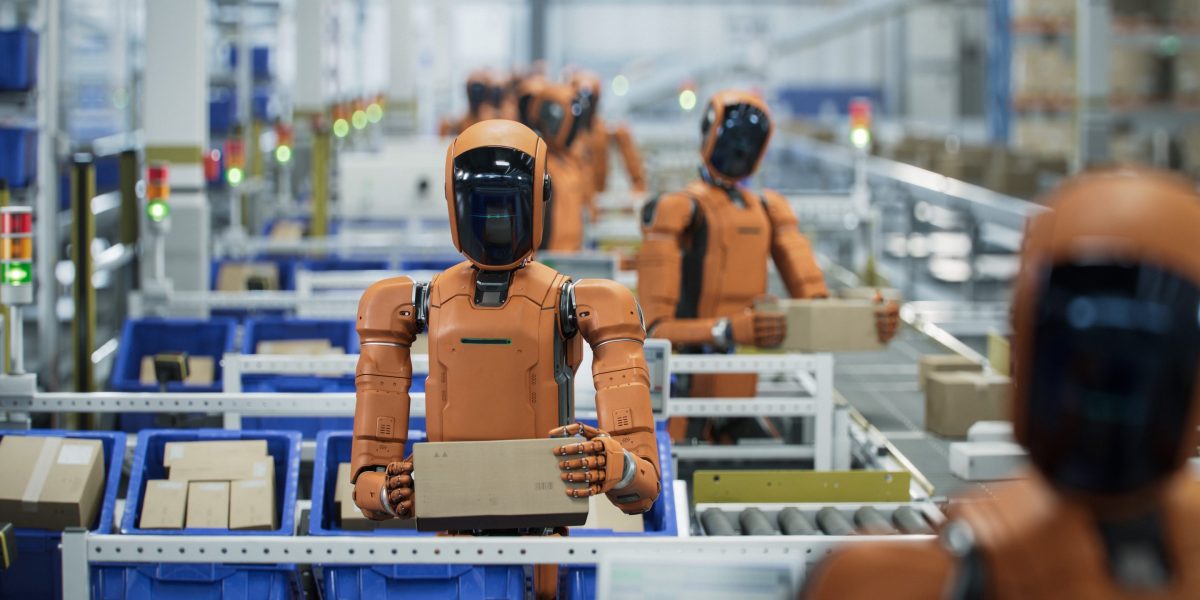
Source: Fortune
Summary
A Roland Berger study estimates robot costs at $2 an hour, while JPMorgan says $10 to $12, and some reports say over $35. The discrepancy highlights the challenge of reliable performance in real-world environments. Enterprises need dependable labor, not just low theoretical costs. A $90,000 robot’s effective cost depends on how many hours it works. Agility Robotics reported $1.78 million in 2025 sales but a $140.2 million operating loss. Its cost model shows robots become cheaper only after 2,700 hours of work annually. The key issue is utilization, not just price.
Our Reading
The numbers tell one story.
Robots cost different amounts depending on who you ask.
Utilization determines if they save money or not.
Agility Robotics shows a big gap between sales and losses.
The real question is whether robots can work reliably and consistently.
Author: Evan Null
The economics depend on utilization
The cost of a robot is straightforward, but its value depends on how much it actually works. A $90,000 robot amortized over five years costs about $9 per hour, but that jumps if it works fewer hours. JPMorgan says it takes two robots to match one worker, doubling the cost. Productivity improves with software, but utilization must improve on the floor. The real challenge is making robots work consistently in unpredictable environments.
The truth in Agility’s filing
Agility Robotics’ S-4 filing shows $1.78 million in 2025 sales but a $140.2 million operating loss. Its cost model shows robots become cheaper only after 2,700 hours of work. The company has logged 65,000 hours across nine sites. Its next robot costs about $400,000 over five years. Running one shift of 2,000 hours a year costs about $40 an hour. Two shifts bring it closer to $20 an hour. The robot becomes cheaper than a $30-an-hour worker only after 2,700 hours.
Factory floors are no laboratories
Robots that work in labs often fail in real-world settings. Factories and warehouses are full of variation, making it hard for robots to perform consistently. A task that seems simple in a demo becomes a stream of exceptions. A robot that needs constant reprogramming is not truly autonomous. The winning companies will be those that can make robots work reliably in unpredictable environments.
Don’t sell a robot. Sell work.
A Labor-as-a-Service model shifts the focus from selling equipment to delivering outcomes. Customers pay for work done, not for machines. This model forces robotics companies to focus on utilization and reliability. The cost comparison is not between robot and worker, but between the service and the current labor model. This is especially important in labor-scarce industries like manufacturing and logistics.
Start with a wedge, not a universal worker
The most visible ambition is a general-purpose humanoid, but that may not be the best path to scale. A better approach is to start with a narrow, repeatable task. Warehousing, automotive manufacturing, and food processing are good starting points. Automating one task reliably generates real-world data that improves models. More data leads to better performance, which opens up new tasks and improves utilization.
The next labor platform
The global labor market is worth tens of trillions. Capturing even a small share would create huge companies. But the opportunity won’t come from more pilots. It will come from making robots dependable labor. Leaders will focus on repetitive, necessary work across multiple shifts. They will start with a narrow wedge, learn from real environments, and expand as systems improve. The physical AI revolution will be defined by how much work robots can do, not how many they sell.