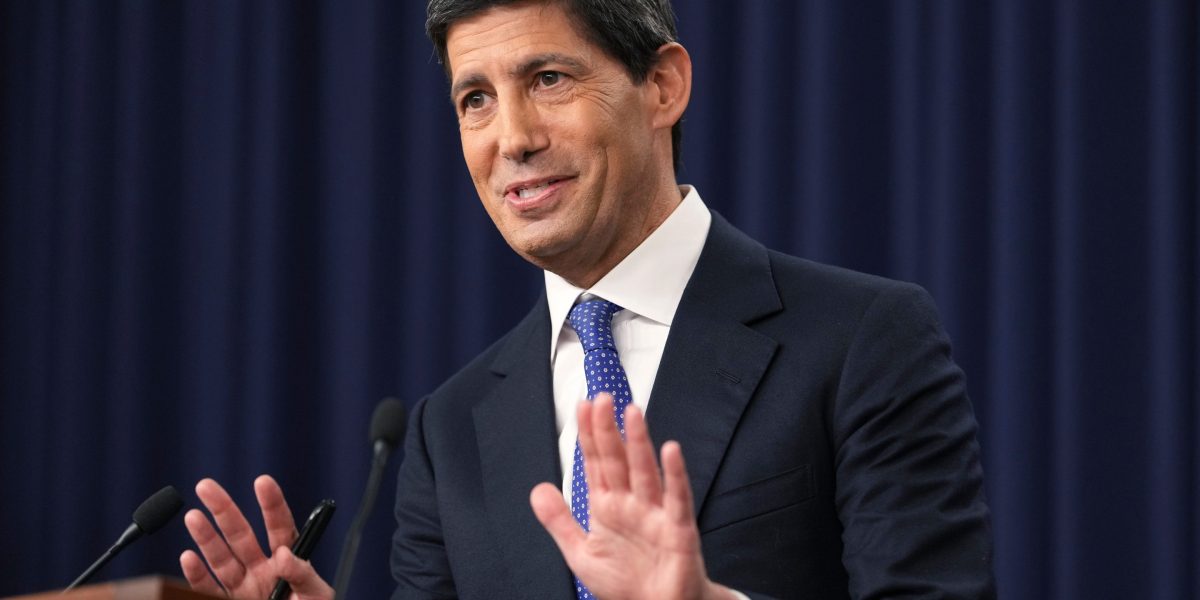
Source: Fortune.com
Summary
President Donald Trump criticized the Federal Reserve for raising interest rates, but economists say broader economic trends, including high inflation and strong consumer spending, are driving higher borrowing costs. The economy is growing steadily, with big tech firms investing heavily in AI data centers and the federal government running large budget deficits. Mortgage rates have risen to 6.95%, the highest in over a year and a half. Analysts say the low-rate, low-inflation era is over, replaced by a higher-cost, higher-rate environment. The shift is linked to supply shocks, increased demand, and the AI buildout, which is straining resources and labor.
Our Reading
The numbers tell one story.
Trump attacks the Fed, but rates are up anyway.
Economy grows despite inflation and supply issues.
Big tech and government borrow more, pushing rates higher.
The old low-cost world is gone, replaced by a new high-rate reality.
Author: Evan Null
Companies and government are competing for bonds
The shift in the economy has brought it back to a state similar to before the 2007 financial crisis. However, after the downturn, consumer and business spending remained weak, with many Americans focused on paying down debt and businesses avoiding investment. This changed as big tech firms began using their cash reserves to build AI data centers and borrowed more to fund these projects. Despite consumer pessimism, spending remains strong, with retail sales picking up and economists forecasting healthy growth.
The Federal Reserve Chairman, Kevin Warsh, noted the change in a speech, stating that the previous belief that capital would sit idle due to a lack of investment opportunities has been proven wrong. Instead, large amounts of capital are now flowing into AI infrastructure. This increased spending and investment has led to higher longer-term interest rates on government bonds, with the 10-year Treasury yield exceeding 5% for the first time since 2023.
Despite the economic expansion, many Americans are struggling with rising prices, and affordability remains a key concern ahead of the midterm elections. Inflation has outpaced wage growth for the past five months, and the economy’s expansion is seen as imbalanced, relying heavily on AI and spending by wealthier consumers who benefit from rising stock prices.
Trump criticized the Fed’s rate hike, calling for a 1% rate instead, but his policies, including the Iran war, have contributed to higher borrowing costs. Analysts say that while Trump can advocate for lower rates, his policies continue to push them higher. The connection between inflation and interest rates is clear, with investors demanding higher returns on longer-term bonds as inflation persists.
The shift in the economy reflects a structural transformation, with the regime change in inflation and interest rates being the result of increased demand, supply shocks, and the AI buildout. This new era is marked by higher costs and higher rates, signaling a departure from the low-cost, low-inflation world of the past 15 years.
Higher inflation leads to higher rates
After the Fed raised its benchmark rate to 3.9%, Trump criticized the move on Truth Social, advocating for a 1% rate instead. However, his policies, such as the Iran war, have contributed to higher gas prices and inflation, which in turn drive up interest rates. Investors demand higher returns on longer-term Treasury bonds, such as the 10-year, which influences mortgage rates. Despite Trump’s rhetoric, his policies continue to push rates higher, highlighting the complex relationship between economic factors and political decisions.
The impact of inflation on interest rates is clear, with the 10-year Treasury yield surpassing 5% this year, even before the Fed’s recent rate hike. This trend reflects the broader economic environment, where increased demand and supply constraints are pushing rates upward. The shift from a low-rate, low-inflation era to a high-rate, high-inflation environment is reshaping the financial landscape, affecting everything from mortgages to government borrowing.
As the economy continues to grow, the challenges of inflation and rising costs remain. While some analysts see strong growth driven by AI and consumer spending, others warn of an imbalanced economy that relies too heavily on specific sectors. The Federal Reserve’s role in managing inflation and interest rates is under scrutiny, with critics arguing that broader economic forces are more influential than monetary policy alone.
The political and economic landscape is evolving, with Trump’s criticism of the Fed reflecting a broader debate about the role of government in managing the economy. As the midterm elections approach, affordability and inflation remain key concerns for voters, shaping the political discourse and influencing economic policy decisions.
The structural transformation of the economy is evident in the shift from a low-cost, low-inflation environment to a high-cost, high-rate one. This change is driven by a combination of factors, including supply shocks, increased demand, and the AI buildout. As the economy adapts to these new conditions, the implications for businesses, consumers, and policymakers will continue to unfold.
Structural transformation of the economy
The U.S. economy has undergone a significant transformation, marked by a shift from a low-rate, low-inflation environment to a high-rate, high-inflation one. This change is driven by a combination of factors, including increased demand, supply shocks, and the AI buildout. The structural transformation has led to higher borrowing costs, with mortgage rates reaching 6.95%, the highest in over a year and a half. This new era reflects a departure from the economic conditions of the past 15 years, which were shaped by the aftermath of the Great Recession.
Analysts like Joe Brusuelas of RSM argue that the regime change in inflation and interest rates is the result of a structural transformation in the economy. The shift from weak consumer and business demand to strong spending and investment has created new challenges, including supply bottlenecks and labor shortages. The AI buildout, in particular, is straining resources and labor, contributing to higher costs and inflation. This transformation is reshaping the financial landscape, affecting everything from mortgage rates to government borrowing.
The Federal Reserve’s role in managing inflation and interest rates is under scrutiny, with critics arguing that broader economic forces are more influential than monetary policy alone. While the Fed has raised rates in response to inflation, economists say that the underlying factors driving higher borrowing costs are more complex. The shift from a low-cost, low-inflation world to a high-cost, high-rate environment is a reflection of these broader economic trends.
As the economy continues to grow, the challenges of inflation and rising costs remain. While some analysts see strong growth driven by AI and consumer spending, others warn of an imbalanced economy that relies too heavily on specific sectors. The Federal Reserve’s role in managing inflation and interest rates is under scrutiny, with critics arguing that broader economic forces are more influential than monetary policy alone.
The structural transformation of the economy is evident in the shift from a low-cost, low-inflation environment to a high-cost, high-rate one. This change is driven by a combination of factors, including supply shocks, increased demand, and the AI buildout. As the economy adapts to these new conditions, the implications for businesses, consumers, and policymakers will continue to unfold.
Trump’s criticism of the Fed
President Donald Trump has renewed his criticism of the Federal Reserve after it raised its benchmark interest rate, arguing that U.S. rates should be 1% instead. However, his policies, including the Iran war, have contributed to higher gas prices and inflation, which in turn drive up interest rates. Analysts say that while Trump can advocate for lower rates, his policies continue to push them higher, highlighting the complex relationship between economic factors and political decisions.
The impact of inflation on interest rates is clear, with the 10-year Treasury yield surpassing 5% this year, even before the Fed’s recent rate hike. This trend reflects the broader economic environment, where increased demand and supply constraints are pushing rates upward. The shift from a low-rate, low-inflation era to a high-rate, high-inflation environment is reshaping the financial landscape, affecting everything from mortgages to government borrowing.
As the economy continues to grow, the challenges of inflation and rising costs remain. While some analysts see strong growth driven by AI and consumer spending, others warn of an imbalanced economy that relies too heavily on specific sectors. The Federal Reserve’s role in managing inflation and interest rates is under scrutiny, with critics arguing that broader economic forces are more influential than monetary policy alone.
The political and economic landscape is evolving, with Trump’s criticism of the Fed reflecting a broader debate about the role of government in managing the economy. As the midterm elections approach, affordability and inflation remain key concerns for voters, shaping the political discourse and influencing economic policy decisions.
The structural transformation of the economy is evident in the shift from a low-cost, low-inflation environment to a high-cost, high-rate one. This change is driven by a combination of factors, including supply shocks, increased demand, and the AI buildout. As the economy adapts to these new conditions, the implications for businesses, consumers, and policymakers will continue to unfold.
Economic challenges and political responses
The U.S. economy is facing a range of challenges, including high inflation, rising interest rates, and supply chain disruptions. These issues are driving up borrowing costs and affecting everything from mortgage rates to government borrowing. Despite these challenges, the economy is growing steadily, with strong consumer spending and increased investment in AI infrastructure. However, the growth is seen as imbalanced, relying heavily on specific sectors and wealthier consumers.
President Trump’s criticism of the Federal Reserve highlights the political tensions surrounding economic policy. While he advocates for lower interest rates, his policies, including the Iran war, have contributed to higher gas prices and inflation. Analysts argue that the relationship between economic factors and political decisions is complex, with broader trends playing a significant role in shaping interest rates and inflation.
The Federal Reserve’s role in managing inflation and interest rates is under scrutiny, with critics arguing that monetary policy alone cannot address the underlying factors driving higher borrowing costs. The shift from a low-rate, low-inflation environment to a high-rate, high-inflation one reflects the broader economic transformation, with increased demand, supply shocks, and the AI buildout all contributing to the new economic landscape.
As the economy continues to grow, the challenges of inflation and rising costs remain. While some analysts see strong growth driven by AI and consumer spending, others warn of an imbalanced economy that relies too heavily on specific sectors. The Federal Reserve’s role in managing inflation and interest rates is under scrutiny, with critics arguing that broader economic forces are more influential than monetary policy alone.
The structural transformation of the economy is evident in the shift from a low-cost, low-inflation environment to a high-cost, high-rate one. This change is driven by a combination of factors, including supply shocks, increased demand, and the AI buildout. As the economy adapts to these new conditions, the implications for businesses, consumers, and policymakers will continue to unfold.