Source: Fortune.com
Summary
Former President Donald Trump, who once criticized China as a threat to the U.S. economy, now speaks positively about Chinese President Xi Jinping. Trump has praised Xi as a “great gentleman” and emphasized a “very good trading relationship.” Despite past tensions, Trump has avoided confronting China on issues like alleged espionage and trade imbalances. His approach has included hosting Xi at the White House and reducing trade conflicts, which some analysts say has weakened U.S. alliances and allowed China to expand its influence.
Our Reading
The numbers tell one story.
Trump once called China a menace, now he calls Xi a gentleman.
He’s avoided hardline actions, even as China expands its tech and manufacturing reach.
Trade tensions have eased, but U.S. allies are rethinking strategies.
Trump’s personal diplomacy may be more about optics than strategy.
Author: Evan Null
Trump’s Shift on China
When Donald Trump first ran for president, he labeled China a threat to the U.S. economy, accusing it of destroying American factories and weakening the middle class. His rhetoric helped him win the White House in 2016, but his stance has since shifted dramatically.
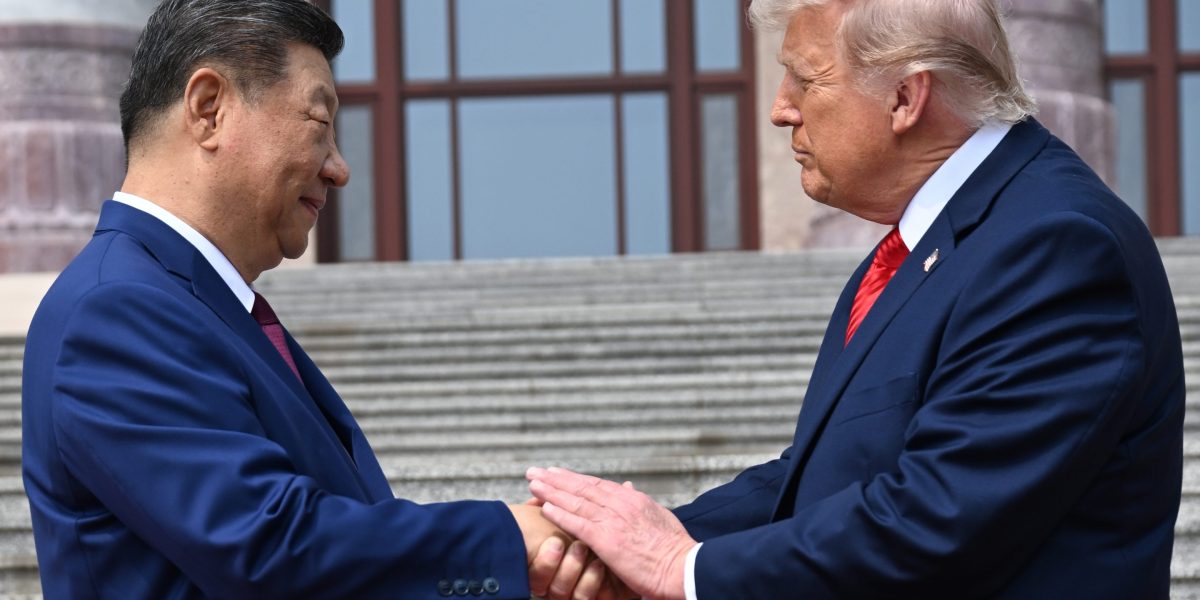
Trump now speaks favorably of Chinese President Xi Jinping, calling him a “great gentleman” and emphasizing a “very good trading relationship.” This change has been notable, especially as Trump has avoided confronting China on issues like alleged espionage and trade imbalances.
His approach has included hosting Xi at the White House and reducing trade conflicts, which some analysts say has weakened U.S. alliances and allowed China to expand its influence. Trump’s personal diplomacy may be more about optics than strategy.
Despite past tensions, Trump has avoided hardline actions, even as China expands its tech and manufacturing reach. His efforts to confront China with tariffs backfired, and he has since focused on maintaining a positive relationship with Xi.
Trump’s shift reflects a broader strategy of personal diplomacy, but critics argue it has come at the expense of a more robust U.S. response to China’s growing global influence.
The Impact of Trump’s Approach
Trump’s approach to China has had significant implications for U.S. foreign policy. By avoiding confrontation and focusing on personal relationships, he has weakened traditional alliances that could have applied pressure on China. This has allowed China to expand its influence in manufacturing and technology, particularly in areas like artificial intelligence and electric vehicles.
Analysts argue that Trump’s strategy has not only failed to curb China’s rise but has also undermined U.S. efforts to compete globally. The trade imbalance with China has not improved significantly, and China continues to find ways to route goods through other countries to avoid tariffs.
Despite this, Trump has maintained a positive relationship with Xi, emphasizing their “very good trading relationship” and mutual respect. This has led to symbolic gestures, such as reciprocal state visits, which some see as more about image than substantive policy.
Trump’s focus on personal diplomacy has also led to criticism from allies, who feel abandoned in the face of China’s growing power. This has prompted some Western leaders to seek closer ties with China, further complicating U.S. efforts to counter its influence.
The long-term effects of Trump’s approach remain unclear, but it has certainly reshaped the dynamics of U.S.-China relations in a way that prioritizes personal relationships over strategic competition.
Trade and Economic Implications
Trump’s trade policies toward China have had mixed results. His initial strategy of imposing high tariffs backfired, as China leveraged its control over rare earth minerals to force a trade armistice. This led to a decline in the U.S.-China trade imbalance, but critics argue that China has found ways to circumvent tariffs by routing goods through other countries like Vietnam.
Despite Trump’s continued tariffs, China’s manufacturing sector has not been significantly curbed. Instead, it has expanded its global reach, undercutting competitors in industries like electric vehicles. China’s $1.2 trillion trade surplus last year highlights its economic strength, which Trump has struggled to counter.
The trade truce between the U.S. and China has allowed both countries to focus on other priorities, such as military buildup and AI development. However, this has also raised concerns about the long-term implications for U.S. economic and national security interests.
Trump’s approach has not led to clear policy deliverables, and it remains uncertain whether the state visit will result in meaningful agreements. Some analysts argue that the U.S. is not positioning itself effectively to compete with China, given the current administration’s focus on personal relationships over strategic competition.
The economic implications of Trump’s approach are significant, as China continues to expand its influence and challenge U.S. dominance in key industries.
China’s Global Influence
China’s growing influence has been a central theme in U.S.-China relations under Trump. The country has expanded its dominance in manufacturing and pushed into new technologies such as artificial intelligence and electric vehicles. This has created risks for the economies of the U.S., Germany, Italy, France, South Korea, and Japan, among others.
Trump’s attempts to confront China with tariffs have not been effective, and China has used its economic leverage to force a trade truce. This has allowed China to continue expanding its influence, particularly in areas where it holds a competitive advantage.
Despite this, Trump has maintained a positive relationship with Xi, emphasizing their “very good trading relationship” and mutual respect. This has led to symbolic gestures, such as reciprocal state visits, which some see as more about image than substantive policy.
China’s growing influence has also prompted some Western leaders to seek closer ties with Beijing, further complicating U.S. efforts to counter its influence. This shift has raised concerns about the long-term implications for U.S. alliances and global leadership.
The impact of China’s global influence is clear, and Trump’s approach has not provided a clear strategy to counter it. Instead, it has allowed China to continue expanding its reach while the U.S. struggles to find a coherent response.
Trump’s Personal Diplomacy
Trump’s approach to China has been characterized by a focus on personal relationships rather than strategic competition. He has emphasized his ability to get along with Xi Jinping, calling him a “great gentleman” and highlighting their “very good trading relationship.” This has led to symbolic gestures, such as reciprocal state visits, which some see as more about image than substantive policy.
Analysts argue that Trump’s idiosyncratic approach has come at a time when the U.S. needs to be more competitive with China. His focus on personal diplomacy has weakened traditional alliances and allowed China to expand its influence in key industries. This has raised concerns about the long-term implications for U.S. economic and national security interests.
Trump’s personal diplomacy has also led to criticism from allies, who feel abandoned in the face of China’s growing power. This has prompted some Western leaders to seek closer ties with China, further complicating U.S. efforts to counter its influence. The long-term effects of this approach remain unclear, but it has certainly reshaped the dynamics of U.S.-China relations.
Despite his efforts to maintain a positive relationship with Xi, Trump has struggled to address the broader challenges posed by China’s rise. His focus on personal relationships has not led to clear policy deliverables, and it remains uncertain whether the state visit will result in meaningful agreements.
Trump’s personal diplomacy has been a defining feature of his approach to China, but it has also raised questions about the effectiveness of his strategy in the face of a growing global rival.