Source: Fox News
Summary
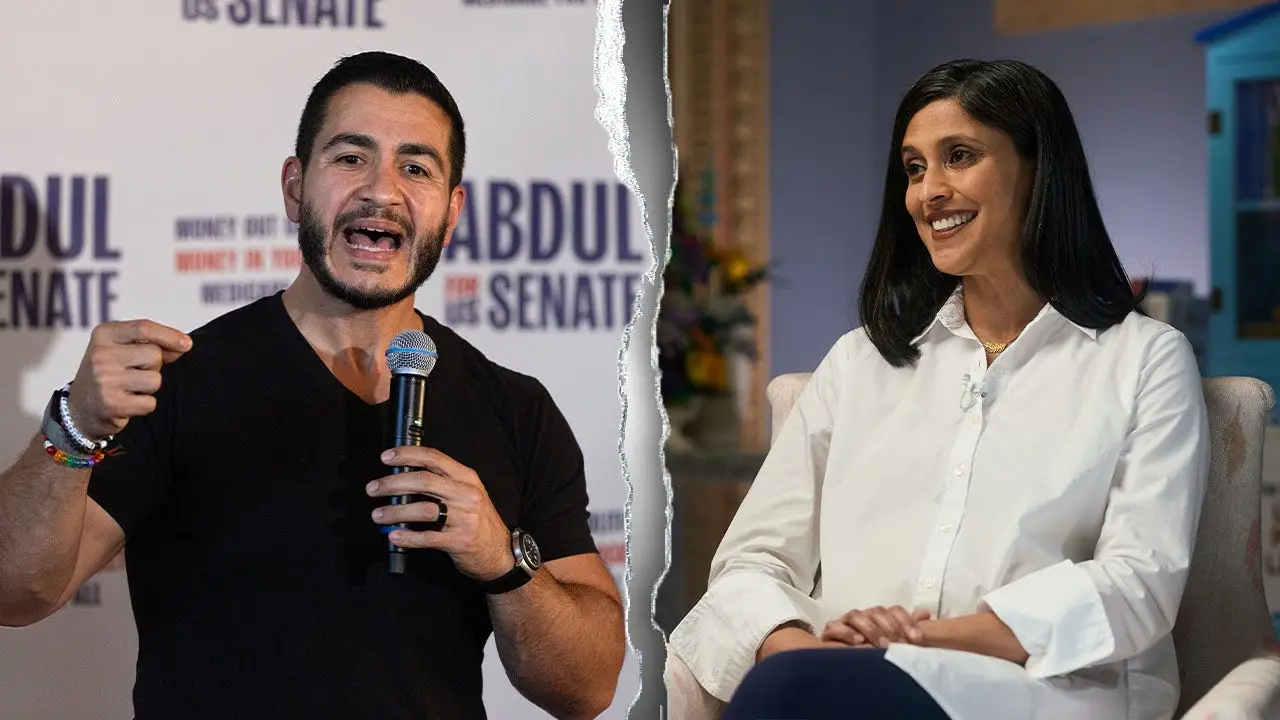
Controversial socialist Senate candidate Abdul El-Sayed of Michigan criticized Vice President JD Vance by referencing his wife, Usha Vance, during a campaign debate. The remarks sparked backlash from political figures and media, with some questioning how El-Sayed would treat female staff if elected. El-Sayed had previously faced criticism for his comments on Sharia law and for attacking female political rivals. His campaign did not respond to requests for clarification.
Our Reading
As expected, the matter has reached another stage.
El-Sayed brings up Usha Vance, wife of VP JD Vance.
Others bring up his past attacks on women and his views on Sharia law.
Comments on social media suggest he is seen as sexist and divisive.
It’s a familiar loop of personal attacks in a tight race.
Author: Evan Null
El-Sayed’s Attack on Usha Vance
Abdul El-Sayed, a socialist candidate for the Senate in Michigan, made a controversial remark about Usha Vance, the second lady of the United States. His comment came after a debate with JD Vance, the vice president. El-Sayed’s remarks were seen as an attempt to undermine Vance’s character, but they instead led to criticism of El-Sayed himself.
El-Sayed’s campaign did not provide an explanation for his comments, which were seen as inappropriate and unprofessional. The attack on Usha Vance was widely criticized, with many questioning his judgment and motives. His remarks were viewed as a personal attack rather than a substantive critique of Vance’s policies or positions.
The controversy surrounding El-Sayed’s remarks highlights the personal nature of modern political campaigns. Instead of focusing on policy issues, candidates often resort to attacking their opponents’ families or personal lives. This tactic can be effective in generating media attention but often leads to backlash from the public and political opponents.
El-Sayed’s attack on Usha Vance was not the first time he had faced criticism for his rhetoric. He had previously been accused of being sexist and misogynistic, particularly in his treatment of female political rivals. This pattern of behavior has raised concerns about his ability to lead and his respect for women in public office.
The incident also underscores the role of social media in modern politics. El-Sayed’s comments were quickly picked up by political figures and media outlets, leading to a broader discussion about his character and qualifications. The speed and reach of social media can amplify personal attacks, making it difficult for candidates to recover from such controversies.