Source: Fox News
Summary
Excavation for the Great Triumphal Arch, a 250-foot memorial planned by the Trump administration, will begin in Washington, D.C., on Columbia Island. The project faces a lawsuit from opponents who claim it will disrupt historic sight lines. Interior Secretary Doug Burgum announced the start of work, calling the arch a “Great Piece of American Architecture.” A 24-page National Park Service report supports the project but notes potential adverse effects on historic properties. The arch, featuring a gold Lady Liberty-like figure and “ONE NATION UNDER GOD” inscriptions, has drawn both support and criticism.
Our Reading
As expected, the matter has reached another stage.
Interior Secretary Doug Burgum announces the start of work on a 250-foot arch.
He calls it a “Great Piece of American Architecture” and shares mock-ups of the design.
Opponents argue the project lacks congressional authorization and disrupts historic sight lines.
The arch, like others in global capitals, is presented as a long-overdue addition to Washington, D.C.
Author: Evan Null
Excavation Begins on Trump’s Triumphal Arch
Excavation work will begin over the next two weeks on a site in Washington, D.C., where the Trump administration plans to build a tall memorial arch. The project is set to be constructed on Columbia Island, between the Lincoln Memorial and Arlington National Cemetery. Interior Secretary Doug Burgum announced the start of the work, highlighting the arch as a symbol of American architecture and history.
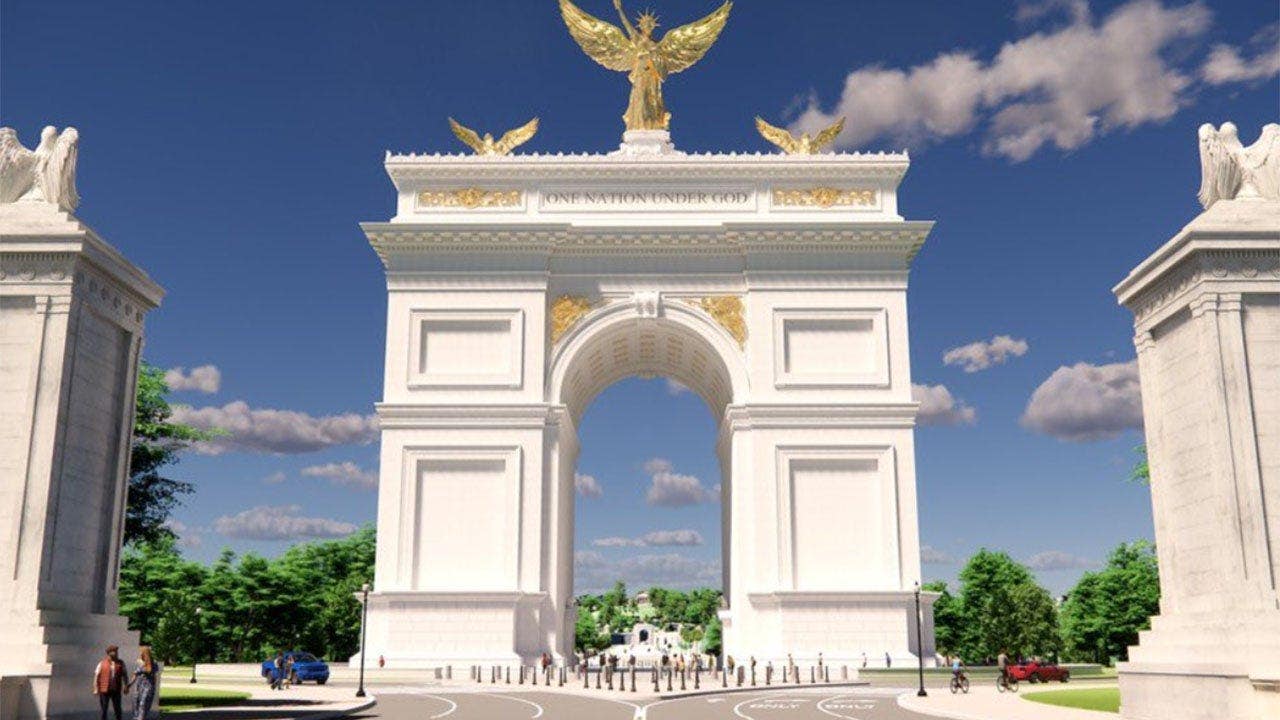
The Great Triumphal Arch and Military Observation Deck will stand 250 feet tall. Burgum described it as a “Great Piece of American Architecture” and shared mock-ups of the design. The arch will feature a gold Lady Liberty-like figure with wings and a torch, as well as gold eagles with their wings spread outward. The project is part of a broader effort by the Trump administration to beautify the capital.
The project faces a lawsuit from three veterans and an architectural historian, who argue that the project lacks necessary congressional authorization. Nicolas Sansone, an attorney with the Public Citizen Litigation Group, said the plaintiffs are prepared to ask the court to intervene. He claimed the project would disrupt historic sight lines and lacked proper approval.
A 24-page report from the National Park Service supports the idea of the arch but notes that it could have “direct and indirect adverse effects” on the sight lines of historic properties. Despite this, the project continues to move forward, with Burgum defending it as a long-standing idea that has been discussed for decades.
Burgum also cited examples of other cities with arches, including Athens, London, Madrid, New Delhi, Paris, and Rome. He noted that Washington, D.C., is the only major Western capital without one. The arch is one of several projects undertaken by the Trump administration, including the renaming of the Kennedy Center and the refurbishing of the Lincoln Memorial Reflecting Pool.
Trump’s Vision for a Monumental Addition
The Trump administration has long envisioned a towering memorial arch in Washington, D.C., as a symbol of American power and history. The project, now moving closer to reality, is set to be built on Columbia Island, a location that sits between the Lincoln Memorial and Arlington National Cemetery. Interior Secretary Doug Burgum has been a vocal supporter, calling the arch a “Great Piece of American Architecture” and sharing detailed mock-ups of the design.
The arch will feature a gold Lady Liberty-like figure with wings and a torch, along with gold eagles with their wings spread outward. The design includes the phrase “ONE NATION UNDER GOD” on top, reinforcing a religious and nationalistic message. Burgum has defended the project, citing historical discussions and the presence of similar structures in other global capitals.
Despite the support, the project faces legal challenges. Opponents argue that the project lacks necessary congressional authorization and could disrupt historic sight lines. A 24-page report from the National Park Service supports the idea of the arch but notes potential adverse effects on the surrounding historic properties. The legal battle continues as the administration pushes forward with the project.
Burgum has emphasized that the arch is a long-standing idea, with discussions dating back decades. He also pointed out that Washington, D.C., is the only major Western capital without an arch, a fact he uses to justify the project. The administration has framed the arch as a way to enhance the city’s skyline and honor American history.
The arch is part of a broader set of initiatives by the Trump administration, including the renaming of the Kennedy Center and the refurbishing of the Lincoln Memorial Reflecting Pool. These projects have drawn both support and criticism, with some praising the efforts to restore and enhance landmarks, while others question the motives and legality of the changes.
Opposition and Legal Challenges
The Great Triumphal Arch project has faced legal opposition from three veterans and an architectural historian, who argue that the project lacks necessary congressional authorization. Nicolas Sansone, an attorney with the Public Citizen Litigation Group, has stated that the plaintiffs are prepared to ask the court to intervene. He claims that the project would disrupt historic sight lines and lacks proper approval, making it illegal to proceed.
The opposition has raised concerns about the impact of the arch on the surrounding historic properties. A 24-page report from the National Park Service supports the idea of the arch but notes that it could have “direct and indirect adverse effects” on the sight lines of these properties. This has led to ongoing legal battles, with opponents seeking to halt the project until proper authorization is obtained.
Burgum has defended the project, stating that it has been discussed for decades and that similar structures exist in other global capitals. He has also emphasized the importance of the arch as a symbol of American power and history. Despite the opposition, the project continues to move forward, with excavation work set to begin in the coming weeks.
The legal challenges have not stopped the administration from promoting the project, with Burgum sharing mock-ups of the design and emphasizing its significance. The arch is part of a broader effort by the Trump administration to reshape the capital’s landscape, with other projects including the renaming of the Kennedy Center and the refurbishing of the Lincoln Memorial Reflecting Pool.
As the project moves forward, the legal battle continues, with opponents hoping to stop the construction before it begins. The outcome of the lawsuit will determine whether the arch can be built as planned or if the project will be delayed or canceled.
Historical and Symbolic Significance
The Great Triumphal Arch is intended to be a symbol of American power and history, with its design and location chosen to reflect the nation’s significance. The arch will be built on Columbia Island, a site that sits between the Lincoln Memorial and Arlington National Cemetery, two of the most iconic landmarks in Washington, D.C. This location was selected to ensure the arch is visible from key points in the city and to emphasize its importance as a national monument.
The design of the arch includes a gold Lady Liberty-like figure with wings and a torch, as well as gold eagles with their wings spread outward. The phrase “ONE NATION UNDER GOD” will be inscribed on top, reinforcing a message of national unity and religious significance. These elements are meant to evoke a sense of pride and reverence for American history and values.
Burgum has emphasized that the arch is a long-standing idea, with discussions about its construction dating back decades. He has also pointed out that other major Western capitals, such as Athens, London, Madrid, New Delhi, Paris, and Rome, have similar structures. This has been used to justify the project, with Burgum arguing that Washington, D.C., is the only major Western capital without an arch.
The project is part of a broader set of initiatives by the Trump administration, including the renaming of the Kennedy Center and the refurbishing of the Lincoln Memorial Reflecting Pool. These projects have been framed as efforts to restore and enhance the city’s landmarks, with supporters praising the administration’s vision for the capital’s future.
Despite the support, the project has faced legal challenges, with opponents arguing that it lacks necessary congressional authorization and could disrupt historic sight lines. The legal battle continues, with the outcome of the lawsuit determining whether the arch can be built as planned or if the project will be delayed or canceled.
Public Reaction and Media Coverage
The Great Triumphal Arch has received mixed reactions from the public and media. Supporters have praised the project as a bold and necessary addition to Washington, D.C.’s skyline, while critics have raised concerns about its impact on historic properties and the lack of congressional approval. The project has been widely covered by the media, with outlets like Fox News highlighting the administration’s vision and the legal challenges facing the initiative.
Interior Secretary Doug Burgum has been a vocal advocate for the project, using social media to share mock-ups of the design and promote its significance. He has also emphasized that the idea for the arch has been discussed for decades, with past Congresses and reports referencing the construction of a memorial. This has been used to justify the project and frame it as a long-overdue addition to the capital.
The project has also drawn attention for its symbolic elements, including the gold Lady Liberty-like figure and the phrase “ONE NATION UNDER GOD.” These elements have been interpreted as reinforcing a nationalistic and religious message, which has sparked debate among critics and supporters alike. The design has been praised for its grandeur and historical significance, but also criticized for its potential impact on the surrounding landscape.
The legal challenges to the project have been covered extensively by the media, with outlets like The Associated Press reporting on the lawsuit and the arguments made by both sides. Opponents have argued that the project lacks proper authorization and could disrupt historic sight lines, while the administration has defended it as a necessary and symbolic addition to the capital.
As the project moves forward, the public and media continue to follow its progress, with the outcome of the legal battle shaping the future of the Great Triumphal Arch. Whether the arch will be built as planned or face further delays remains to be seen, but the project has already sparked significant discussion and debate.