Source: Fortune
Summary
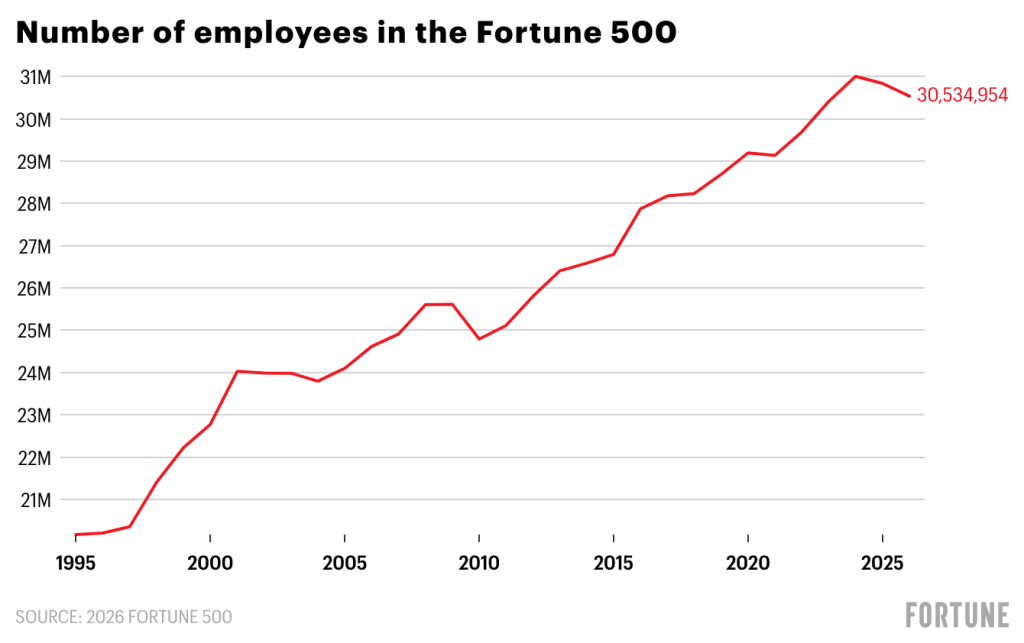
The 2026 Fortune 500 list shows record revenue of $21 trillion, up 5% from last year, and total profits of $2.1 trillion, up 12%. However, the total headcount decreased for the second straight year to 30.5 million employees, down 1%. The departure of companies like Walgreens Boots Alliance and Nordstrom from the list contributed to the decline. Incumbent firms added 41,177 employees, but employment growth was only 0.1%. The largest sector, retailing, saw a 0.9% drop in employment, while technology and financials saw a 1% and 0.9% change, respectively.
Our Reading
The numbers tell one story.
Walgreens Boots Alliance’s departure from the Fortune 500 list was a major blow to headcount, with 252,500 employees lost. Nordstrom’s exit also contributed to the decline. The 22 companies that replaced the drop-offs employed fewer than half the number of people. Incumbent firms added 41,177 employees, but employment growth was only 0.1%. The “low-hire, low-fire economy” is reflected in the steady employment among incumbent firms. Large firms have outsourced labor-intensive work while reaping technology’s huge productivity gains.
As companies continue to focus on AI adoption, it’s likely that the trend of increasing revenue and profit per employee will continue, while inflation-adjusted wages remain relatively flat.
The Fortune 500’s headcount decline is a sign of a broader shift in the economy, where companies are prioritizing efficiency and technology over employment growth.
Lawrence Katz’s comment about the “rise in new business startups” and the “flourishing of smaller scale enterprises” suggests that the future of employment may lie in smaller, more agile companies rather than the titans of industry.
The fact that two newcomers on the list, Bitgo Holdings and Galaxy Digital, have fewer than 1,000 employees, operating in the digital asset space, highlights the changing nature of employment in the Fortune 500.
Author: Evan Null