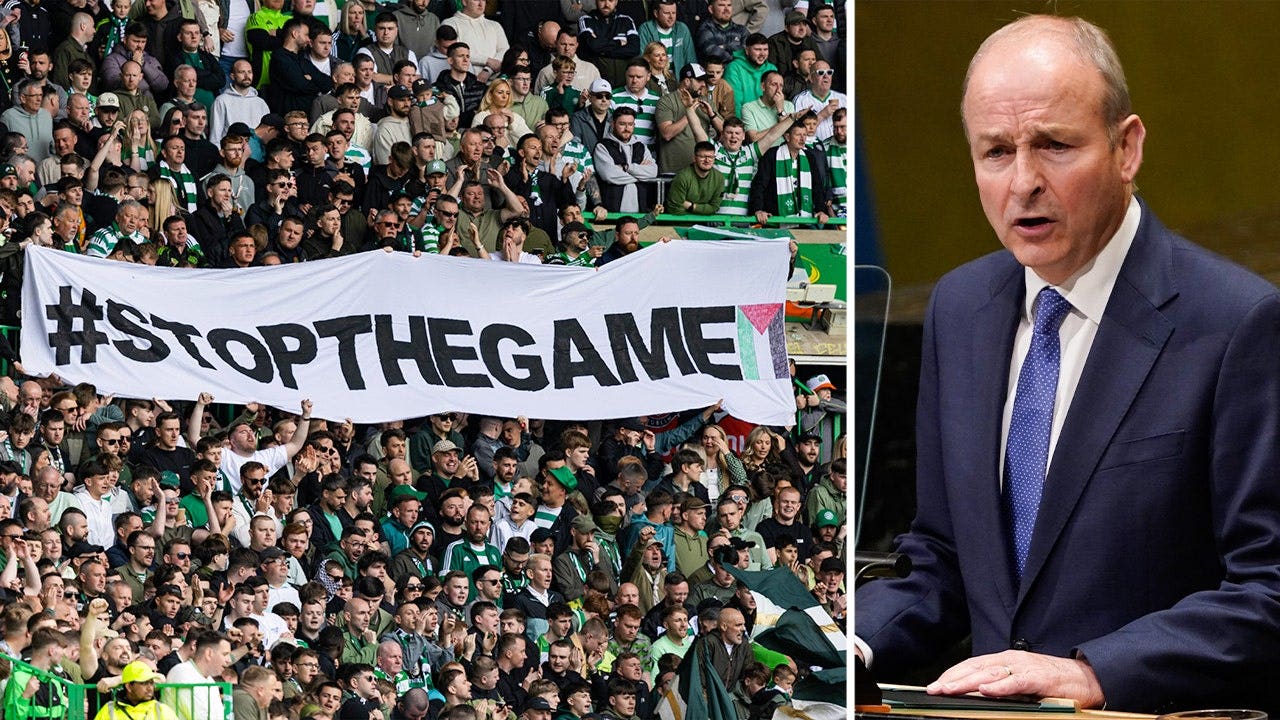
Source: Fox News
Summary
Irish Prime Minister Micheál Martin denied accusations that Ireland’s criticism of Israel has crossed into antisemitism, following tensions around a soccer match between the countries. Martin called Israel’s military response in Gaza “disproportionate” and urged humanitarian aid. Irish players voted to play the game, with one leaving the squad. Martin condemned Hamas’ Oct. 7 attack and supported a two-state solution. He linked Ireland’s stance to its history of conflict resolution, including Northern Ireland. The Irish government has faced criticism over antisemitism, which Martin denied, citing Holocaust commemorations and Jewish community contributions.
Our Reading
As expected, the matter has reached another stage.
Ireland’s prime minister rejects antisemitism claims.
Players vote to play the match, one leaves the squad.
Israel’s military response criticized, Hamas condemned.
History of conflict shapes Ireland’s stance, calls for peace.
Author: Evan Null
Irish Prime Minister’s Stance on Israel
Irish Prime Minister Micheál Martin has repeatedly denied accusations that Ireland’s criticism of Israel has crossed into antisemitism. Martin, in an interview with Fox News Digital, called Israel’s military response in Gaza “absolutely disproportionate” and urged the country to “change strategy.” He also emphasized Ireland’s support for a two-state solution and condemned Hamas’ Oct. 7 attack. Martin’s position is rooted in Ireland’s history of conflict resolution, particularly its experience in Northern Ireland.
Player Vote and Tensions
A last-minute vote by Irish soccer players determined whether to boycott the match against Israel. A “significant majority” chose to play, while one player left the squad. The decision came after months of pressure, with over 160 Irish sports figures calling for a boycott. The game, held in Hungary, faced protests and calls for cancellation, with some players expressing discomfort with the match. The Irish Football Association faced criticism for its stance, with Martin calling remarks against the game “unacceptable.”
International Context and Criticism
Martin’s position has drawn criticism from groups like the American Jewish Committee, which raised concerns about antisemitism in Ireland. Martin defended Ireland’s record, pointing to Holocaust commemorations and the contributions of Jewish communities. He also addressed the broader debate over whether Ireland’s criticism of Israel has crossed a line. Martin emphasized the need for humanitarian aid to Gaza and called for Israel to reconsider its approach to the conflict.
Historical and Diplomatic Influences
Martin linked Ireland’s stance to its own history of ending decades of conflict, particularly in Northern Ireland. He spoke of the importance of reconciliation and peace, drawing parallels to his meeting with Israeli and Palestinian fathers who worked together for peace. Martin also addressed the role of the United States in the Northern Ireland peace process, suggesting Washington could play a similar role in a future reunification of Ireland. His comments reflect a broader diplomatic strategy, especially as Ireland holds the rotating presidency of the European Union Council.
Broader Global and Regional Implications
Martin’s focus on ending conflicts extends beyond the Middle East, with his comments on Russia’s war in Ukraine and the need for a ceasefire along existing lines. He rejected territorial gains by force and emphasized Ireland’s humanitarian support for Ukraine. His stance on reunification with Northern Ireland reflects a long-term goal, though he stressed the need for greater trust between communities. Martin’s position highlights the complex interplay of history, diplomacy, and international relations in shaping Ireland’s foreign policy.