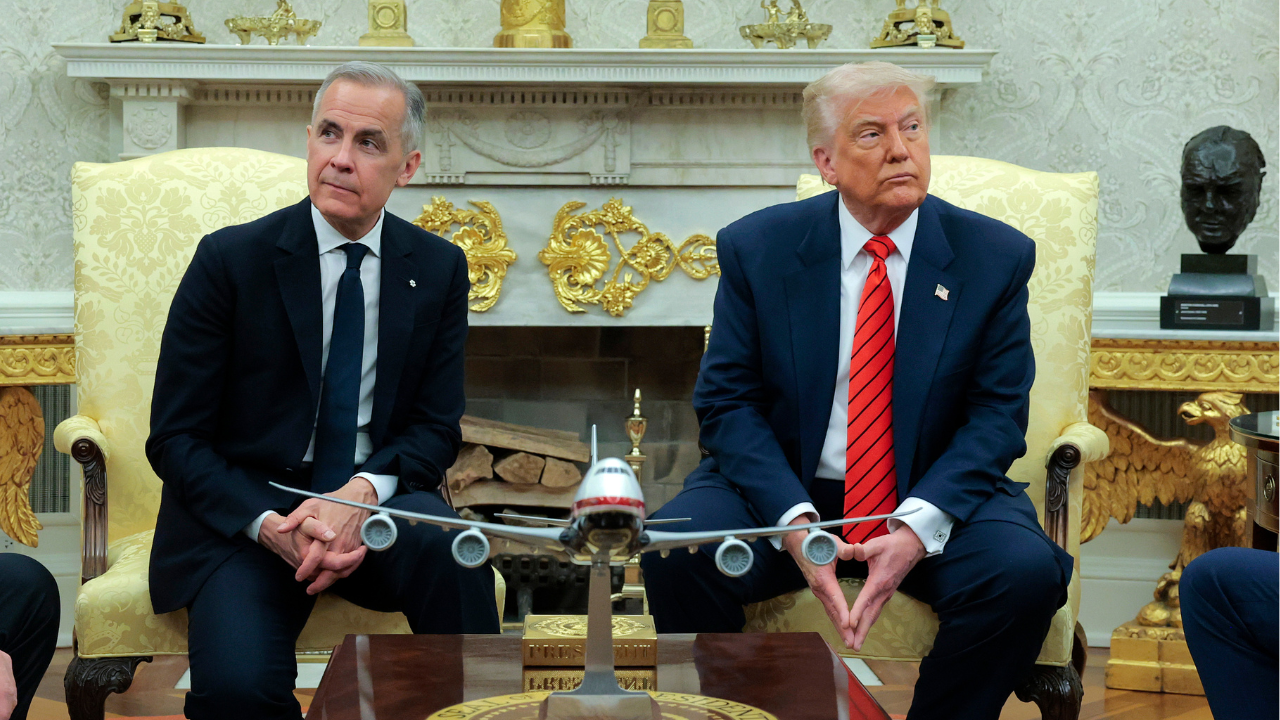
Source: Fox News
Summary
President Donald Trump’s trade conflict with Canada could harm Michigan, a key battleground state, due to its reliance on cross-border auto supply chains. A Michigan Department of Transportation report shows 36% of the state’s exports go to Canada, mostly vehicles and parts. David Clement, policy director of the Consumer Choice Center, warned that tariffs could raise prices for Michigan consumers. Trump imposed a 50% tariff on Canadian products and banned some goods from entering the U.S. starting Sept. 29. Clement said Michigan is among the most vulnerable states in the trade war, with auto parts frequently crossing the border multiple times. The state’s Senate race between Democrat Abdul El-Sayed and Republican Mike Rogers could be affected by the economic impact of the trade dispute.
Our Reading
As expected, the matter has reached another stage.
Trump imposes tariffs on Canadian goods.
Michigan’s auto industry faces higher costs.
Consumers see prices rise at dealerships.
Trade war becomes a familiar political tool.
Author: Evan Null
Michigan’s Auto Industry and Cross-Border Trade
Michigan’s auto industry is deeply tied to Canada, with a large portion of its exports going north. The state’s economy depends on the movement of vehicles and parts across the border. This connection makes it vulnerable to trade disputes between the U.S. and Canada. The auto sector is a major employer in Michigan, and any disruption could have wide-reaching effects. The state’s economic health is closely linked to its trade relationships with neighboring countries.
Trump’s Trade Policies and Their Impact
Trump’s trade policies have targeted Canada with increased tariffs, affecting industries that rely on cross-border supply chains. The 50% tariff on certain Canadian products is part of a broader strategy to protect American businesses. These measures are intended to create a more balanced trade relationship. However, they also risk harming American consumers and businesses. The impact of these policies is felt most strongly in states like Michigan, where the auto industry is central to the economy.
The Political Implications in Michigan
The trade war with Canada could influence the outcome of Michigan’s Senate race. The state is a key battleground in the upcoming election. Candidates are aware of the economic concerns facing voters. The potential for rising costs and job losses could affect voter sentiment. Political campaigns are likely to address these issues as they seek to win support. The trade dispute adds another layer of complexity to the election.
Consumer and Business Concerns
Consumers in Michigan may see higher prices for vehicles and other goods due to the trade war. The cost of living is already a major concern for many residents. Businesses that rely on Canadian imports could face increased expenses. These factors could influence consumer behavior and business decisions. The economic impact of the trade war is expected to be felt in the lead-up to the election. Voters may be more sensitive to these issues as they make their choices.
The Broader Economic Context
The trade war with Canada is part of a larger economic strategy by the Trump administration. It aims to protect American industries and workers from what is seen as unfair trade practices. However, the effects of these policies are not always straightforward. They can create unintended consequences for businesses and consumers. The situation in Michigan highlights the complex relationship between trade policy and economic stability. The outcome of the trade dispute could have lasting effects on the region’s economy.