Source: Fox News
Summary
The U.S. Court of Appeals for the Eighth Circuit ruled that Missouri must use its 2025 congressional map for the November election, despite the August primary being held under a different map. The decision, which pauses until Sept. 28, 2026, allows for a potential Supreme Court review. Missouri’s Supreme Court had previously allowed a referendum to challenge the 2025 map, leaving the 2022 districts in place for the general election. Legal experts noted constitutional concerns about switching maps between primary and general elections, while others argued the 2025 map was never legally valid.
Our Reading
As expected, the matter has reached another stage.
The Eighth Circuit orders Missouri to use the 2025 map for November.
The Supreme Court pauses the order until next year.
Missouri voters cast ballots under a different map in August.
The process feels like a repeat of past legal back-and-forth.
Author: Evan Null
Missouri’s Congressional Map Fight
The fight over Missouri’s congressional map has become a legal and political battleground, with courts and lawmakers repeatedly clashing over which map should govern the November election. The dispute began after more than 1.2 million Missourians voted in the August primary under a different map than the one that will be used for the general election. The U.S. Court of Appeals for the Eighth Circuit ruled that the 2025 map must be used, but the decision is on hold until Sept. 28, 2026, creating a narrow window for further legal challenges.
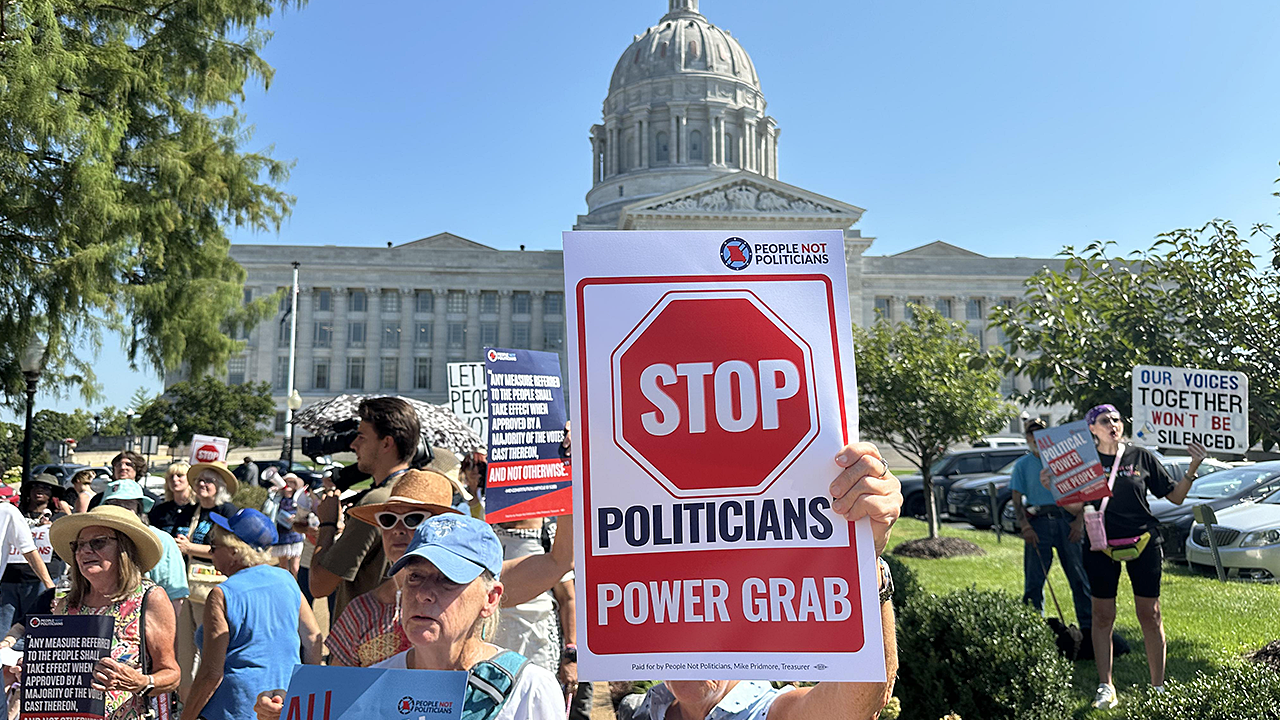
Missouri’s Supreme Court had previously allowed a referendum to challenge the 2025 map, which led to confusion over which districts would be in effect for the general election. Legal experts have raised concerns about the potential for voter disenfranchisement if the map changes between the primary and general election. The situation has drawn comparisons to past redistricting battles, with some arguing that the legal chaos was preventable.
Supreme Court’s Role in the Dispute
The U.S. Supreme Court has already intervened in the case, previously staying a lower court’s order that required Missouri to use the 2025 map. The Eighth Circuit has now directed the lower court to enter a permanent injunction requiring the newer districts, putting the dispute in a different procedural posture. Legal analysts say the Supreme Court’s previous intervention does not necessarily indicate how the justices will rule on the latest decision.
Abhishek Kambli, a partner at Holtzman Vogel, said the Supreme Court’s decision to stay the previous order was unpredictable because the justices did not provide their reasoning. He argued that switching maps between the primary and general election raises serious constitutional concerns, as it could disenfranchise voters who cast ballots under a different set of districts.
Legal and Political Implications
The Missouri Supreme Court’s decision to allow a referendum on the 2025 map has created additional uncertainty. The court ruled that voters could challenge the map through a referendum, which left the 2022 districts in place for the November election. Legal experts have criticized the Missouri Supreme Court for not resolving the issue earlier, arguing that the turmoil was preventable. The court also faulted Missouri Secretary of State Denny Hoskins for delays in processing the referendum petition, which contributed to the confusion.
Alicia Bannon of the Brennan Center for Justice pointed to delays by Hoskins as a key reason the dispute dragged on. Opponents of the 2025 map submitted more than 300,000 signatures in December 2025, but Hoskins did not formally reject the petition until the day of the primary. The Missouri Supreme Court ultimately ruled that the referendum could proceed and criticized Hoskins for the delays, saying he had created the confusion he complained about.
Conflicting Legal Arguments
Legal scholars have presented conflicting arguments about whether the 2025 map should be used for the November election. Akhil Amar and Vikram Amar, professors at Yale and UC Davis, argued that the 2025 map was never legally valid and that using it in November would not protect voters’ rights. They said the map’s lines lacked the force of law and could not be used to justify changes in the general election.
Abhishek Kambli, on the other hand, argued that the Purcell principle, which discourages last-minute changes to election rules, supports using the 2025 map. He said the Eighth Circuit had already ruled that the principle supported the injunction, not opposed it. Kambli also warned that courts being too cautious could incentivize legal shenanigans that harm voters’ rights.
Next Steps and the Referendum
Regardless of whether the Supreme Court decides to intervene, the referendum on the 2025 map will still be on the ballot. If the Supreme Court does not stay the Eighth Circuit’s injunction, the 7-1 map will be in effect for the November election. The referendum will determine the map for future elections, but for this one, the decision is already made. Legal experts say the situation highlights the challenges of redistricting and the potential for legal disputes to disrupt the electoral process.
The Missouri congressional map fight continues to unfold in a way that feels familiar, with courts and lawmakers repeatedly clashing over the same issues. The outcome of the November election will depend on which map is used, and the legal battles show no signs of ending anytime soon. As the process continues, the focus remains on ensuring that voters have a fair and clear path to the ballot box.