Source: Fox News
Summary
The Senate has been out of session since August 8, with only brief pro forma sessions held in the early morning. Senate Majority Leader John Thune proposed a schedule that allowed the Senate to recess for most of August and into September. The plan was approved without objection, despite some Republicans wanting to continue debating the SAVE America Act. A test vote on a voter ID bill was included, but it required 60 votes and failed. All 100 senators agreed to the schedule, meaning the recess was not forced by any single leader or group.
Our Reading
As expected, the matter has reached another stage.
Senators gavels in and gavels out with a skeleton crew.
Thune proposes a schedule, no one objects.
Test vote on voter ID fails, but all Republicans vote yes.
Everyone agrees to go home, even those who wanted to stay.
Author: Evan Null
Senate Recess and Pro Forma Sessions
The Senate has been out of session for about two weeks. It has convened in brief “pro forma” sessions on four occasions since senators called it quits for more than a month at 4:57 a.m. ET on Saturday, August 8. Pro forma sessions are where the Senate huddles for just a few seconds, gaveling in and gaveling out with a skeleton crew. It’s rare that more than one senator is even in the chamber.
The Senate truly isn’t back for debate and votes until the afternoon of Monday, September 15. But what about all of that sturm and drang about “cancelling the August recess?” Remember that President Donald Trump and conservatives wanted the Senate to remain in session for the month to debate the SAVE America Act. That’s the chief legislative demand of Trump. It requires voter ID and proof of citizenship to vote.
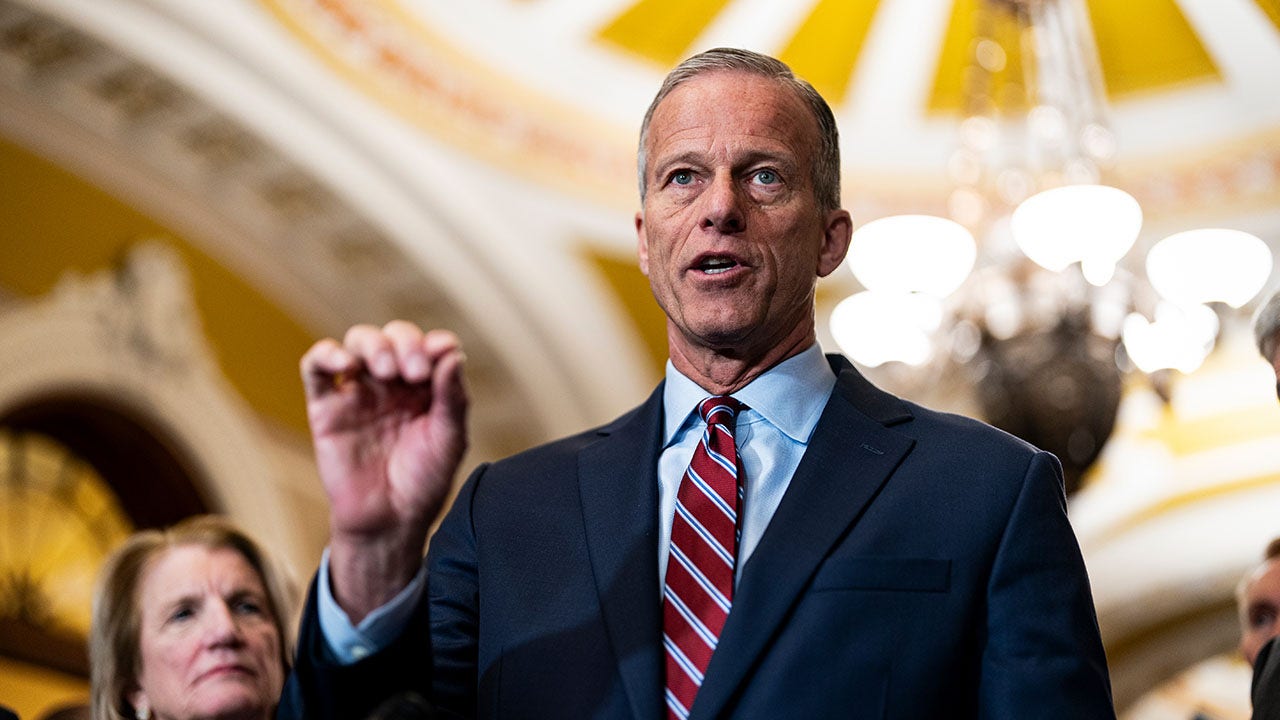
Senate Majority Leader John Thune, R-S.D., was on the floor when the Senate cut town a little more than two weeks ago. Did Thune hornswoggle his fellow Republicans into recessing the Senate for five weeks in the dead of night? Hardly. In fact, even those Republicans who would have liked senators to remain in Washington to debate the SAVE America Act were in on Thune’s plan, allowing the Senate to abandon town for most of August and nearly half of September.
The Senate was meeting at 2:07 a.m. that Saturday, on the verge of commencing a vote series to confirm Attorney General Todd Blanche and approve the Russia sanctions bill. That’s when Thune asked the following on the Senate floor: “When the Senate completes its business on Aug. 8, to meet for pro forma sessions only at 10 a.m. on Monday, Aug. 10, 2026. 8 a.m. on Thursday, Aug. 13, 2026,” requested Thune.
Sen. Bernie Moreno, R-Ohio, was presiding over the Senate at the time. “Without objection?” asked Moreno of the body when Thune concluded. There was none. Believe it or not, Thune and all other 99 senators agreed to leave Washington. In fact, that’s the only way it could have happened.
Unanimous Consent and Senate Procedures
The Senate conducts much of its business via “unanimous consent.” The Senate is a body of equals. All 100 senators wield nearly the same power. The Senate relies on “unanimous consent,” the blessing of all 100 members, to conduct quotidian tasks, like going in and out of session or what time to meet. The Senate occasionally approves bills — sometimes even big ones — by unanimous consent if all senators agree.
But unanimous consent is just that. All 100 members must be on the same page. And if you have 99 senators in agreement and one holdout, well, that’s not unanimous consent. All it takes is the objection of a solitary member to sidetrack a “unanimous consent” request on the floor. And note that despite the advocacy by some Republican senators for the body to remain in session during August, no one lodged an objection.
That’s because Thune pre-baked a series of unanimous consent requests offstage before he came to the floor. Late in the evening of Friday, August 7, Thune ran what’s called a “hotline” in the Senate. He proposed a series of votes to confirm Blanche, OK Russia sanctions and consider a few other items. If any senator had a problem with Thune’s hotline, they should let leadership know before 11:30 p.m. that night. Otherwise, Thune would go to the floor and “propound” the unanimous consent request for the upcoming vote sequence.
This package included a plan for those aforementioned pro forma sessions. And, for the Senate to hold off on any votes until Monday, night, September 14. Thune also locked in the procedural vote on the cryptocurrency measure for September 15. Anyone could have objected offstage. They didn’t. That would have scuttled the entire enterprise.
Anyone could have objected on the Senate floor when Thune made the unanimous consent requests in real time. That didn’t happen either. That’s why both Moreno and Lummis asked the body if there was “an objection.” Or, they declared “without objection, so ordered.”
The Test Vote on Voter ID
However, those pushing for the Senate to remain in session to debate the SAVE America Act did manage a minor victory. Part of Thune’s unanimous consent request at 2:07 a.m. that Saturday included a test vote on a voter ID bill pushed by Sen. Jon Husted, R-Ohio. This package addressed some of the provisions desired by Trump. It was also helpful to Husted, who faces a tough election this fall against former Sen. Sherrod Brown, D-Ohio. And, the test vote would get senators on the record voting for or against voter ID.
All Republican senators voted yes. All Democratic senators voted no. Republicans will likely deploy this roll call vote against their Democratic colleagues this fall. The vote secured more than a simple majority in the Senate. But here’s the catch: part of Thune’s unanimous consent request — pre-agreed to by all 100 senators — dictated that the test vote on the Husted measure was subject to a 60 vote threshold. Republicans only command 53 votes in the Senate. So without Democratic assistance, the Husted plan was doomed from the start.
So the Senate is long gone. And will continue to be gone for a few weeks. This wasn’t because of some backroom plan cooked up by Thune. This wasn’t just Thune going against the wishes of conservative senators who suggested the Senate remain in session. This wasn’t just Thune working against the president.
Those unanimous consent requests reflected the will of all 100 senators. Anyone on either side could have blocked the proposals. But they didn’t. And when someone asks why the Senate didn’t remain in session this month to address the SAVE America Act, you can tell them that all 100 senators agreed to call it quits and go home at 4:57 a.m. on Saturday, August 8.
Senate Recess and Political Strategy
The Senate’s recess was not a surprise. It was a calculated move, with all 100 senators agreeing to the schedule. This means that the decision to recess was not driven by a single leader or a faction, but by the collective agreement of the entire body. Despite the noise from some Republicans and President Trump, the Senate moved forward with its plan without objection.
The process of recessing was handled through unanimous consent, a procedural tool that requires the agreement of all 100 senators. This means that no one could have stopped the recess unless they had objected. But no one did, even those who wanted the Senate to stay in session. This suggests that the decision to recess was not a surprise, but a planned and agreed-upon move.
The test vote on the voter ID bill was a strategic move by Republicans, even though it failed due to the 60-vote threshold. The vote allowed Republicans to get on record supporting voter ID, which they can use in future elections. However, the failure of the bill also highlights the limitations of the Senate’s procedural rules, which require a supermajority for certain actions.
The Senate’s actions show how political decisions are often made through procedural agreements rather than open debate. The recess was not a result of a single leader’s decision, but a collective agreement. This means that the political process is not always as dramatic as it seems, but rather a series of calculated moves and procedural steps.
Procedural Politics and Collective Agreement
The Senate’s decision to recess was not a surprise. It was a calculated move, with all 100 senators agreeing to the schedule. This means that the decision to recess was not driven by a single leader or a faction, but by the collective agreement of the entire body. Despite the noise from some Republicans and President Trump, the Senate moved forward with its plan without objection.
The process of recessing was handled through unanimous consent, a procedural tool that requires the agreement of all 100 senators. This means that no one could have stopped the recess unless they had objected. But no one did, even those who wanted the Senate to stay in session. This suggests that the decision to recess was not a surprise, but a planned and agreed-upon move.
The test vote on the voter ID bill was a strategic move by Republicans, even though it failed due to the 60-vote threshold. The vote allowed Republicans to get on record supporting voter ID, which they can use in future elections. However, the failure of the bill also highlights the limitations of the Senate’s procedural rules, which require a supermajority for certain actions.
The Senate’s actions show how political decisions are often made through procedural agreements rather than open debate. The recess was not a result of a single leader’s decision, but a collective agreement. This means that the political process is not always as dramatic as it seems, but rather a series of calculated moves and procedural steps.
The Senate’s actions also highlight the role of procedural rules in shaping political outcomes. Without the support of all 100 senators, the recess could not have happened. This shows that even in a body of equals, decisions are made through consensus and procedural agreements, not through majority rule alone.