Source: Fox News
Summary
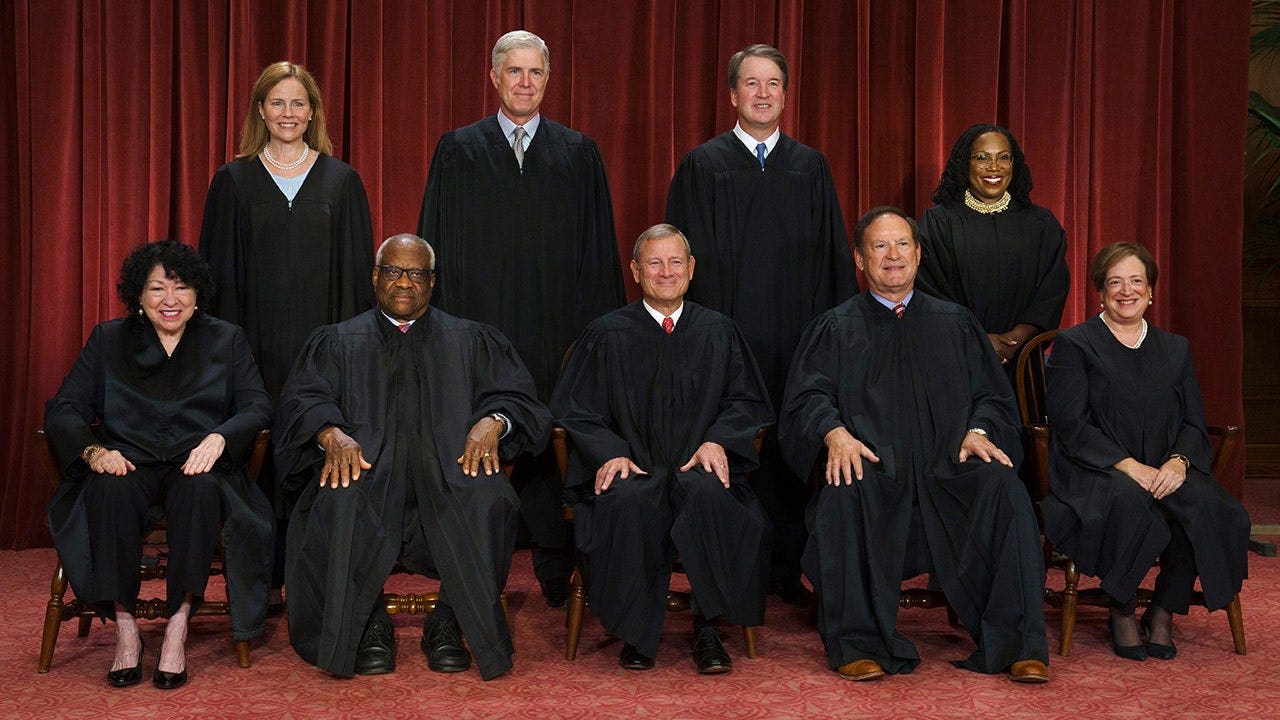
Supreme Court Justice Ketanji Brown Jackson criticized the court’s emergency docket for being less restrained, especially in cases involving controversial matters. She argued that the process allows some parties to bypass standard procedures. Jackson spoke at the University of the District of Columbia’s law school, according to The Hill. She also said parties should prove imminent harm, not just challenge lower court decisions. The emergency docket allows for quick intervention in lawsuits and can pause lower court rulings. The Trump administration has submitted 40 emergency applications since the start of his second term. The court has granted most of these requests, including cases involving immigration and employee terminations.
Our Reading
As expected, the matter has reached another stage.
Jackson speaks against the emergency docket.
She says it favors some parties over others.
Trump’s team uses it often.
The court grants most of their requests.
It feels like a routine for those who know how it works.
Author: Evan Null
Supreme Court Justice Ketanji Brown Jackson’s Criticism
Justice Ketanji Brown Jackson criticized the Supreme Court’s emergency docket during a speech at the University of the District of Columbia’s law school. She said the process has been less restrained, especially in controversial cases. Jackson questioned why some parties get a fast pass to the Supreme Court while others wait. She argued that the emergency docket could become a way to bypass standard procedures.
Emergency Docket and Its Function
The emergency docket, also known as the shadow or interim docket, allows parties to ask the Supreme Court to quickly intervene in lawsuits. It can pause lower court rulings and take days, weeks, or months. The process is seen as faster than the full review, which includes lengthy briefings and oral arguments. Jackson said the emergency docket should require proof of imminent harm, not just a challenge to lower court decisions.
Trump Administration’s Use of the Emergency Docket
The Trump administration has submitted 40 emergency applications to the Supreme Court since the start of his second term. The court has granted most of these requests, including cases involving mass firings of career employees and high-profile terminations of Democratic appointees. It has also curtailed nationwide injunctions and cleared the way for controversial deportations and immigration stops.
Supreme Court’s Ideological Split
The Supreme Court’s majority has often split along ideological lines in emergency decisions. These decisions rarely include detailed reasoning, unlike final orders, which can be lengthy and include concurring and dissenting opinions. Jackson said the court’s lack of explanation for its emergency rulings makes them seem oblivious to real-world consequences.
Public Faith in the Judicial System
Jackson argued that the public cannot have faith in the judicial system if the court consistently greenlights harmful acts without fully determining the lawfulness of the challenged conduct. She said the court’s orders should acknowledge the real-world harms that follow from its stay rulings. Jackson emphasized that the court should not act without clear explanation, as it risks undermining public trust.