Source: Fox News
Summary
The Supreme Court ruled in favor of the Trump administration on mail-in voting restrictions, allowing federal agencies to proceed with parts of the election-integrity order. Former White House deputy counsel Gene Hamilton said the ruling means states challenging the order must show concrete harm, not just potential future issues. The decision allows the Postal Service, Department of Homeland Security, and Department of Justice to implement new protocols, including voter citizenship checks and ballot monitoring. Some states, like Pennsylvania and Arizona, have vowed to continue legal battles against the measures. The White House said the actions are necessary to protect election security.
Our Reading
As expected, the matter has reached another stage.
States prepare lawsuits as agencies move forward with new rules.
Hamilton says courts won’t stop federal plans based on future fears.
States claim harm, but courts say it’s not enough.
Another round of legal fights is already planned.
Author: Evan Null
Trump’s Mail-In Voting Strategy
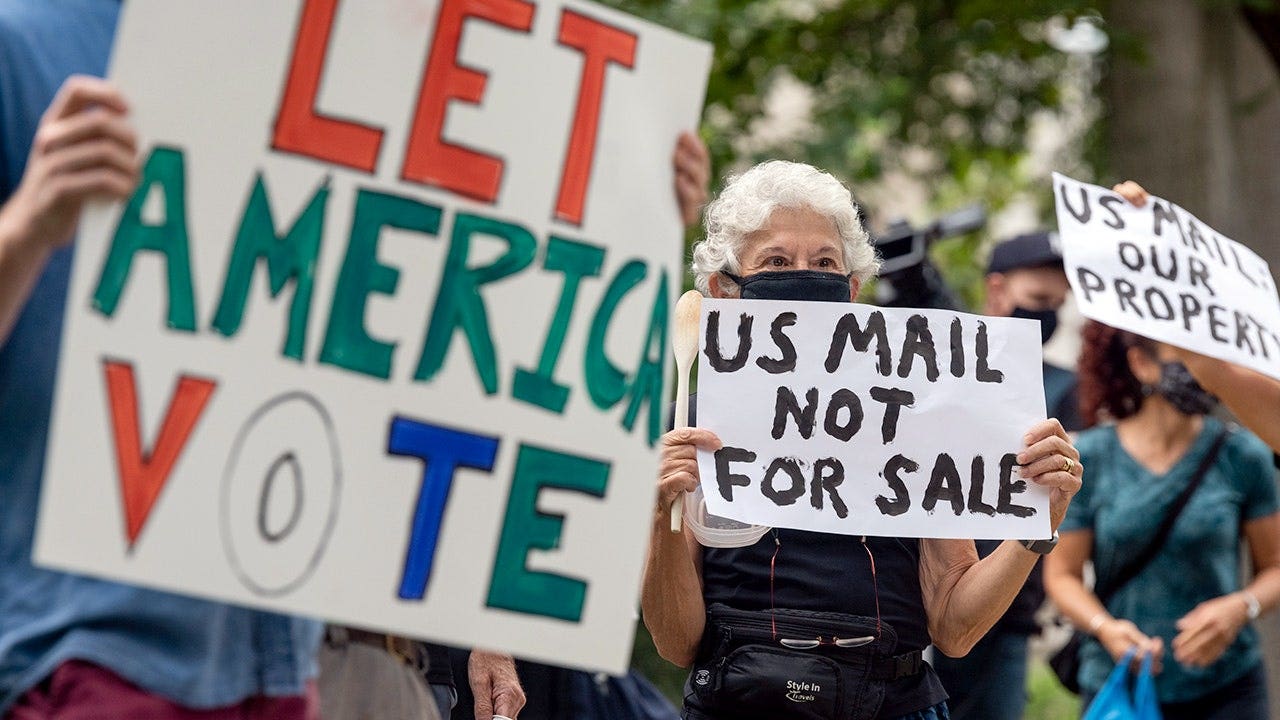
President Donald Trump’s effort to change America’s mail-in-voting system is continuing after the Supreme Court issued a ruling in favor of the White House. The court’s decision allows federal agencies to move forward with parts of Trump’s election-integrity order, including new ballot-mail standards and efforts involving state citizenship lists.
Former White House deputy counsel Gene Hamilton said the ruling means states challenging the order must show concrete harm, not just potential future issues. He said the court’s decision was predictable and in line with expectations.
The Supreme Court rejected challenges from several states, which had claimed harm from the new protocols. A Boston federal judge had initially agreed with them, but the Supreme Court said the states couldn’t block federal actions based on future possibilities.
Hamilton said the legal landscape could change quickly once Trump’s actions get underway, but he emphasized that states must show a concrete or sufficiently imminent injury rather than rely on predictions about what agencies might eventually do.
The Postal Service, Department of Homeland Security, and Department of Justice are now preparing to implement new protocols, including voter citizenship checks and ballot monitoring. Some states, like Pennsylvania and Arizona, have vowed to continue legal battles against the measures.
Supreme Court Ruling and Legal Challenges
The Supreme Court’s decision allowed the Trump administration to proceed with its mail-in voting restrictions, despite challenges from several states. The ruling was seen as a victory for the White House, as it cleared the way for federal agencies to implement new protocols.
Former White House deputy counsel Gene Hamilton said the court’s decision was predictable and in line with expectations. He emphasized that states challenging executive action must show a concrete or sufficiently imminent injury rather than rely on predictions about what agencies might eventually do.
The decision came after a Boston federal judge had initially sided with the states, but the Supreme Court rejected their challenge. The court said the states couldn’t block federal actions based on future possibilities, as no action had taken place yet.
Hamilton said the legal landscape could change quickly once Trump’s actions get underway, but he emphasized that states must show a concrete or sufficiently imminent injury rather than rely on predictions about what agencies might eventually do.
Some states, like Pennsylvania and Arizona, have vowed to continue legal battles against the measures. California Attorney General Rob Bonta and Pennsylvania Governor Josh Shapiro criticized the ruling, saying it would make it harder for Americans to vote.
States’ Responses and Legal Battles
Several states have responded to the Supreme Court’s ruling by vowing to continue legal battles against Trump’s mail-in voting restrictions. Pennsylvania Governor Josh Shapiro and California Attorney General Rob Bonta criticized the decision, saying it would make it harder for Americans to vote.
Shapiro said the Supreme Court’s decision does not mean Trump’s attempt to restrict mail-in voting will go forward. He emphasized that Trump does not run elections in Pennsylvania or any other state. Arizona Attorney General Kris Mayes also vowed to fight the ruling, saying, “Over my dead body is that rule going to go into effect.”
The states that challenged the order, including Pennsylvania and Arizona, had claimed harm from the new protocols. However, the Supreme Court said they couldn’t block federal actions based on future possibilities, as no action had taken place yet.
Hamilton said the legal landscape could change quickly once Trump’s actions get underway, but he emphasized that states must show a concrete or sufficiently imminent injury rather than rely on predictions about what agencies might eventually do.
The White House said the actions are necessary to protect election security and ensure only Americans are electing American leaders. A spokesperson for the White House said the administration will continue to lawfully enact the agenda President Trump was elected on.
Implementation of New Protocols
The Supreme Court’s ruling allows federal agencies to proceed with parts of Trump’s election-integrity order, including new ballot-mail standards and efforts involving state citizenship lists. The Postal Service, Department of Homeland Security, and Department of Justice are now preparing to implement new protocols, including voter citizenship checks and ballot monitoring.
Gene Hamilton, former White House deputy counsel, said the ruling means states challenging the order must show concrete harm, not just potential future issues. He said the court’s decision was predictable and in line with expectations.
The Postal Service had previously proposed a ballot-mail rule requiring standardized envelopes and tracking barcodes. However, the agency has not implemented the rule for the midterms unless the litigation is resolved. A separate injunction obtained in litigation by the League of Women Voters currently blocks USPS from implementing the rule.
Hamilton said the states that challenged the order had claimed harm from the new protocols, but the Supreme Court said they couldn’t block federal actions based on future possibilities. He emphasized that states must show a concrete or sufficiently imminent injury rather than rely on predictions about what agencies might eventually do.
The White House said the actions are necessary to protect election security and ensure only Americans are electing American leaders. A spokesperson for the White House said the administration will continue to lawfully enact the agenda President Trump was elected on.
Future Legal and Political Implications
The Supreme Court’s ruling allows federal agencies to proceed with parts of Trump’s election-integrity order, but it also sets the stage for more legal battles. Gene Hamilton, former White House deputy counsel, predicted that disputes would lead to another round of litigation as agencies make their next moves.
He said the legal landscape could change quickly once Trump’s actions get underway, but he emphasized that states must show a concrete or sufficiently imminent injury rather than rely on predictions about what agencies might eventually do. Hamilton also said the district judge’s decision was an “egregious” misread of Article III powers.
Some states, like Pennsylvania and Arizona, have vowed to continue legal battles against the measures. California Attorney General Rob Bonta and Pennsylvania Governor Josh Shapiro criticized the ruling, saying it would make it harder for Americans to vote. Arizona Attorney General Kris Mayes also vowed to fight the ruling, saying, “Over my dead body is that rule going to go into effect.”
The White House said the actions are necessary to protect election security and ensure only Americans are electing American leaders. A spokesperson for the White House said the administration will continue to lawfully enact the agenda President Trump was elected on.
Hamilton predicted that more fighting would come as agencies move forward with new protocols. He said the legal system would need to go through lower court proceedings before the issue is fully resolved.