Source: Fox News
Summary
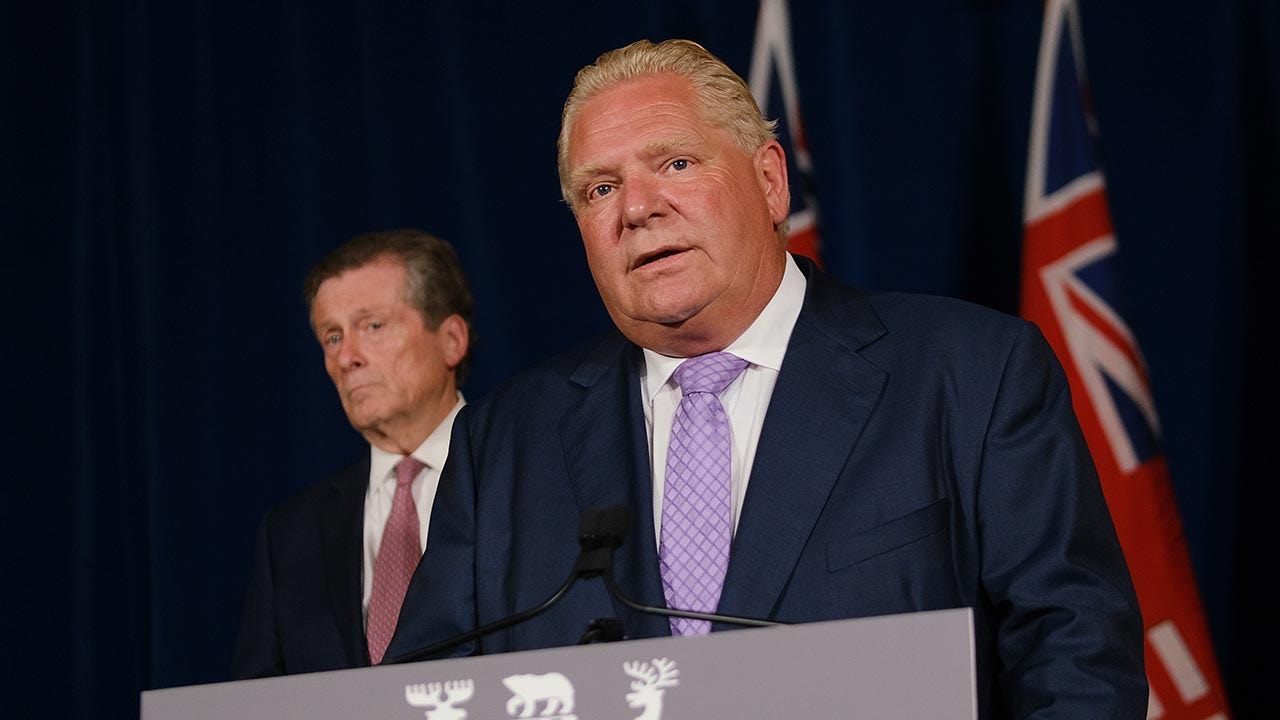
Ontario Premier Doug Ford criticized President Donald Trump over trade tensions, calling for stronger action against U.S. tariffs on Canadian goods. Trump responded by mocking Ford, comparing him unfavorably to his late brother, former Toronto Mayor Rob Ford. The dispute involves ongoing tariff threats, with new 50% U.S. tariffs on Canadian goods taking effect in August and potential further tariffs on autos in 2027. Canada plans to retaliate in September. Trump also suggested renaming Lake Ontario “Lake America.”
Our Reading
As expected, the matter has reached another stage.
Ford calls Trump a fool, then says he will outbuy him.
Trump mocks Ford, then compares him to his brother.
Both men talk about tariffs, then talk about names.
They repeat the same lines, just louder.
Author: Evan Null
Trade Tensions Escalate
The trade tensions between the U.S. and Canada have grown more intense as both sides continue to exchange threats and criticisms. Ontario Premier Doug Ford has taken a strong stance against President Donald Trump, vowing to fight back against proposed tariffs on Canadian goods. Trump, in turn, has dismissed Ford as unimpressive and has continued to push for harsher trade measures against Canada.
The situation has been marked by a series of escalating exchanges, with both leaders using strong language to assert their positions. Ford has accused Trump of being out of touch with Canadian interests, while Trump has claimed that Canada is taking advantage of the U.S. and must be brought into line.
The tariff dispute has been ongoing for months, with Trump threatening new tariffs on Canadian autos and auto parts. These threats have been met with resistance from Canadian officials, who have warned that they will take retaliatory action if the tariffs are implemented.
Trump has also made a number of other statements that have added to the tension, including a proposal to rename Lake Ontario “Lake America.” This move has been seen as another attempt to assert U.S. dominance in the region.
Despite the growing tensions, both sides have continued to engage in a cycle of threats and counter-threats, with little sign of a resolution in sight. The situation remains a key point of contention between the two nations, with both leaders showing no signs of backing down.
Political Rhetoric and Performance
The exchange between Trump and Ford has become a familiar routine, with each side using strong language to assert their position. Ford’s blunt remarks about Trump have been met with Trump’s usual brand of criticism, which often includes personal attacks and comparisons to others.
Both leaders have used the tariff issue as a way to rally support and demonstrate their strength. Trump has framed the issue as a matter of national pride, while Ford has positioned himself as a defender of Canadian interests.
The rhetoric has become increasingly heated, with each side using the same arguments and threats repeatedly. This pattern has become a kind of performance, with both leaders playing their roles in a way that feels expected and familiar.
The use of strong language and personal attacks has become a standard part of the political discourse, with both sides using it to assert their dominance and influence. This has created a cycle of escalation that continues to play out in the public eye.
The situation has also highlighted the broader tensions between the U.S. and Canada, with each side trying to assert its position in the relationship. The repeated threats and counter-threats have become a way for both leaders to show their strength and commitment to their respective causes.
Public Reactions and Media Coverage
The media has played a significant role in shaping the public perception of the trade tensions between the U.S. and Canada. Fox News, in particular, has been a major source of coverage, highlighting the exchanges between Trump and Ford and the broader implications of the tariff dispute.
Public reactions have been mixed, with some supporting Trump’s stance on trade and others criticizing his approach. Ford’s strong words have been seen as a sign of Canadian resistance to U.S. pressure, while Trump’s comments have been viewed as an attempt to assert U.S. dominance.
The media has also covered the broader context of the dispute, including the history of U.S.-Canada trade relations and the potential impact of the tariffs on both countries. This coverage has helped to keep the issue in the public eye and has contributed to the ongoing debate.
As the situation continues to unfold, the media’s role in shaping public opinion remains significant. The coverage has helped to highlight the key points of contention and has provided a platform for both sides to present their arguments.
The ongoing media coverage has also contributed to the sense of routine and repetition that has come to define the exchange between Trump and Ford. Each new development is covered in a way that feels familiar, reinforcing the idea that this is a predictable and expected part of the political process.
Historical Context and Future Implications
The current trade tensions between the U.S. and Canada have roots in a long history of economic and political relations between the two nations. While they have generally maintained a strong partnership, the issue of trade has often been a point of contention, with each side seeking to protect its own interests.
Trump’s approach to trade has been marked by a focus on protecting American industries and reducing what he sees as unfair trade practices. This has led to a series of tariffs and other measures aimed at pressuring other countries to change their trade policies.
The current dispute with Canada is part of a broader pattern of trade tensions that have emerged under Trump’s administration. Similar issues have arisen with other countries, including Mexico and China, and have often been met with strong reactions from the affected nations.
The future implications of the current dispute remain uncertain. While both sides have shown a willingness to escalate the situation, there is also a possibility that a resolution could be reached through negotiations. However, the current tone of the exchange suggests that a quick resolution is unlikely.
The ongoing tensions have also raised questions about the future of U.S.-Canada relations, with some fearing that the current approach could lead to a breakdown in the relationship. However, others believe that the two countries will continue to find ways to work together despite their differences.
Conclusion and Observations
The ongoing trade tensions between the U.S. and Canada have become a recurring theme in the political discourse, with both sides using strong language and threats to assert their positions. The exchanges between Trump and Ford have followed a familiar pattern, with each side responding to the other’s statements in a way that feels expected and predictable.
The situation has also highlighted the broader issues of trade policy and the challenges of maintaining a strong relationship between two close allies. The repeated threats and counter-threats have become a kind of performance, with both leaders playing their roles in a way that feels familiar to the public.
The media has played a key role in shaping the public perception of the dispute, with coverage that emphasizes the key points of contention and the potential impact of the tariffs. This has contributed to the sense of routine and repetition that has come to define the exchange between Trump and Ford.
As the situation continues to unfold, it remains to be seen how the tensions will develop and whether a resolution can be reached. However, the current pattern suggests that the dispute is likely to continue for some time, with both sides showing no signs of backing down.
The ongoing exchange between Trump and Ford has become a familiar part of the political landscape, with each side using the same arguments and threats repeatedly. This has created a sense of routine that is both expected and predictable, reinforcing the idea that this is a standard part of the political process.