Source: Fortune.com
Summary
The Trump administration suspended Microsoft and other companies from a program allowing foreign workers to apply for green cards, citing concerns that the program displaces American workers. Vice President JD Vance accused Microsoft of abusing H-1B visas and replacing U.S. employees with foreign workers. Microsoft stated that most of its H-1B applications were for existing employees. The administration also targeted universities over J-1 visa usage, accusing them of facilitating foreign student programs that undermine domestic workers.
Our Reading
The numbers tell one story.
Vance claims Microsoft replaced 6,000 U.S. workers with 6,300 H-1B visa holders.
Microsoft says most H-1B applications were for existing employees, not new hires.
The administration targets tech firms and universities, framing them as threats to American workers.
Corporate responses are procedural, emphasizing compliance and existing policies.
Author: Evan Null
Trump’s Suspension of Microsoft and Others
The Trump administration announced the suspension of Microsoft and other companies from a program that allows foreign workers to apply for green cards. This move is part of a broader effort to limit the influx of foreign workers and protect American jobs. The administration accused Microsoft of using H-1B visas to replace American workers with foreign labor, a claim the company denies.
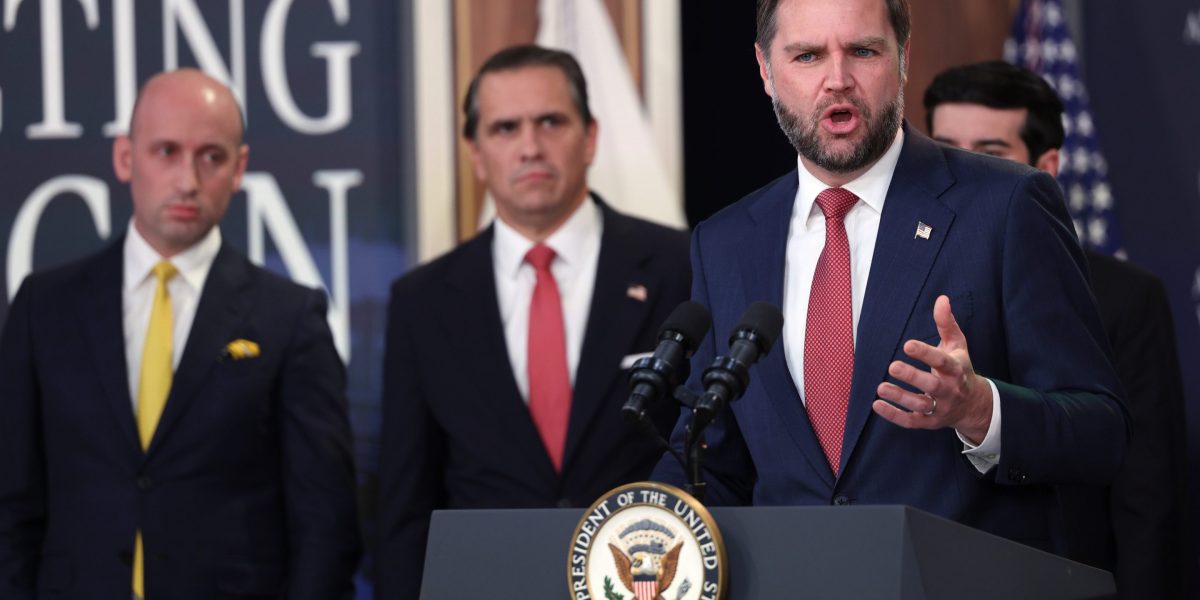
Vice President JD Vance was the main voice behind the announcement, stating that the program allows companies to replace American workers with what he called “foreign indentured servants.” He cited Microsoft as the most frequent user of the program, claiming the company replaced 6,000 American workers with 6,300 H-1B visa holders. Microsoft responded by stating that most of its H-1B applications were for existing employees, not new hires.
The administration also targeted universities, accusing them of abusing J-1 visas to bring in international students. Vance singled out nine universities for further investigation, suggesting they used the program in greater proportions than their counterparts. The universities did not immediately respond to requests for comment.
This move by the Trump administration reflects a broader strategy to limit the influence of foreign workers and students in the U.S. labor market. It is part of a larger effort to protect American jobs and ensure that the H-1B and J-1 visa programs serve the national interest.
The suspension of Microsoft and other companies from the green card program is a significant development in the ongoing debate over immigration policy and its impact on the U.S. workforce. It highlights the administration’s focus on protecting domestic workers and limiting the use of foreign labor in key industries.
Microsoft’s Response and H-1B Visa Usage
Microsoft, one of the largest users of H-1B visas, responded to the administration’s claims by stating that the majority of its H-1B applications were for existing employees, not new hires. The company emphasized that these applications were for extending or changing the status of current employees, not for bringing in new foreign workers.
According to data from U.S. Citizenship and Immigration Services, Microsoft is the fifth-largest employer using H-1B visas, with Amazon leading the list. Microsoft’s statement highlighted that only 1% of its U.S. workforce consisted of new H-1B visa holders, and these individuals were already legally in the United States.
The company also stated that it only files H-1B petitions for individuals who meet the rigorous standards of the visa category. This response aims to counter the administration’s claims that Microsoft is exploiting the program to replace American workers with foreign labor.
Microsoft’s stance reflects the broader debate over the H-1B visa program, which is designed to fill high-skilled job gaps but is often criticized for being used to undercut American workers. The administration’s actions against Microsoft and other tech firms underscore the ongoing tension between immigration policy and labor market concerns.
The company’s response highlights the complexity of the H-1B visa program and the challenges of balancing the needs of American workers with the demands of the tech industry. It also underscores the importance of transparency and accountability in the use of these visas.
Trump’s Broader Immigration Policy
The Trump administration’s actions against Microsoft and other tech firms are part of a broader strategy to reform immigration policy and protect American jobs. The administration has consistently targeted programs that allow foreign workers and students to enter the U.S., arguing that these programs undermine domestic employment and economic stability.
In addition to the green card program, the administration has also proposed a $70,000 fee for international students seeking to work in the U.S. through the Optional Practical Training (OPT) program. This move is aimed at reducing the number of foreign students entering the workforce and protecting American workers from competition.
Vice President JD Vance has been a vocal critic of these programs, accusing universities and tech firms of exploiting the system to bring in foreign labor. He has called for stricter enforcement of existing policies and has pushed for new regulations to limit the use of H-1B and J-1 visas.
The administration’s approach reflects a broader ideological stance on immigration, emphasizing the need to prioritize American workers and ensure that immigration policies serve the national interest. This has led to increased scrutiny of companies and institutions that rely on foreign labor and students.
The ongoing debate over immigration policy highlights the challenges of balancing economic growth with the need to protect domestic workers. It also underscores the political nature of immigration reform and the influence of executive actions on the labor market.
Impact on Tech Firms and Universities
The suspension of Microsoft and other tech firms from the green card program has significant implications for the tech industry. These companies rely heavily on H-1B visas to fill high-skilled job positions, and the administration’s actions could disrupt their ability to attract and retain foreign talent.
Several other tech firms, including Adobe, Cognizant, Infosys, Tata, Wipro, HCL, and Capgemini, were also suspended from the program. These companies have not yet responded to the administration’s actions, but their reliance on H-1B visas suggests that they may face challenges in maintaining their current workforce.
The administration’s targeting of universities over J-1 visa usage also has implications for higher education institutions. These schools rely on international students to fill enrollment gaps and generate revenue, and the proposed $70,000 fee for OPT programs could have a significant impact on their financial stability.
The suspension of these programs highlights the growing tension between immigration policy and the needs of the tech industry and higher education sector. It also underscores the administration’s focus on protecting American workers and limiting the influence of foreign labor in key industries.
The long-term impact of these actions remains to be seen, but they signal a shift in the administration’s approach to immigration and its potential effects on the U.S. labor market.
Legal and Political Challenges
The Trump administration’s actions against Microsoft and other tech firms are likely to face legal and political challenges. The proposed $70,000 fee for international students and the suspension of companies from the green card program are expected to be contested in court, as similar measures have been struck down in the past.
Legal experts have already raised concerns about the administration’s approach, arguing that it may be unconstitutional or violate existing immigration laws. The previous attempt to increase H-1B visa fees to $100,000 was struck down by a federal judge, and the new proposed fee is expected to face similar challenges.
Politically, the administration’s actions have drawn criticism from both sides of the aisle, with some arguing that they are overly restrictive and others supporting the focus on protecting American workers. The debate over immigration policy continues to be a contentious issue in U.S. politics, with significant implications for the labor market and the economy.
The legal and political challenges facing the administration’s immigration policies highlight the complexity of the issue and the need for careful consideration of the long-term effects on the U.S. workforce and economy.
The outcome of these challenges will have a significant impact on the future of immigration policy and the role of foreign workers in the U.S. labor market. It also underscores the importance of balancing economic growth with the need to protect domestic workers and ensure fair treatment for all.