Source: Fortune.com
Summary
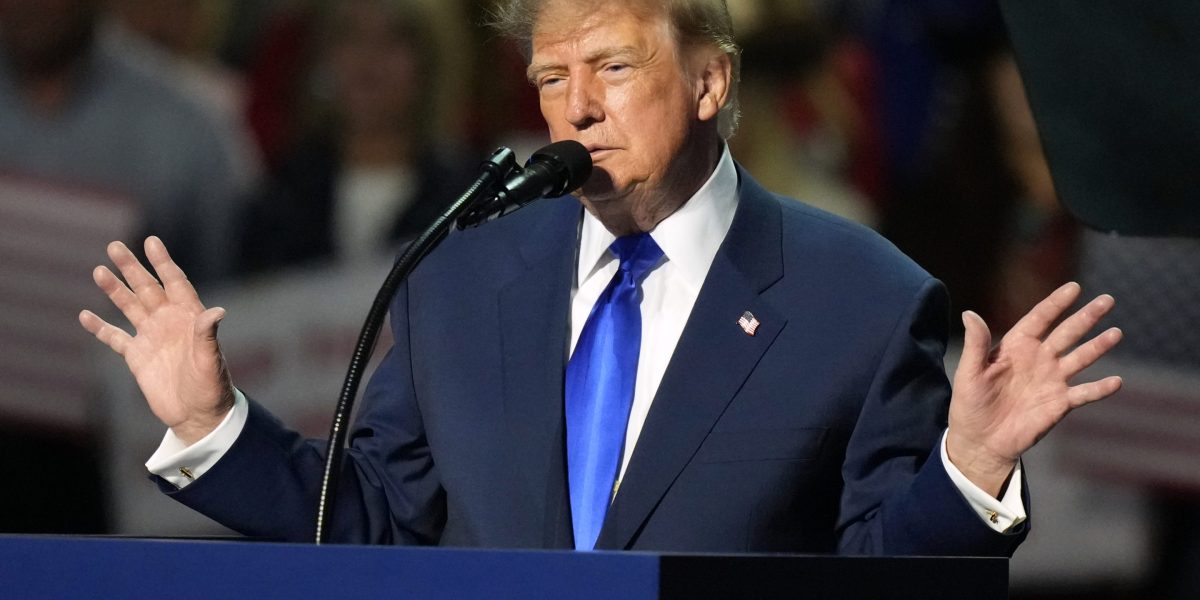
President Donald Trump pledged to give every American adult $5,000 if Republicans win the midterms, calling it the “Trump Dividend.” The proposal, which would cost over $1 trillion, requires congressional approval and faces skepticism over feasibility. Vice President JD Vance attempted to downplay the plan, suggesting it would not benefit the wealthy. Analysts criticized the idea, noting the U.S. runs a $2 trillion deficit and has a $40 trillion debt. The move echoes past efforts by Trump to use financial incentives to influence elections.
Our Reading
The numbers tell one story.
Trump promises $5,000 to every adult if Republicans win.
The plan would cost over $1 trillion and needs Congress.
Vance tries to limit the scope, saying it won’t go to the wealthy.
Goldwein calls the idea “laughable” given the deficit.
The original observation: A dividend for voters, not shareholders.
Author: Evan Null
Trump’s $5,000 Dividend Proposal
President Donald Trump announced a plan to give every American adult $5,000 if Republicans win the midterms, calling it the “Trump Dividend.” The proposal, which would cost over $1 trillion, is seen as a desperate attempt to boost Republican chances in the November elections. Trump framed the payments as a reward for economic success, comparing them to corporate shareholder dividends.
Vice President JD Vance attempted to temper the promise, suggesting the payments would not go to the wealthy. He also proposed funding the plan through tariff revenues, though the amount would far exceed what the U.S. has collected from such measures. The White House did not comment on the proposal, and Congress would need to approve it.
Analysts, including Marc Goldwein of the Committee for a Responsible Federal Budget, criticized the idea, noting the U.S. runs a $2 trillion annual deficit and has a $40 trillion debt. Goldwein called the notion of fiscal success “backwards and bordering on laughable.” The plan has drawn comparisons to Elon Musk’s efforts to buy votes in a Wisconsin state Supreme Court race.
Trump has previously discussed similar ideas, including a $2,000 dividend and a $1,776 “warrior dividend” for military members. This latest proposal is tied directly to electoral outcomes, a shift from past discussions. The plan would be legal, as it would go to all adults regardless of voting behavior, according to attorney John Day.
Republicans face strong headwinds in the midterms, with Trump’s unpopularity and public opposition to the war in Iran complicating their efforts. Despite this, some Republicans, like Senator Bernie Moreno, have expressed support for the plan, calling it a way to secure a win in November.
Financial and Political Implications
The $5,000 dividend would exceed the total amount of direct payments made during the Trump administration’s COVID-19 relief efforts. It is seen as a bold political move, but one that could further strain the U.S. budget. The plan would require Congress to approve the funding, which is unlikely given the current fiscal climate and the country’s growing debt.
Trump’s proposal has drawn criticism for its lack of feasibility. The U.S. is running a massive deficit, and the idea of distributing $5,000 to every adult is seen as unrealistic. Analysts argue that the plan is more of a campaign promise than a concrete policy, and it may not be legally enforceable without congressional approval.
Despite the criticism, some Republicans have embraced the idea, seeing it as a way to energize voters and counter the party’s declining fortunes. The plan has also raised questions about the role of money in politics and whether such proposals could become a new norm in future elections.
With the national debt exceeding $40 trillion, the financial implications of the plan are significant. Critics argue that the proposal is not only unrealistic but also irresponsible, given the country’s current economic challenges. The move has also sparked debate about the potential for future similar proposals and how they might impact the political landscape.
Ultimately, the plan reflects a broader trend in modern politics, where financial incentives are used as a tool to influence voter behavior. Whether it will be effective remains to be seen, but it has already generated significant attention and debate.
Political Strategy and Public Reaction
Trump’s $5,000 dividend proposal is part of a broader strategy to energize Republican voters and counter the party’s declining popularity. The plan is seen as a direct attempt to sway voters in the upcoming midterms, with the promise of financial incentives serving as a powerful motivator. However, the feasibility of the plan remains in question, and many analysts doubt its chances of success.
Public reaction to the proposal has been mixed. While some Republicans have expressed support, others have raised concerns about the financial implications. The plan has also drawn criticism from Democrats, who argue that it is an unrealistic and irresponsible proposal that would further strain the U.S. economy.
The proposal has also sparked a broader conversation about the role of money in politics. Critics argue that such proposals could set a dangerous precedent, encouraging other politicians to use financial incentives as a way to influence voters. This has raised concerns about the potential for future similar proposals and how they might impact the political landscape.
Despite the criticism, the plan has already generated significant media attention and political discussion. It has also highlighted the challenges facing the Republican Party in the midterms, as they struggle to maintain their narrow majority in the House and Senate. The proposal may be seen as a last-ditch effort to turn the tide in their favor.
As the midterms approach, the plan has become a key talking point in the political discourse. Whether it will be effective in swaying voters remains to be seen, but it has already had a significant impact on the political conversation.
Historical and Comparative Context
Trump’s $5,000 dividend proposal is not without precedent. The president has previously used financial incentives as a political tool, including a $1,776 “warrior dividend” for military members. These past efforts have been met with mixed results, and the latest proposal is seen as an extension of this strategy.
The plan also draws comparisons to other political efforts, such as Elon Musk’s attempt to buy votes in a Wisconsin state Supreme Court race. In that case, Musk distributed million-dollar checks to voters, but the effort ultimately failed. Critics argue that Trump’s proposal is similarly unrealistic and unlikely to succeed.
Historically, the president’s party has struggled in midterms, and Trump has been looking for ways to defy this trend. The $5,000 dividend is one of his more unconventional strategies, and it has generated significant debate about the role of money in politics. Some argue that such proposals could become a new norm in future elections, while others see them as a desperate attempt to gain an advantage.
The proposal has also raised questions about the feasibility of large-scale financial incentives in a political context. With the U.S. facing a massive deficit and growing debt, the idea of distributing $5,000 to every adult is seen as unrealistic by many analysts. The plan may be more of a campaign promise than a concrete policy, and its chances of being implemented are uncertain.
As the midterms approach, the proposal has become a key talking point in the political discourse. It has also highlighted the challenges facing the Republican Party and the broader political landscape. Whether it will be effective in swaying voters remains to be seen, but it has already had a significant impact on the political conversation.
Legal and Practical Considerations
While Trump’s $5,000 dividend proposal has generated significant attention, its legal and practical feasibility remains uncertain. The plan would require congressional approval, and it is unclear whether lawmakers would support such a large-scale financial incentive. The U.S. is already running a $2 trillion deficit, and the proposal would further strain the budget.
Legal experts have noted that the plan would be difficult to implement without congressional action. While the payments would go to all adults regardless of voting behavior, the process of distributing such a large sum would be complex and time-consuming. Additionally, the plan would require a significant amount of funding, which is unlikely to be available given the current fiscal climate.
Some legal analysts argue that the plan is more of a campaign promise than a concrete policy, and it may not be enforceable without congressional approval. The White House has not provided detailed information on how the plan would be funded or implemented, leaving many questions unanswered.
Despite these challenges, some Republicans have expressed support for the proposal, seeing it as a way to energize voters and counter the party’s declining fortunes. The plan has also sparked a broader debate about the role of money in politics and whether such proposals could become a new norm in future elections.
As the midterms approach, the proposal has become a key talking point in the political discourse. Whether it will be effective in swaying voters remains to be seen, but it has already had a significant impact on the political conversation. The plan highlights the challenges facing the Republican Party and the broader political landscape, and its ultimate success or failure will be closely watched.