Source: Fortune.com
Summary
President Donald Trump praised data centers as job-creating economic assets during a White House meeting with cryptocurrency leaders, a stance that has become a political liability for candidates in competitive midterm races. While Trump frames data centers as essential for national security and AI leadership, voters across the political spectrum oppose their construction due to concerns over energy use, water depletion, and pollution. In states like Ohio, Nevada, and Wisconsin, data centers have become a central issue in gubernatorial and Senate races, with candidates using them to attack opponents. A Fox News poll found most voters oppose data centers in their area, though the issue ranks lower than cost of living concerns.
Our Reading
The numbers tell one story.
Trump calls data centers a jobs machine, but voters don’t want them nearby.
Candidates from both parties use data centers as a political weapon.
Opposition to data centers is widespread but not top of mind for most voters.
Political leaders are trying to balance economic growth with public backlash.
Author: Evan Null
Trump’s Data Center Praise and Political Fallout
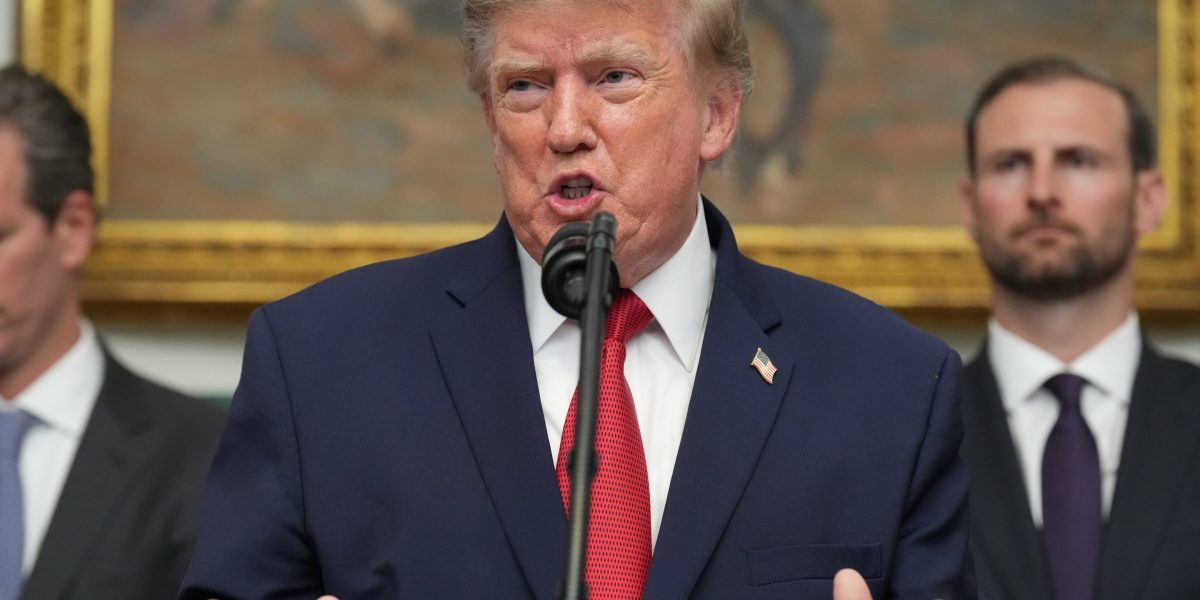
President Donald Trump’s recent comments on data centers, which he called “enormous” in terms of job creation and tax revenue, have drawn attention in the context of upcoming midterm elections. His remarks, made during a meeting with cryptocurrency leaders at the White House, highlight his view of data centers as a key component of the U.S. AI strategy. However, the same data centers have become a source of political controversy, with voters in multiple states expressing strong opposition to their construction.
Despite Trump’s enthusiasm, data centers are increasingly being used as a political tool in competitive races. In Ohio, for example, Democratic candidate Sherrod Brown is attacking Republican Senator Jon Husted over his support for data centers, while the National Republican Senatorial Committee warns that the issue could cost Husted his seat. Similar dynamics are playing out in Nevada, where Democrat Aaron Ford is tying Republican Governor Joe Lombardo to Trump’s pro-data center stance.
The political backlash against data centers stems from concerns about their environmental and economic impact. Voters worry that these massive facilities will strain local resources, increase utility costs, and alter the character of their communities. A July Fox News poll found that most registered voters oppose building a data center in their area, though the issue ranks lower than other concerns like the cost of living.
In Texas, Governor Greg Abbott has faced criticism from his Democratic challenger, Gina Hinojosa, over his support for data center development. Abbott has since shifted his stance, promising to review energy usage and remove tax exemptions, a move that Trump has criticized as a mistake. Meanwhile, in Wisconsin, U.S. Rep. Tom Tiffany is using data centers as a campaign issue against Democratic candidate David Crowley, who has called for local communities to have veto power over projects.
The debate over data centers reflects a broader tension between economic growth and public sentiment. While leaders like Trump see them as vital for AI and national security, voters are more focused on the immediate impacts on their communities. As the midterm elections approach, data centers have become a flashpoint in political campaigns, with candidates using them to attack opponents and differentiate themselves from the opposition.
Data Centers as a Political Weapon
As the 2026 midterm elections approach, data centers have emerged as a contentious issue in multiple states. Candidates are leveraging public opposition to data centers to attack their opponents, with some even using the issue to distance themselves from their own records. In Ohio, for example, the National Republican Senatorial Committee has warned that data centers could cost Senator Jon Husted his seat, as Democratic candidate Sherrod Brown runs ads calling Husted the “face of data centers in Ohio.”
The political use of data centers is not limited to one party. In Nevada, Democrat Aaron Ford has tied Republican Governor Joe Lombardo to Trump’s pro-data center stance, accusing them of being “Nevada data centers’ biggest cheerleaders.” Ford has also proposed halting new tax breaks for data centers and auditing existing projects to ensure they deliver on promises. In Wisconsin, U.S. Rep. Tom Tiffany is using a TV ad to brand his Democratic opponent, David Crowley, as “Data Center David Crowley,” highlighting Crowley’s support for data center development.
Despite the political backlash, data centers remain a key part of the national AI strategy. Trump has framed them as essential for maintaining U.S. leadership in the AI race against China, even as he has acknowledged concerns over rising electricity bills. He has also called for “a little public relations help” for the industry, suggesting that the negative perception of data centers is a hurdle to their growth.
The political challenges facing data centers are not new, but they have become more urgent as the midterm elections approach. In states like Ohio, Nevada, and Wisconsin, candidates are using data centers to shape public opinion and influence voter behavior. While some candidates are trying to distance themselves from the issue, others are using it as a central part of their campaign strategy.
The debate over data centers reflects a broader trend in American politics, where economic development and public sentiment often come into conflict. As the midterm elections draw closer, the issue of data centers is likely to remain a key topic in political campaigns, with candidates using it to attack opponents and shape the narrative around their own records.
Public Opposition and Political Strategy
Public opposition to data centers is widespread, with many voters expressing concerns about their environmental and economic impact. A July Fox News poll found that most registered voters oppose building a data center in their area, citing issues such as increased utility costs, water depletion, and pollution. However, the issue ranks lower than other concerns like the cost of living, suggesting that while voters are aware of the problem, it is not their top priority in the upcoming elections.
The political use of data centers has become a key strategy for candidates in competitive races. In Ohio, for example, the National Republican Senatorial Committee has warned that data centers could cost Senator Jon Husted his seat, as Democratic candidate Sherrod Brown runs ads calling Husted the “face of data centers in Ohio.” In Nevada, Democrat Aaron Ford has tied Republican Governor Joe Lombardo to Trump’s pro-data center stance, accusing them of being “Nevada data centers’ biggest cheerleaders.”
Despite the political challenges, data centers remain a key part of the national AI strategy. Trump has framed them as essential for maintaining U.S. leadership in the AI race against China, even as he has acknowledged concerns over rising electricity bills. He has also called for “a little public relations help” for the industry, suggesting that the negative perception of data centers is a hurdle to their growth.
The political challenges facing data centers are not new, but they have become more urgent as the midterm elections approach. In states like Ohio, Nevada, and Wisconsin, candidates are using data centers to shape public opinion and influence voter behavior. While some candidates are trying to distance themselves from the issue, others are using it as a central part of their campaign strategy.
The debate over data centers reflects a broader trend in American politics, where economic development and public sentiment often come into conflict. As the midterm elections draw closer, the issue of data centers is likely to remain a key topic in political campaigns, with candidates using it to attack opponents and shape the narrative around their own records.
Political Attacks and Campaign Narratives
As the 2026 midterm elections approach, data centers have become a central issue in political campaigns across multiple states. Candidates are using the issue to attack opponents, with some even using it to distance themselves from their own records. In Ohio, for example, the National Republican Senatorial Committee has warned that data centers could cost Senator Jon Husted his seat, as Democratic candidate Sherrod Brown runs ads calling Husted the “face of data centers in Ohio.”
In Nevada, Democrat Aaron Ford has tied Republican Governor Joe Lombardo to Trump’s pro-data center stance, accusing them of being “Nevada data centers’ biggest cheerleaders.” Ford has also proposed halting new tax breaks for data centers and auditing existing projects to ensure they deliver on promises. In Wisconsin, U.S. Rep. Tom Tiffany is using a TV ad to brand his Democratic opponent, David Crowley, as “Data Center David Crowley,” highlighting Crowley’s support for data center development.
Despite the political backlash, data centers remain a key part of the national AI strategy. Trump has framed them as essential for maintaining U.S. leadership in the AI race against China, even as he has acknowledged concerns over rising electricity bills. He has also called for “a little public relations help” for the industry, suggesting that the negative perception of data centers is a hurdle to their growth.
The political challenges facing data centers are not new, but they have become more urgent as the midterm elections approach. In states like Ohio, Nevada, and Wisconsin, candidates are using data centers to shape public opinion and influence voter behavior. While some candidates are trying to distance themselves from the issue, others are using it as a central part of their campaign strategy.
The debate over data centers reflects a broader trend in American politics, where economic development and public sentiment often come into conflict. As the midterm elections draw closer, the issue of data centers is likely to remain a key topic in political campaigns, with candidates using it to attack opponents and shape the narrative around their own records.