Source: Fortune
Summary
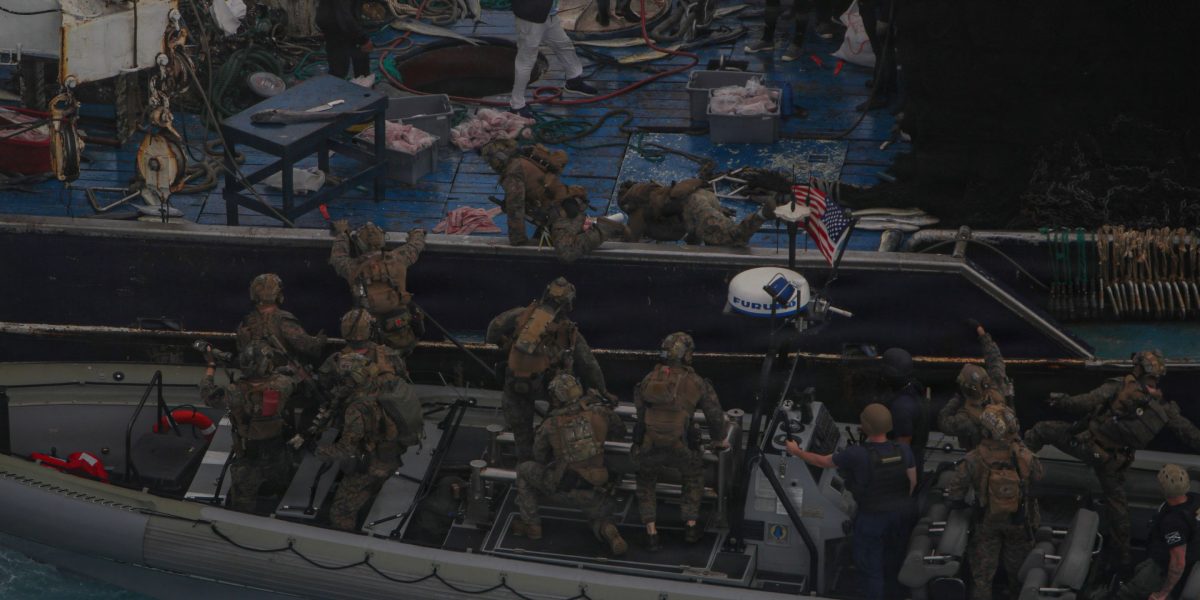
Three Iranian-linked oil tankers, seized by U.S. naval forces, are en route to the United States after being intercepted in the Indian Ocean. The vessels, including the Tifani, Majestic X, and Lenore, are large crude carriers capable of holding 2 million barrels each. A total of nearly six million barrels of crude, valued at about $600 million, are being transported. The U.S. has used prize law, a medieval legal framework, to justify the seizures. The legal basis for the action is rooted in the Constitution’s Captures Clause. The tankers are expected to arrive in Texas, where the U.S. Attorney’s office is prepared to handle the legal proceedings.
Our Reading
The numbers tell one story.
Three tankers, seized in the Indian Ocean, are sailing toward the U.S.
Each holds 2 million barrels of crude, worth $600 million.
The legal basis is centuries old, tied to the Constitution and the Civil War.
Prize law is being revived for modern conflict.
Author: Evan Null
Background on the Seizures
The U.S. naval blockade on Iran was initiated by President Donald Trump in April, targeting ships attempting to enter or leave Iranian ports. The blockade was briefly lifted over the summer but was reimposed weeks later as part of a shift toward economic warfare. The three tankers—Tifani, Majestic X, and Lenore—were seized in the Indian Ocean, with the Lenore and Davina now heading west into the Atlantic after clearing the Cape of Good Hope.
Legal Framework and Historical Context
The U.S. is using prize law, a legal framework dating back to the Middle Ages, to justify the seizure of the tankers. This law, outlined in the Constitution’s Captures Clause, allows for the seizure of enemy vessels during times of war. The Prize Act of 1812, first used by Abraham Lincoln during the Civil War, has been invoked again in modern times. The legal process does not require a warrant or a direct violation of an existing statute, unlike civil seizure laws.
Expected Destination and Legal Implications
If the tankers reach a U.S. port, it is likely to be in Texas, where the U.S. Attorney for the Southern District of Texas, Aaron Reitz, has stated the office is ready to handle the legal proceedings. Reitz did not specify which law the Justice Department will use, but he emphasized the need for federal courts to adjudicate seized maritime property. The legal process involves determining whether the vessels and cargo will be condemned, returned, or disposed of.
Current Market and Strategic Considerations
Brent crude oil is currently trading at around $106 per barrel, adding to the value of the seized oil. The U.S. government’s use of prize law reflects a broader strategy of economic pressure on Iran, moving away from military conflict. The legal and strategic implications of the seizure are significant, as the U.S. seeks to control the flow of Iranian oil and assert its maritime power through historical legal mechanisms.
Broader Implications for International Law
The use of prize law in modern times raises questions about the intersection of historical legal frameworks and contemporary international relations. The U.S. is leveraging a centuries-old system to justify its actions, highlighting the adaptability of legal traditions in modern geopolitical strategies. This approach also underscores the complexity of maritime law and the challenges of applying ancient principles to contemporary conflicts. The case could set a precedent for future actions involving seized maritime assets.