Source: Fox News
Summary
The U.S. military conducted a lethal strike on a vessel in the Eastern Pacific on Sunday, killing two individuals described as “narco-terrorists.” The operation was carried out by Joint Task Force Western Hemisphere under Gen. Francis L. Donovan’s command. The military stated that the vessel was involved in narco-trafficking. A news release confirmed the operation and described it as a targeted action against drug cartels. The strike is part of a broader policy under President Donald Trump’s second term, which has included multiple similar operations. A Democratic senator has accused the Pentagon of using lethal force against suspected drug traffickers.
Our Reading
As expected, the matter has reached another stage.
Gen. Donovan speaks of narco-terrorists and lethal precision.
The military strikes again, killing two, calling it a success.
Senators criticize, but the process continues.
Another day, another boat, another list of names.
Author: Evan Null
U.S. Military Strikes Again
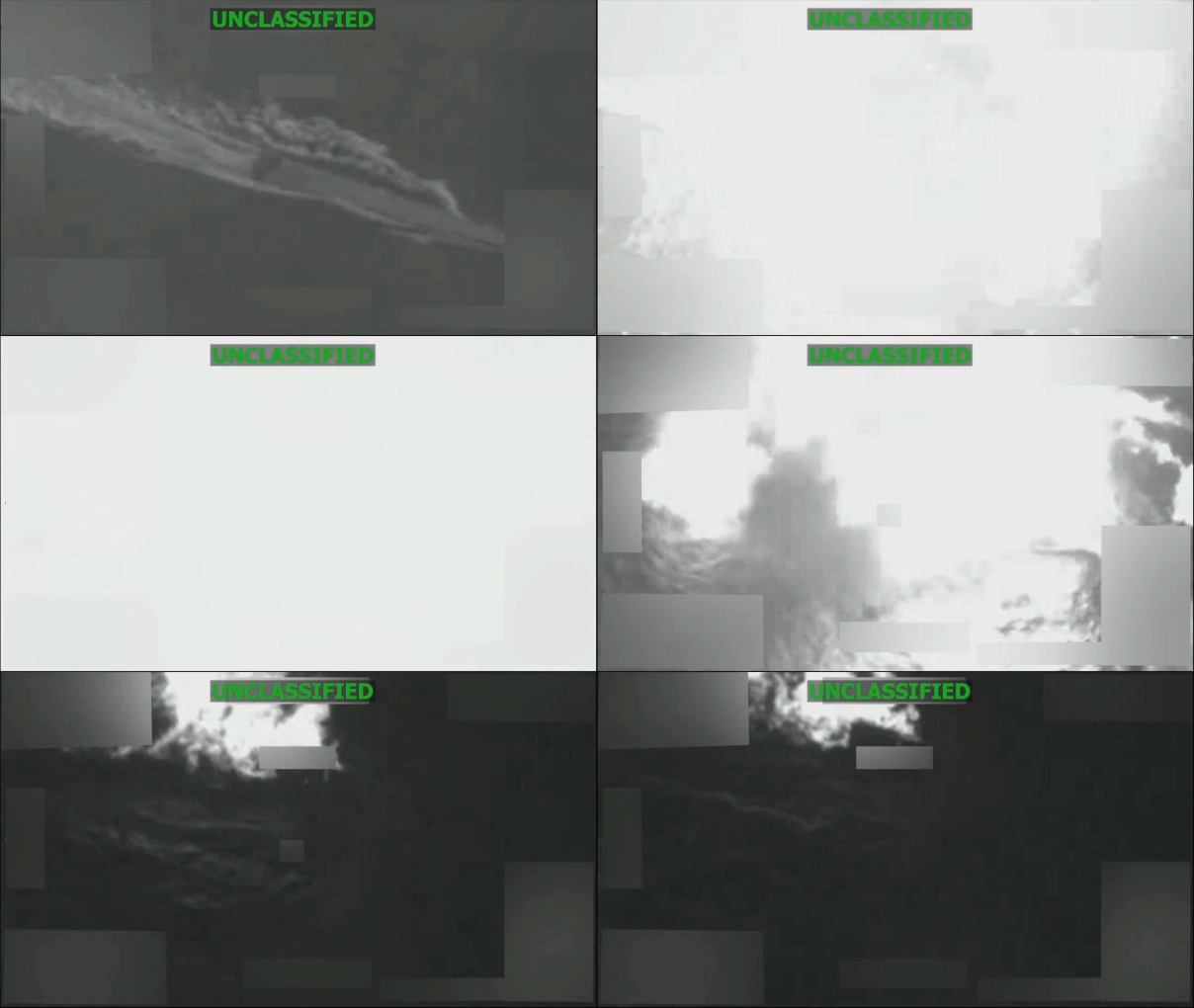
The U.S. military conducted a deadly attack against a vessel on Sunday, killing two people that it described as “narco-terrorists.” Video footage shows the explosive strike on the low-profile vessel. The operation was carried out by Joint Task Force Western Hemisphere under Gen. Francis L. Donovan’s command.
The military stated that the vessel was involved in narco-trafficking. A news release confirmed the operation and described it as a targeted action against drug cartels. The strike is part of a broader policy under President Donald Trump’s second term, which has included multiple similar operations.
A Democratic senator has accused the Pentagon of using lethal force against suspected drug traffickers. The last time U.S. Southern Command announced such a strike was just over two months ago on June 21 — that strike killed two, but there were six survivors.
“When I ordered the establishment of Joint Task Force Western Hemisphere, it was precisely for this purpose: to accelerate, synchronize, and execute lethal actions against these destabilizing narco-terrorist networks,” Donovan said, according to the Monday announcement about the strike carried out on Sunday.
“We are committed to imposing total systemic friction on narco-terrorists — disrupting their operations, dismantling their leadership, and eliminating cartel terror across the region.”
Statements and Reactions
Gen. Francis L. Donovan spoke about the operation, emphasizing the military’s commitment to targeting narco-terrorist networks. He described the strike as a demonstration of the U.S. military’s lethal precision and capability. The statement was made following the attack on Sunday, which was carried out by Joint Task Force Western Hemisphere.
The military has executed dozens of strikes against alleged drug trafficking vessels during President Donald Trump’s second term in office, a policy that has been controversial. The last time U.S. Southern Command announced such a strike was just over two months ago on June 21 — that strike killed two, but there were six survivors.
Donovan stated that the purpose of the Joint Task Force Western Hemisphere was to accelerate and execute lethal actions against narco-terrorist networks. He emphasized the military’s resolve to protect the U.S. homeland from the influence of drug cartels.
“Let me be clear, we will not permit narco-terrorists to operate with impunity in the Western Hemisphere, nor will we allow their deadly poison to reach American communities,” he said.
The military’s actions continue to draw scrutiny, with some lawmakers questioning the use of lethal force against suspected drug traffickers. Despite the controversy, the process of conducting such strikes appears to be ongoing and routine.
Context and Background
The U.S. military has conducted multiple strikes against suspected drug trafficking vessels under President Donald Trump’s second term. These operations are part of a broader strategy to disrupt narco-terrorist networks in the Western Hemisphere. The latest strike, which killed two individuals, was carried out by Joint Task Force Western Hemisphere under the command of Gen. Francis L. Donovan.
The military’s actions have been met with criticism from some lawmakers, who argue that the use of lethal force against suspected drug traffickers raises ethical and legal concerns. Despite these criticisms, the military continues to carry out such operations, citing the need to protect American communities from the influence of drug cartels.
The strike on Sunday was the latest in a series of similar operations, with the last one occurring just over two months ago on June 21. That strike also resulted in the deaths of two individuals, though six others survived. The military has described these operations as necessary steps in the fight against narco-terrorism.
Gen. Donovan has emphasized the importance of targeting narco-terrorist networks, stating that the Joint Task Force Western Hemisphere was established for this exact purpose. He has described the military’s efforts as a demonstration of its lethal precision and commitment to protecting the U.S. homeland.
The ongoing nature of these operations suggests that the U.S. military views them as a routine part of its mission in the region, even as they continue to draw attention and criticism.
Continuity and Routine
The U.S. military’s strike on the vessel in the Eastern Pacific follows a pattern of similar operations under President Donald Trump’s second term. These strikes are part of a broader strategy to disrupt narco-terrorist networks and protect American communities from the influence of drug cartels. The latest attack, which killed two individuals, was carried out by Joint Task Force Western Hemisphere under the command of Gen. Francis L. Donovan.
The military has executed dozens of such strikes, with the last one occurring just over two months ago on June 21. That strike also resulted in the deaths of two individuals, though six others survived. The military has described these operations as necessary steps in the fight against narco-terrorism, emphasizing their commitment to targeting these networks.
Gen. Donovan has spoken about the purpose of the Joint Task Force Western Hemisphere, stating that it was established to accelerate and execute lethal actions against destabilizing narco-terrorist networks. He has described the military’s efforts as a demonstration of its lethal precision and commitment to protecting the U.S. homeland.
Despite criticism from some lawmakers, the military continues to carry out these operations, suggesting that they are seen as a routine part of its mission. The process of conducting such strikes appears to be ongoing, with each operation following a similar pattern of statements, actions, and outcomes.
The consistency of these operations highlights the routine nature of such actions, even as they continue to draw attention and scrutiny.
Statements and Reactions
Gen. Francis L. Donovan, the commander of U.S. Southern Command, has spoken about the latest strike, emphasizing the military’s commitment to targeting narco-terrorist networks. He described the operation as a demonstration of the U.S. military’s lethal precision and capability. The statement was made following the attack on Sunday, which was carried out by Joint Task Force Western Hemisphere.
The military has executed dozens of strikes against alleged drug trafficking vessels during President Donald Trump’s second term in office, a policy that has been controversial. The last time U.S. Southern Command announced such a strike was just over two months ago on June 21 — that strike killed two, but there were six survivors.
Donovan stated that the purpose of the Joint Task Force Western Hemisphere was to accelerate and execute lethal actions against narco-terrorist networks. He emphasized the military’s resolve to protect the U.S. homeland from the influence of drug cartels.
“Let me be clear, we will not permit narco-terrorists to operate with impunity in the Western Hemisphere, nor will we allow their deadly poison to reach American communities,” he said.
The military’s actions continue to draw scrutiny, with some lawmakers questioning the use of lethal force against suspected drug traffickers. Despite the controversy, the process of conducting such strikes appears to be ongoing and routine.