
Pennsylvania High School Rivalry Game Marred By Seemingly Dirty Ankle Twist That Left Player Injured
—
Source: BroBible
Summary
The annual Cocoa Bean football game between Hershey High School and the Milton Hershey School, which began in 1943, ended with a controversial play. During the game, a Hershey player appeared to twist the leg of Milton Hershey quarterback Kamari Cooper, causing him to leave the field. The incident, captured on video, sparked online calls for disciplinary action. Cooper suffered a serious injury and did not return to the game. The event overshadowed the historic rivalry.
Our Reading
The habit gets a new name.
High school football games are supposed to be about sportsmanship. But now it’s about viral videos and calls for bans.
Players twist legs, fans demand punishments, and the game becomes a spectacle of outrage.
Every play is now under a microscope, and every tackle is a potential scandal.
It’s not just a game anymore—it’s a performance, and the audience is always watching.
Author: Evan Null
Annual Rivalry Turned Controversy
The Cocoa Bean game, a long-standing tradition between Hershey High School and the Milton Hershey School, has always been a highlight of the fall season. But this year, it took a dark turn when a play led to a serious injury and public outrage.
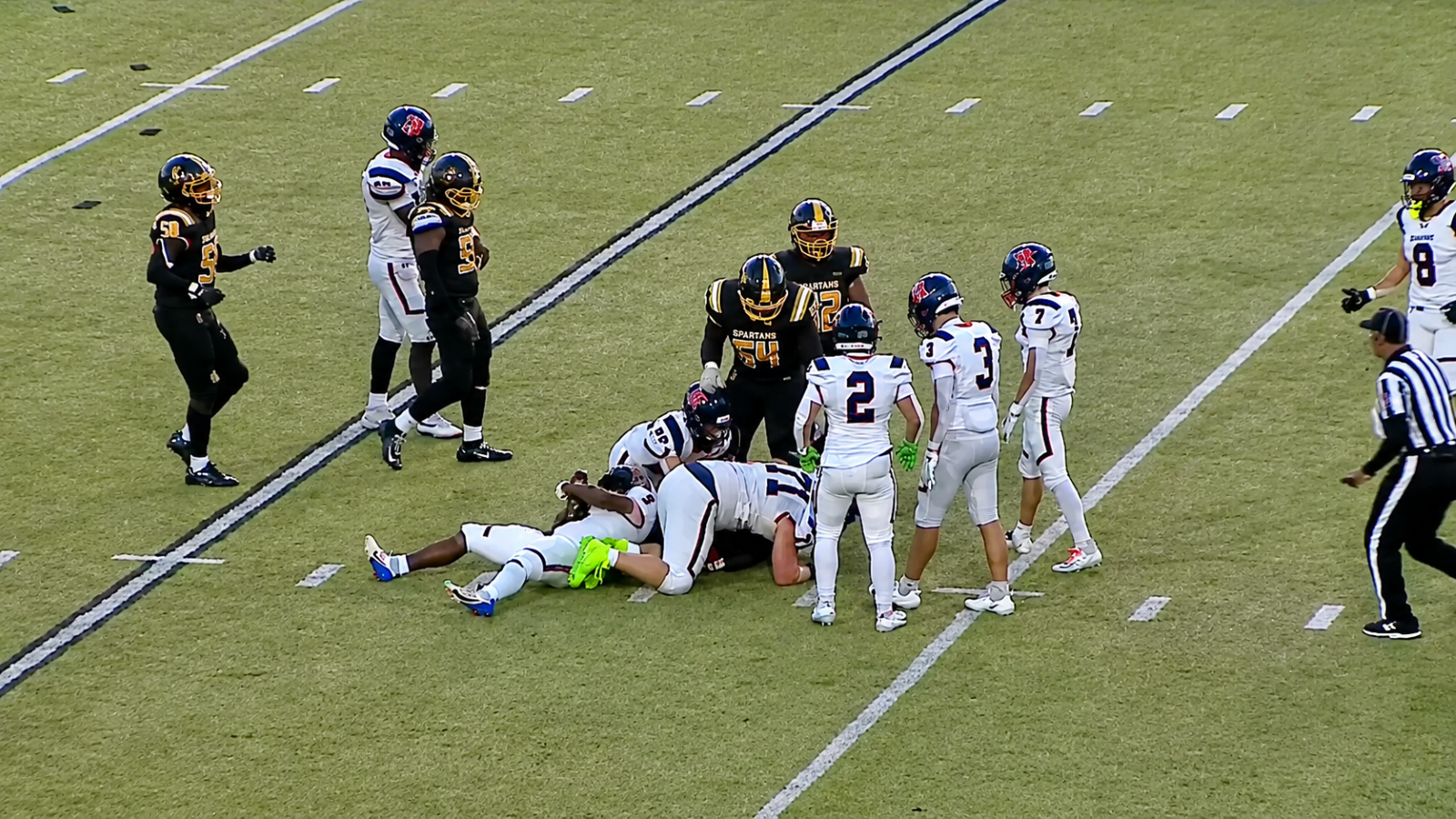
The game, which started in 1943, has seen Hershey win the last five matchups, including this year’s 20-18 victory. But the final moments of the game were overshadowed by a controversial tackle that left Milton Hershey’s quarterback, Kamari Cooper, injured and unable to continue.
The incident happened in the second quarter, when Cooper was tackled and appeared to suffer a leg injury. The video of the play, which was shared by the Milton Hershey School, quickly went viral on social media, with many calling for disciplinary action.
Some fans demanded that the player be banned from PIAA sports, while others questioned the intent behind the tackle. The controversy has cast a shadow over what was once a celebrated rivalry.
The game, which was meant to showcase the best of high school athletics, now stands as a reminder of how quickly a moment can turn into a national debate.
Historic Rivalry, Modern Drama
The Cocoa Bean game has long been a symbol of community and tradition, with both schools representing different aspects of the local area. Hershey High School is a public school, while the Milton Hershey School is a private boarding school founded in 1909 to support underprivileged students.
For decades, the game has been a way for the two schools to compete and celebrate their shared history. But this year, the game became more than just a contest—it became a flashpoint for controversy.
The incident involving Kamari Cooper has raised questions about the safety of high school athletes and the role of social media in shaping public perception of sports.
What was once a simple rivalry has now become a case study in how modern sports are scrutinized and judged by the public.
The game’s legacy may now be defined not by its history, but by this single, controversial moment.
From Tradition to Trend
The Cocoa Bean game has always been more than just a football match. It’s a tradition that brings together students, alumni, and the local community. But now, it’s also a trend—something that can be watched, shared, and debated online.
With the rise of social media, every play is now a potential moment of controversy. What was once a local event has now become a national spectacle, with fans and critics weighing in on every decision and action.
The game’s significance has shifted from being a celebration of sportsmanship to a platform for public outrage. The line between competition and controversy has become increasingly blurred.
What was once a simple rivalry is now a complex mix of tradition, modernity, and public scrutiny.
The game may still be played, but its meaning has changed.
The Cost of a Single Play
Kamari Cooper’s injury has had a lasting impact, not just on the game, but on the entire rivalry. What was once a chance for both schools to showcase their talent has now been overshadowed by a single, controversial moment.
The incident has raised questions about the safety of high school athletes and the role of coaches and officials in preventing such situations. But it has also highlighted the power of social media in shaping public opinion.
With the video of the play going viral, the focus has shifted from the game itself to the actions of a single player. The controversy has turned what was once a celebration into a case study in sports ethics.
The game may continue, but its legacy may now be defined by this one moment.
The Cocoa Bean game, once a symbol of unity, now stands as a reminder of how quickly a moment can change everything.
The New Normal in High School Sports
The incident involving Kamari Cooper is not an isolated event. It reflects a broader trend in high school sports, where every play is now under scrutiny, and every decision is subject to public judgment.
Social media has made it easier than ever for fans to react, share, and demand action. What was once a private event is now a public spectacle, with every moment potentially becoming a topic of debate.
This shift has changed the way high school sports are played and perceived. Coaches, players, and officials must now navigate a landscape where every action is watched, analyzed, and judged.
The game may still be played, but the way it is experienced has changed.
The Cocoa Bean game is no longer just a rivalry—it’s a reflection of the modern sports world, where tradition meets scrutiny.