Source: Fortune.com
Summary
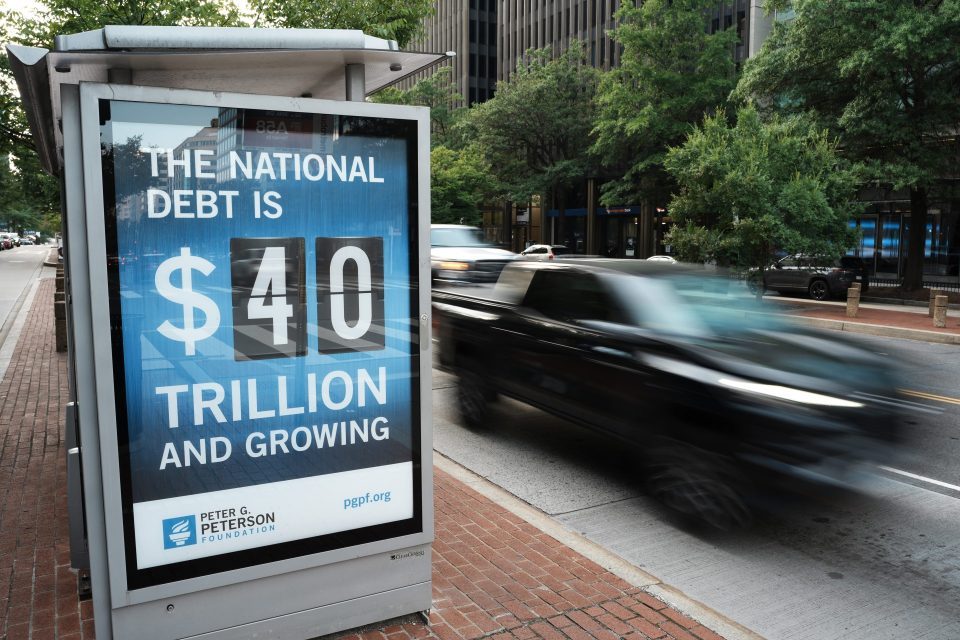
Congressional Budget Office Director Phillip Swagel said U.S. debt is unlikely to be stabilized by faster economic growth alone, even if GDP doubles its current pace. Gross debt is now $40 trillion, with publicly held debt at 100% of GDP. Swagel warned that keeping the debt-to-GDP ratio flat would require a massive, sustained economic boom. CBO projects the ratio will rise to 120% by 2036. Swagel also noted that while growth can increase tax revenue, it can also raise interest costs and Social Security outlays. He emphasized that fiscal stability will require political decisions on spending and revenue.
Our Reading
The numbers tell one story.
CBO says growth alone won’t fix the debt.
GDP would need to double to keep the ratio flat.
Interest rates and spending complicate the picture.
Political choices remain the only real path forward.
Author: Evan Null
U.S. Debt and Economic Growth
U.S. debt is at a record $40 trillion, with publicly held debt equal to 100% of GDP. Congressional Budget Office Director Phillip Swagel said that even if GDP grows at more than double its current pace, it won’t be enough to stabilize the debt. He explained that while growth can increase tax revenue, it also raises interest costs and Social Security payments. The CBO projects the debt-to-GDP ratio will rise to 120% by 2036, highlighting the severity of the fiscal challenge.
Factors Affecting Debt and Growth
Swagel noted that economic growth can have a dual effect. It increases government revenue but also raises interest rates, which in turn increases debt costs. He also pointed out that higher wages from a strong economy can lead to higher Social Security benefits. These factors create a complex relationship between growth and fiscal stability. Swagel warned that without changes in spending or revenue, the debt problem will persist.
AI and Future Growth
The CBO is incorporating AI into its economic forecasts, as total factor productivity has increased. Swagel said AI could help boost growth, but even that may not be enough to address the deepening deficit. He estimated that nominal GDP growth would need to reach 7%-8% and real GDP growth 5%-6% to stabilize the debt. These numbers far exceed current forecasts, which are around 2.5% for the year. The gap between what’s needed and what’s expected shows the scale of the challenge.
Political and Economic Challenges
Swagel emphasized that stabilizing the debt will require political decisions on spending and revenue. He warned that even with strong growth, the debt problem is too large to solve through economic expansion alone. Treasury Secretary Scott Bessent has argued that 3% growth could help, but CBO’s numbers suggest that’s not enough. Other estimates, like those from the Penn Wharton Budget Model, suggest growth would need to average 3.5%-4% over a decade to maintain the debt-to-GDP ratio.
The Risk of Interest Rate Shocks
Swagel warned that a sudden increase in interest rates could create a vicious cycle. Higher rates would increase debt costs, which would worsen the deficit, leading to even higher rates. This “turbocharger” effect could make the fiscal situation worse. While the bond market is currently absorbing U.S. debt, long-term yields have reached 24-year highs. Swagel said the impact of the debt on interest rates is modest now, but the long-term trajectory is concerning.