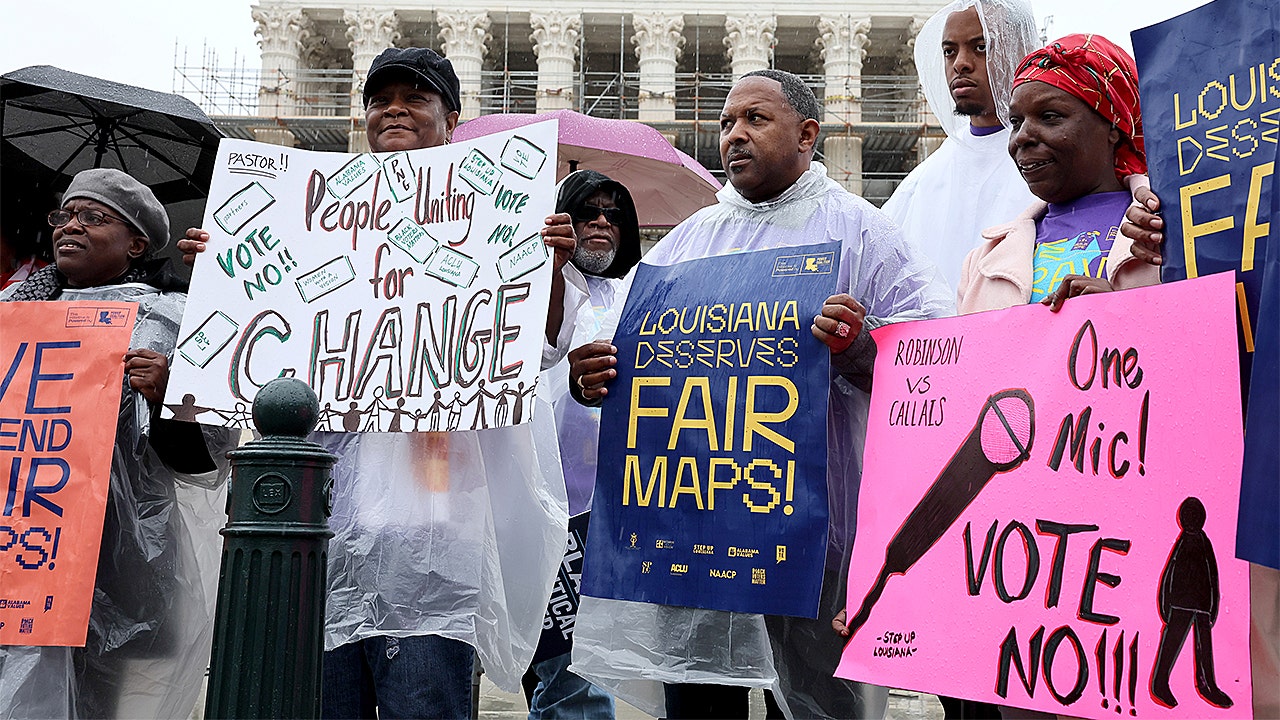
Source: Fox News
Summary
Georgia’s redistricting maps, drawn in 2021, are under federal review after a 2023 ruling by U.S. District Judge Steve Jones. The 11th U.S. Circuit Court of Appeals vacated that decision, sending the case back for reconsideration under the new legal standard set by the Supreme Court in Louisiana v. Callais. Plaintiffs argue the maps diluted Black voting power, but the new standard requires evidence of intentional racial discrimination, not just effects. Georgia’s replacement maps, enacted in 2023, remain in use for the 2026 election cycle.
Our Reading
As expected, the matter has reached another stage.
Judge Steve Jones must now reevaluate the case under new rules.
Plaintiffs face a higher burden to prove racial intent over political effect.
Georgia’s maps, already used in 2024, stay in place for 2026.
The overlap of race and party makes discrimination harder to prove.
Author: Evan Null
Georgia’s Voting Rights Battle
Georgia’s redistricting maps have become a focal point in the national voting rights debate. The state’s 2021 map changes sparked legal challenges, with critics claiming they diluted Black voting power. The case has moved through federal courts, with recent rulings shifting the burden of proof for plaintiffs.
The Supreme Court’s decision in Louisiana v. Callais raised the standard for proving racial discrimination in redistricting. This change has complicated the legal strategy for those challenging Georgia’s maps. Plaintiffs must now show a “strong inference” of intentional racial bias, not just the effects of partisan gerrymandering.
Judge Steve Jones initially ruled in favor of the plaintiffs, ordering the creation of additional majority-Black districts. However, the 11th Circuit Court of Appeals sent the case back for reconsideration under the new legal framework. Georgia’s replacement maps, which satisfy the original ruling but maintain Republican advantages, are still in use.
Legal experts suggest the new standard makes it harder for plaintiffs to win their case. They argue that the overlap between Black voters and Democratic support makes it difficult to separate race from political influence. This complexity could affect how the case is handled in the future.
The outcome of the case is unlikely to change Georgia’s current maps before the 2026 elections. The appeals court did not order the state to revert to the original 2021 maps, and the replacement districts have already been used in recent elections.
The Legal Framework
The Voting Rights Act, particularly Section 2, has been central to the legal battle over Georgia’s maps. This section prohibits voting practices that result in discrimination based on race. However, the Supreme Court’s ruling in Louisiana v. Callais has made it more difficult for plaintiffs to prove such discrimination.
Under the new standard, courts must determine whether race, rather than political strategy, influenced the redrawing of district lines. This shift has placed a heavier burden on plaintiffs, who must now provide stronger evidence of intentional racial discrimination.
The legal challenge in Georgia has been ongoing since 2021, with multiple lawsuits filed by Black voters and civil rights groups. These cases argue that the maps weaken the political influence of Black voters, who overwhelmingly support Democratic candidates.
Judge Steve Jones initially ruled in favor of the plaintiffs, ordering the creation of additional majority-Black districts. However, the 11th Circuit Court of Appeals has now sent the case back for further review, applying the new legal framework established by the Supreme Court.
The outcome of the case could set a precedent for future redistricting battles across the country. It also highlights the ongoing tension between race and politics in the legal interpretation of voting rights.
Political and Racial Dynamics
The political landscape in Georgia is shaped by the strong alignment between Black voters and the Democratic Party. This overlap complicates efforts to prove that redistricting decisions were motivated by race rather than political strategy. It also raises questions about how race and party affiliation influence voting behavior.
Legal experts like Hans von Spakovsky argue that the current challenge lacks evidence of intentional racial discrimination. He claims that previous rulings misinterpreted Section 2 of the Voting Rights Act, focusing too much on the effects of gerrymandering rather than the intent behind it.
The new legal standard requires plaintiffs to distinguish between racial and political motivations for redistricting. This distinction is particularly challenging in Georgia, where the political preferences of Black voters align closely with those of the Democratic Party. As a result, proving that race was the primary factor in map creation is more difficult.
The case also highlights the broader debate over the role of race in redistricting. While some argue that race should be a central factor in ensuring fair representation, others believe that partisan gerrymandering is a separate issue that should not be conflated with racial discrimination.
As the case moves forward, the legal and political implications of the new standard will continue to shape the conversation around voting rights in Georgia and beyond.
The Role of the Courts
The federal courts have played a central role in the redistricting battle in Georgia. The case has moved through multiple levels of the judiciary, with each ruling shaping the legal landscape for future challenges. The 11th Circuit Court of Appeals has now sent the case back to Judge Steve Jones for reconsideration under the new legal standard.
Judge Jones must now apply the new framework established by the Supreme Court in Louisiana v. Callais. This means reevaluating the evidence presented in the original case and determining whether it meets the higher burden of proof required under the new standard. The court has not automatically granted a new trial, leaving the plaintiffs to decide whether to supplement the record with additional evidence.
The outcome of the case will depend on how the court interprets the new legal standard. If the plaintiffs can provide sufficient evidence of intentional racial discrimination, they may succeed in their challenge. However, if the court finds that the evidence is insufficient, the case may be dismissed or upheld in favor of Georgia’s current maps.
The role of the courts in this case underscores the ongoing legal and political tensions surrounding redistricting. As the case moves forward, the courts will continue to shape the interpretation of voting rights and the legal standards for proving discrimination.
The final decision by Judge Jones could have significant implications for the future of redistricting in Georgia and other states facing similar challenges. It also highlights the evolving nature of legal standards in the context of voting rights.
Implications for the 2026 Elections
The outcome of the redistricting case in Georgia is unlikely to affect the 2026 midterm elections. The 11th Circuit Court of Appeals did not order the state to revert to the original 2021 maps, and the replacement districts created in 2023 are already in use. This means that the current maps will remain in place for the 2026 election cycle.
The legal battle over the maps has already had an impact on the 2024 elections, as the replacement districts were used in the primary elections. However, the final decision on the case may not be reached before the 2026 elections, leaving the current maps unchanged for the foreseeable future.
The courts have not mandated a complete overhaul of the current maps, which means that the political landscape in Georgia will remain as it is for the next election cycle. This outcome reflects the complexity of the legal process and the challenges of making significant changes to redistricting maps in a timely manner.
The case also highlights the broader issue of how redistricting affects political representation. While the current maps may be in place for the 2026 elections, the legal challenges and ongoing debates could influence future redistricting efforts. This underscores the long-term impact of the case on Georgia’s political landscape.
As the case moves forward, the courts will continue to play a critical role in determining the future of redistricting in Georgia. The outcome of the case may shape the political dynamics of the state for years to come.