Source: Fortune
Summary
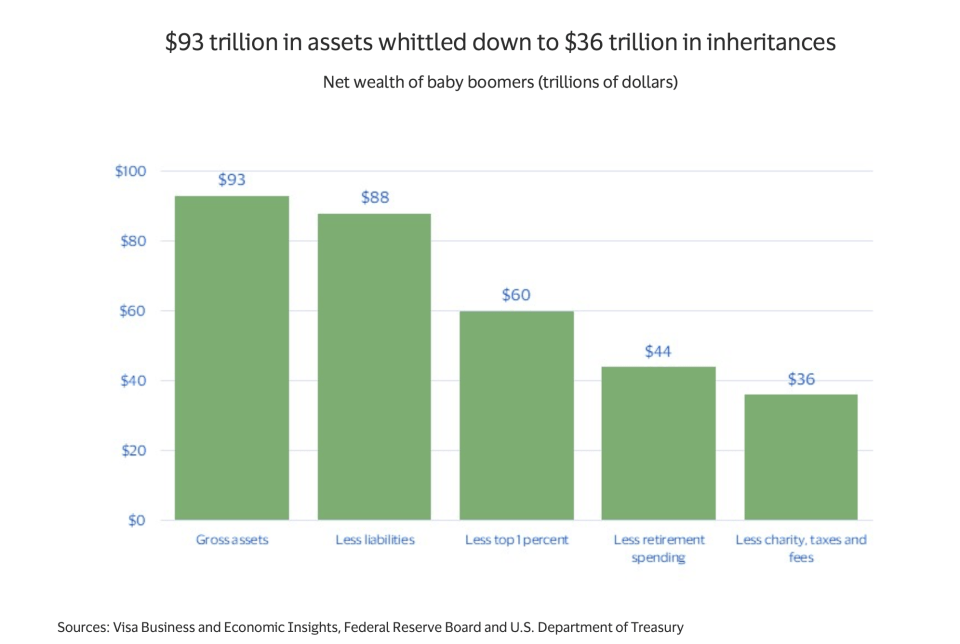
A report by Visa Business and Economic Insights estimates that the Great Wealth Transfer, where baby boomers pass on their wealth to younger generations, will be around $93 trillion. However, after deducting debts, taxes, and fees, the actual amount passed on will be significantly lower, around $36 trillion. This translates to about $515,000 per inheriting household, but the majority of this wealth will go to the top 1% of households. The report also notes that boomers are already giving some of their wealth to their heirs, with 28% of grandparents taking “skip-generation trips” with their grandkids and a quarter of millennial homeowners receiving help with down payments from their parents.
Our Reading
The numbers tell one story. Baby boomers are sitting on immense wealth, but their heirs shouldn’t get their hopes up too much. The Great Wealth Transfer is expected to be around $93 trillion, but after deducting debts and taxes, the actual amount passed on will be significantly lower. The top 1% of households will receive the majority of this wealth, leaving the rest with a much smaller share. Boomers are already giving some of their wealth to their heirs, but it’s not just about the money – it’s about the impact it will have on their lives.
The wealth gap between affluent boomers and the rest of their peers means that the average $515,000 per-household amount overstates what most millennials and Gen Xers will actually receive. The majority of inherited wealth will be saved or invested, rather than spent, which will have a minimal impact on the economy.
One thing is clear: the Great Wealth Transfer is not just about the money – it’s about the relationships between generations and the impact it will have on their lives.
Author: Evan Null