Source: Fortune.com
Summary
Iran’s currency, the rial, hit a record low of 2.5 million to the U.S. dollar, reflecting deepening economic crisis. U.S. sanctions have crippled oil exports, with Iran unable to load oil for the first time since the 1979 revolution. Inflation is near 90%, and the economy is shrinking. The regime is running out of oil revenue, with remaining supplies expected to deplete by mid-October. U.S. sanctions have also blocked Iranian funds in China, worsening the crisis.
Our Reading
The numbers tell one story.
Iran’s rial is collapsing. Oil exports are zero. Inflation is 90%. The regime is out of cash. Sanctions are tightening. Payments are blocked. The economy is in free fall.
The announcement sounds familiar.
Sanctions, blockades, currency collapse. Iran’s economy is in free fall. The rial is down 170% since early 2026. Oil revenue is drying up. Payments are frozen. The regime is desperate.
The strategy enters a familiar phase.
Economic warfare is working. Sanctions are cutting off money. Oil is gone. Funds are blocked. The regime is running out of options. The U.S. is tightening the noose.
Iran’s economy is collapsing under pressure. The rial is a symbol of that collapse. The regime is losing control. Sanctions are the main driver. The endgame is unclear.
Author: Evan Null
Iran’s Currency Crisis
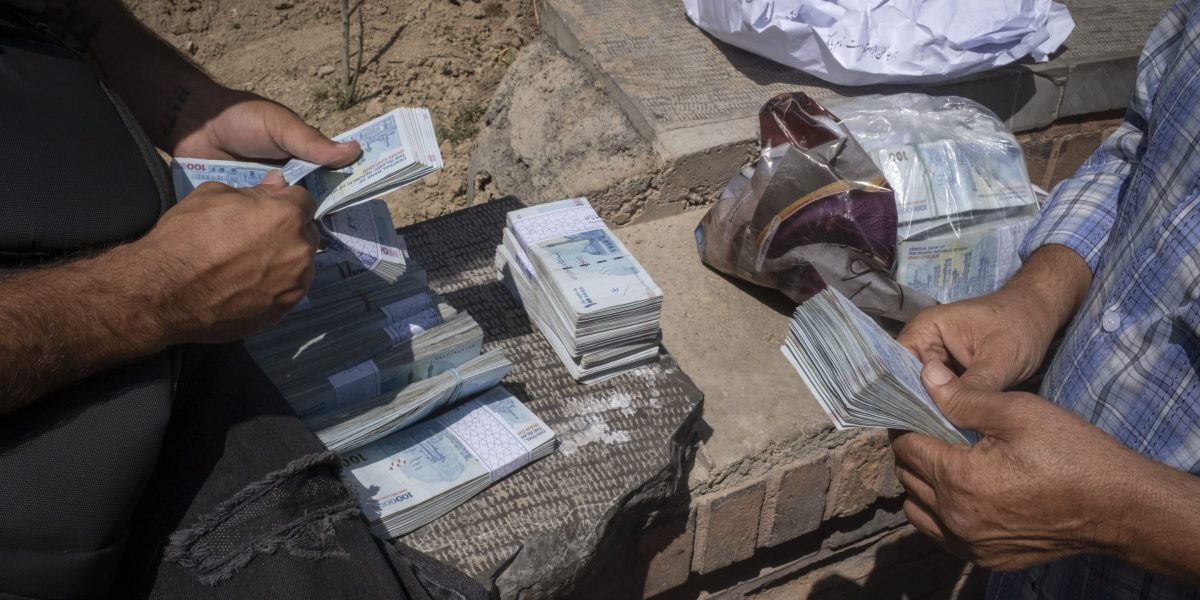
Iran’s economy is in free fall, with the rial hitting a new record low against the U.S. dollar. The U.S. naval blockade has crippled oil exports, leaving the country without a major source of revenue. The rial has lost more than 170% of its value since early 2026, reflecting the depth of the crisis. Inflation is near 90%, and the government is struggling to maintain basic services.
Oil Exports at a Standstill
For the first time since the 1979 Islamic revolution, Iran did not load any oil for export last month. This is a major blow to the regime, which relies on oil sales for a third of its budget. The U.S. sanctions have made it nearly impossible for Iran to move oil, and its neighbors are taking advantage of the situation. The regime is running out of oil reserves, with remaining supplies expected to deplete by mid-October.
Blocked Funds and Economic Hardship
Iranian President Masoud Pezeshkian has complained that the regime’s money in China is blocked, preventing it from accessing funds it earned from exports. This has worsened the economic crisis, as the government struggles to pay for imports and maintain basic services. The U.S. has tightened sanctions, making it harder for Iran to move money through front companies and other intermediaries.
U.S. Sanctions and Economic Warfare
The U.S. has intensified its economic pressure on Iran, with Secretary of State Marco Rubio calling the country’s economic situation a “cataclysm.” Sanctions are not just punishing Iran, but also preventing it from accessing money that could be used to fund weapons programs or threaten global security. The regime is running out of options as its oil revenue dwindles and its currency collapses.
Protests and Social Unrest
A prior currency collapse in late 2025 led to widespread protests, which the regime suppressed with a brutal crackdown. Since the U.S. and Israel launched the war on Iran in February, the rial has plunged further, raising fears of renewed unrest. The government is struggling to maintain social cohesion as inflation soars and basic goods become scarce. The economic crisis is deepening, and the regime is under increasing pressure.