Source: Fox News
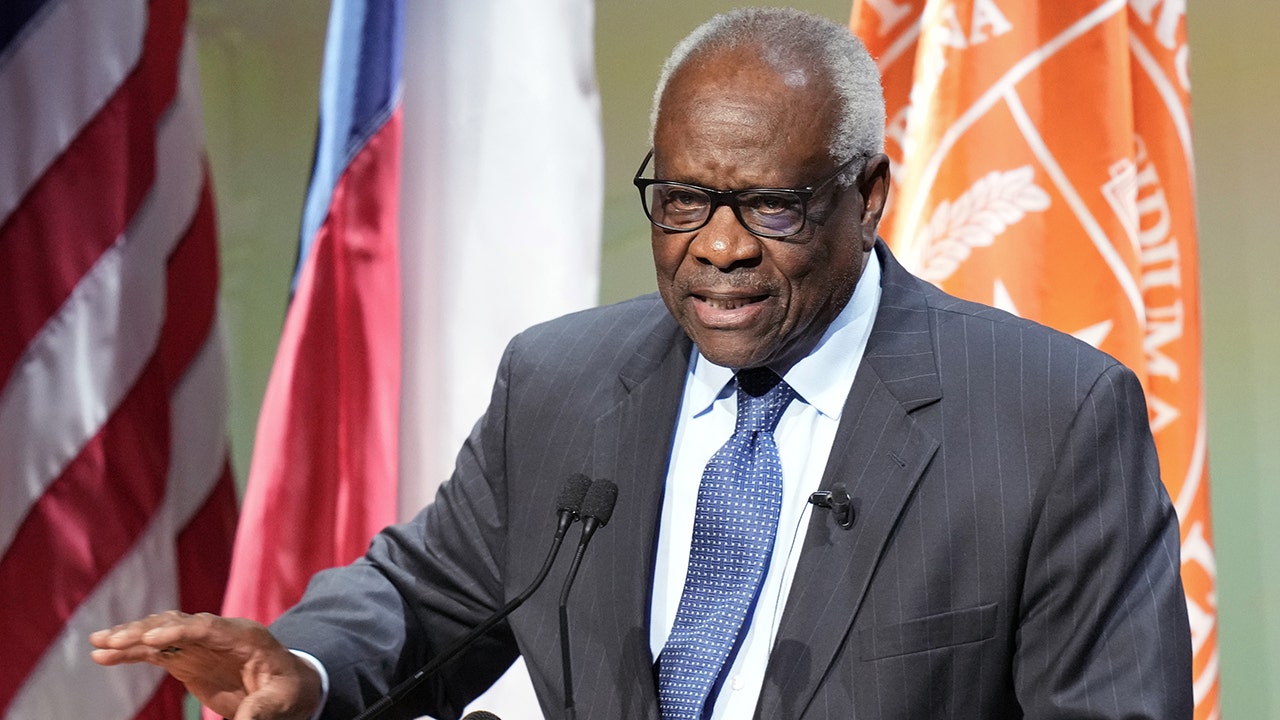
Supreme Court Justice Clarence Thomas rejected the idea that Black Americans should be expected to hold particular political views because of their race during a rare interview with Republican Texas Sen. Ted Cruz.
“We had this saying [that there are] only two things I have to do: stay Black and die,” Thomas told Cruz, responding to a comment about the conservative justice having an individualist streak. “That was a retort to people who had these sort of requirements for us, these these mandates for us because of our skin color … But at any rate, they think that here’s the way you’re supposed to think. Again, here’s your skin color. There’s this kind of deterministic view that you’re supposed to think this because we say so.”
“And I, of course, declined that invitation. And so now that means that something, that I’m a walking contradiction because I’ve deviated from their perception of what I should think,” the justice added while speaking on the “Verdict with Ted Cruz” podcast.
Thomas, who is Black, grew up poor in segregated Georgia, initially living in his parents’ wooden shack in Pin Point and later in Savannah with his grandparents. As a child, Thomas was raised speaking Gullah, a creole language derived from English spoken by the descendants of African slaves.
At the College of the Holy Cross, he initially embraced left-wing Black nationalism, admired Malcolm X and helped establish the school’s Black Student Union. Thomas began moving right after participating in a violent 1970 protest in Cambridge, Massachusetts, later saying his shame over the episode prompted him to reject left-wing activism and reconsider the self-reliance preached by his grandfather.
Summary
Supreme Court Justice Clarence Thomas rejected the idea that Black Americans should be expected to hold specific political views due to their race during an interview with Sen. Ted Cruz. Thomas described a saying from his youth that suggested Black people had only two options: to stay Black and die. He argued against the notion that Black individuals should be dictated how to think based on their race, drawing a comparison to racial segregation. Thomas, who grew up in segregated Georgia, initially embraced left-wing Black nationalism but later shifted politically after a protest in Cambridge, Massachusetts. He criticized the idea that Black people should be confined to certain beliefs, likening it to the restrictions of segregation.
Our Reading
As expected, the matter has reached another stage.
Thomas speaks of segregation and choice.
He rejects the idea of expected thinking.
He compares it to a library that lets him in but not the stacks.
It’s a performance of self-determination, but the script is familiar.
Author: Evan Null