Oil Prices and the Rise of Professional Oil Thieves
The spike in oil prices since the Iran war began this year has attracted more thieves, and they are increasingly professional criminals. West Texas Intermediate crude is up 60% so far this year, and fuel prices have risen even more as global refining capacity has fallen due to the Mideast and Russia-Ukraine wars.
While oil theft has long been a part of the industry, the problem has become prevalent enough for the Dallas Fed to ask about in its quarterly surveys. The latest one showed that nearly half of firms that are primarily focused in the Permian Basin said their operations have been impacted by theft in oil fields. By contrast, 86% of firms operating mostly outside the Permian said they were not impacted.
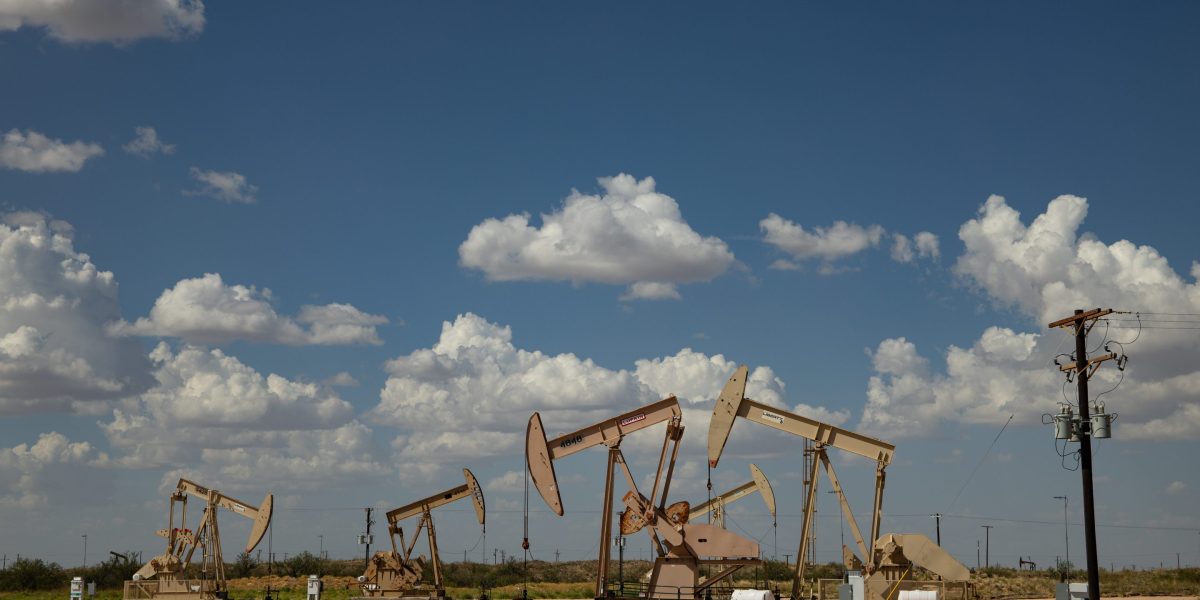
The Permian is the heart of the oil patch and the epicenter of the shale revolution that has transformed the U.S. into an energy superpower. It stretches across the vast expanses of West Texas and southeastern New Mexico—and is dotted with drilling rigs, pipelines, trucks and other infrastructure necessities.
That’s made the Permian a target-rich environment. And now that U.S. oil prices have been hovering around $100 a barrel lately, criminals can’t resist the payoff. According to the Dallas Fed survey, 32% of executives who were impacted by oil theft said it had increased slightly over the last 12 months, while 47% said it remained the same, and 22% said it decreased slightly or significantly.
Nearly half of the oil executives (47%) said the most common form of theft was targeted and organized, while 42% described it as opportunistic petty theft. Still, the losses were relatively minimal, with 84% saying the financial impact of the theft was low.
Impact on the Permian Basin
The Permian Basin has become a hotspot for oil theft, with nearly half of firms in the area reporting operational impacts. The Dallas Fed survey highlights the growing concern, as 47% of firms in the region reported being affected by theft, compared to only 14% outside the area.
The region’s significance as the epicenter of the shale revolution makes it a prime target for organized and opportunistic theft. The high value of oil, now hovering around $100 a barrel, has made it increasingly attractive for criminals.
The survey also revealed that 32% of impacted executives saw an increase in theft over the past year, while 47% reported no change. This suggests a steady but not escalating threat to the region’s operations.
Despite the reported thefts, the financial impact on most firms remains low, with 84% of affected executives stating that the losses were minimal. This could indicate that while theft is a growing issue, it hasn’t yet caused major disruptions.
However, the presence of organized crime and the increasing complexity of theft operations suggest that the problem is evolving. The Dallas Fed’s focus on this issue signals a growing concern among industry leaders.
Types of Theft and Industry Response
The Dallas Fed survey found that nearly half of the oil executives (47%) described the most common form of theft as targeted and organized, while 42% described it as opportunistic petty theft. This indicates a shift from random theft to more structured and professional operations.
The survey also revealed the types of assets being stolen, with 61% of respondents reporting crude oil theft, 58% reporting theft of piping, valves, and wiring, and 39% reporting equipment theft. These figures highlight the diverse nature of the problem.
Despite the reported thefts, the financial impact on most firms remains low, with 84% of affected executives stating that the losses were minimal. This could indicate that while theft is a growing issue, it hasn’t yet caused major disruptions.
The Dallas Fed’s focus on this issue signals a growing concern among industry leaders. The survey highlights the need for better security and monitoring in the region, especially as the value of oil continues to rise.
Industry leaders are now facing a new challenge as the threat of organized oil theft grows. The need for improved security and collaboration between companies and law enforcement is becoming more apparent.
Law Enforcement and Criminal Activity
Law enforcement has started to take notice of the growing problem of oil theft. In August, executives from a wastewater disposal company were charged with felony oil theft, money laundering, and organized crime. This was part of an investigation dubbed Operation Black Market Basin, which resulted in the seizure of over $12 million in petroleum products, vehicles, cash, and other assets.
The investigation involved petroleum allegedly acquired and sold across Texas, New Mexico, and Oklahoma. This case highlights the increasing involvement of organized crime in oil theft and the need for stricter enforcement.
In April, federal prosecutors announced charges in a large-scale oil theft conspiracy in the Permian Basin, where stolen crude oil was transported across the New Mexico-Texas border for resale. This indicates that the problem is not limited to individual thefts but involves organized networks.
Howard County Sheriff Stan Parker told Texas Public Radio in May that his county, near the Midland-Odessa oil hub, sees “probably over 1,000, 1,500 barrels of oil reported stolen every month.” This figure underscores the scale of the issue and the challenges faced by local authorities.
Law enforcement is now working to combat these organized theft operations, but the complexity of the oil industry and the vastness of the Permian Basin make it a difficult task.
Challenges in Monitoring and Security
One of the main challenges in addressing oil theft is the difficulty in monitoring and securing the vast infrastructure of the Permian Basin. Howard County Sheriff Stan Parker noted that it’s hard to determine who is supposed to be on a site and who is not. This lack of clarity makes it easier for thieves to operate undetected.
The complexity of the oil field operations, including tank batteries, pipelines, and drilling rigs, adds to the difficulty of tracking unauthorized activity. Sheriff Parker explained that if he pulled up on a tank battery, he wouldn’t know if someone was there legally or if they were stealing oil.
This lack of visibility is a major obstacle for law enforcement and industry leaders. The sheer scale of the Permian Basin makes it challenging to monitor every site effectively. As a result, theft can occur without immediate detection.
Industry leaders are now looking for better security solutions to combat the growing threat of organized oil theft. This includes increased surveillance, better access control, and stronger collaboration with law enforcement.
As the value of oil continues to rise, the need for improved security and monitoring in the Permian Basin becomes more urgent. The challenge lies in balancing operational efficiency with the need for greater oversight.
—
Source: Fortune.com
Summary
Oil theft has increased in the Permian Basin as prices have risen, with nearly half of firms reporting impacts. The Dallas Fed survey found that 47% of executives described theft as targeted and organized, while 42% called it opportunistic. Despite the rise in theft, 84% of affected firms reported minimal financial impact. The survey also showed that 61% of firms reported crude oil theft, and 58% reported theft of piping and wiring. Law enforcement has started to crack down on organized oil theft, with recent arrests and seizures of over $12 million in assets.
Our Reading
The numbers tell one story.
Oil prices are up 60% this year, and thefts are up in the Permian.
Half of firms in the region report being impacted, but losses are low.
Most thefts are organized, not petty.
Law enforcement is stepping in, but the scale of the problem is still growing.
Author: Evan Null