Source: Fox News
Summary
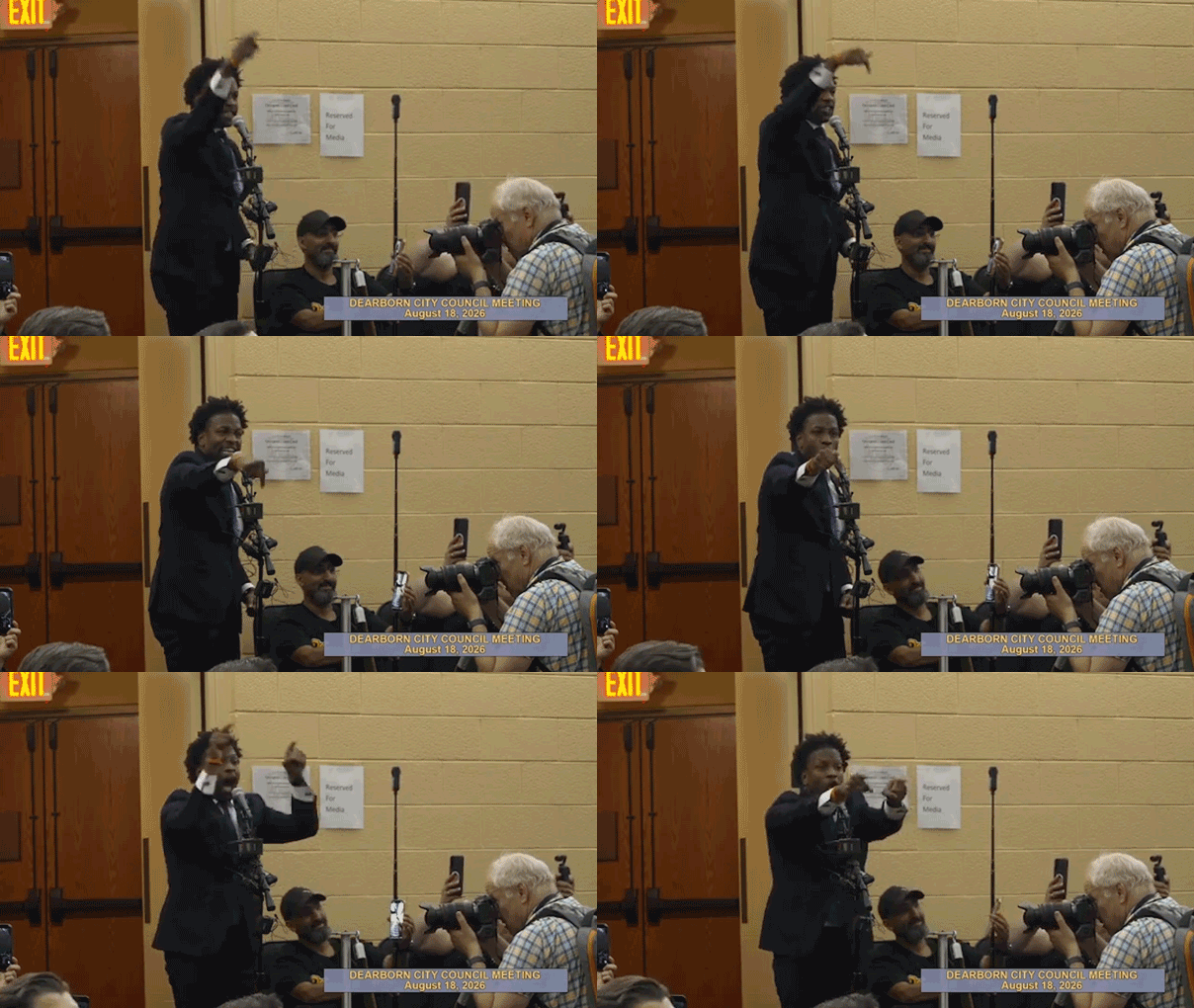
A Black Christian pastor, Lorenzo Sewell, criticized Michigan Senate candidate Abdul El-Sayed for following Sharia law and warned of potential Islamic influence in the U.S. Sewell claimed El-Sayed, who previously mentioned following Sharia law in a 2009 interview, could recommend federal judges if elected. El-Sayed’s spokeswoman denied the claims, calling them “cheap attacks.” Sewell also accused El-Sayed of not assimilating and of associating with controversial figures like Hasan Piker, who has made inflammatory remarks.
Our Reading
As expected, the matter has reached another stage.
Pastor Sewell warns of Sharia law in America.
El-Sayed’s past comments resurface.
His campaign denies the claims.
Religious and cultural divides deepen in political rhetoric.
Author: Evan Null
Religious Rhetoric in Political Campaigns
The pastor’s comments reflect a broader trend where religious beliefs are used to frame political opposition. His warnings about Sharia law are not new, but they resurface in the context of a high-profile Senate race. The use of religious language to describe political opponents is a common strategy in American politics. It often serves to mobilize specific voter bases by invoking shared values or fears. This kind of rhetoric can be seen in various political campaigns, where religious identity becomes a key factor in shaping public opinion.
Resurfacing Controversies
El-Sayed’s past remarks about Sharia law, made in a 2009 interview, have come back into focus. This is a common occurrence in political campaigns, where past statements are revisited and reinterpreted. The timing of these revelations often aligns with key moments in the campaign, such as debates or media coverage. The resurfacing of such statements can significantly impact a candidate’s image and public perception. It also highlights the importance of a candidate’s past in shaping their current political narrative.
Accusations and Denials
El-Sayed’s campaign has denied the accusations made by Sewell, calling them attacks. This pattern of accusation and denial is a staple of political discourse. Candidates often respond to allegations by discrediting the sources or reiterating their positions. The denial serves to protect the candidate’s image and maintain support among their base. It also allows the campaign to shift the focus back to their message and platform, rather than the allegations made against them.
Cultural Assimilation and Identity
Sewell’s comments about assimilation reflect a broader debate about cultural identity in America. The idea of assimilation is often used to frame discussions about immigration, religion, and political values. In this case, Sewell is suggesting that certain groups are not fully integrating into American culture. This kind of rhetoric can be divisive, as it implies that some groups are not fully American. It also raises questions about what it means to be American and who gets to define those values.
Political Alliances and Controversies
El-Sayed’s association with Hasan Piker, a controversial figure, has also come under scrutiny. This highlights the importance of a candidate’s allies in shaping public perception. The alliances a candidate makes can influence how they are viewed by voters and the media. In this case, Piker’s past remarks have been used to question El-Sayed’s judgment and values. This underscores the role of political alliances in shaping a candidate’s image and the potential consequences of those associations.