Source: Fortune
Summary
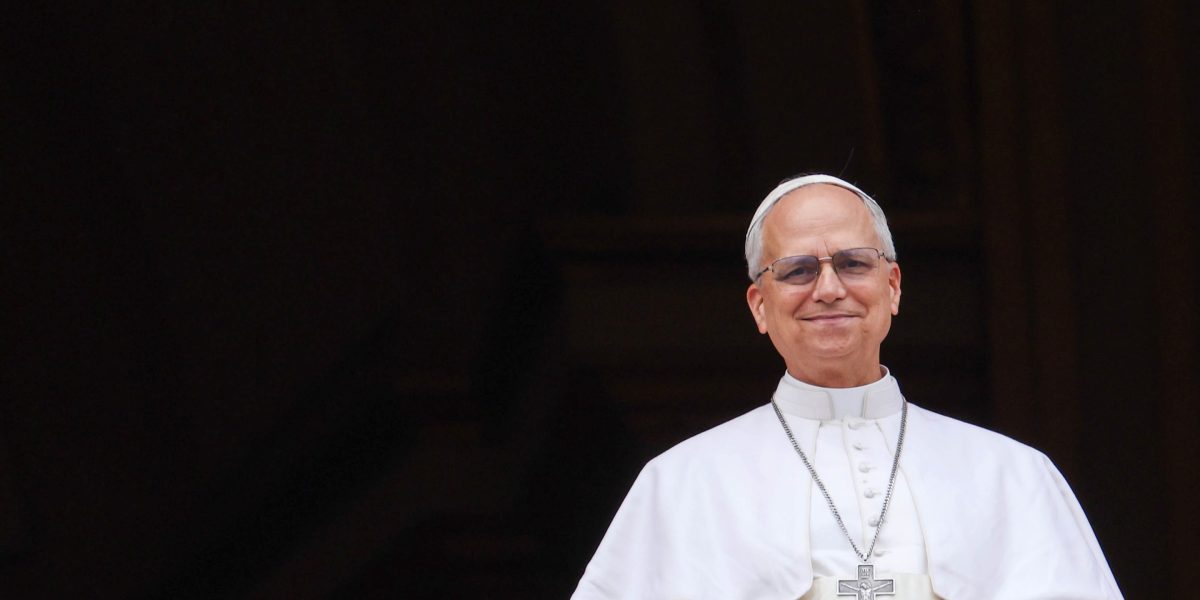
Pope Leo XIV warned that artificial intelligence could become a new form of “economic colonialism,” deepening the divide between wealthy and poor nations. He criticized algorithms for creating a “subtle form of domination” over who is seen and heard. The pope called for legal frameworks and oversight to prevent AI from eroding human dignity and family life. His remarks echoed concerns raised in his May 2026 encyclical, “Magnifica Humanitas,” which criticized AI’s impact on labor and relationships. The Vatican has previously clashed with the Trump administration over AI regulation.
Our Reading
The numbers tell one story.
Pope Leo XIV warns of AI as economic colonialism.
He calls for legal frameworks and oversight.
His remarks echo past encyclicals.
The Vatican clashes with Trump-era deregulation.
A redelivery of the church’s stance.
Author: Evan Null
A redelivery of the church’s stance
The address built on his first encyclical, which made AI’s effect on human dignity, labor and family life the centerpiece of his papacy’s early teaching. Christopher Hale, a political consultant and founder of the newsletter Letters from Leo, said Friday’s remarks were less a new position than a redelivery of ideas already laid out in the encyclical.
“No one reads a 200-page encyclical,” Hale told Fortune. “Oftentimes what will happen is over weeks and months the pope will reveal different parts of that encyclical.” The pope’s Friday’s remarks were in gist a reiteration of his first encyclical—but the point is who it is redelivering the point.
Hale said Leo’s religious authority gives him standing that other AI critics lack in confronting the technology industry.
“Silicon Valley has an opponent that operates on a terrain that they’re not used to,” Hale said. “They’re used to dealing in transactional relationships, but Leo XIV represents something of a quagmire for them because he cannot be bought off, he cannot be terrorized, he can’t be indicted, he can’t be deported.”
Religious authority and AI criticism
Hale added that pairing AI criticism with religious language broadens its reach beyond activists already skeptical of the technology.
“When this language is combined with moral language, with religious language, what it does is it takes a leftist critique that might have marginal support in the United States and makes it mainstream,” he said.
Hale pointed to the backlash against AI data centers as evidence that opposition to the industry already cuts across party lines, even without a shared political language to unite it.
“If you look at the criticism of AI data centers, particularly over the summer, they’re really coming from all factions, from the left and the right,” Hale said. “What’s been hard about it, though, is that there has yet to be a language that can combine the two.”
The pope’s unique position
“He strangely represents the fusion of the populist left and the populist right,” Hale said. “That’s what makes him so powerful.”
Hale emphasized that the pope’s moral authority gives him an edge over other AI critics. His ability to speak across ideological lines makes his warnings more impactful.
While many critics focus on specific issues like data privacy or labor rights, the pope frames AI as a broader threat to human dignity and social structures. This approach resonates with a wider audience.
The Vatican’s stance on AI is not new, but its delivery by a religious leader with global influence adds weight to the message. It challenges the tech industry to consider ethical implications beyond profit and innovation.
Opposition to AI crosses political lines
Opposition to AI is not limited to any single political group. Hale noted that criticism of AI data centers has come from both the left and the right, indicating a growing concern about the technology’s impact.
However, the lack of a unified language to address these concerns remains a challenge. Different groups focus on different aspects of AI, from environmental impact to labor rights, making it difficult to build a cohesive movement.
The pope’s message offers a unifying framework that combines ethical and religious concerns with broader social issues. This could help bridge the gap between different factions opposing AI.
Despite this, the tech industry continues to push forward with minimal regulation, highlighting the ongoing struggle between innovation and ethical responsibility.