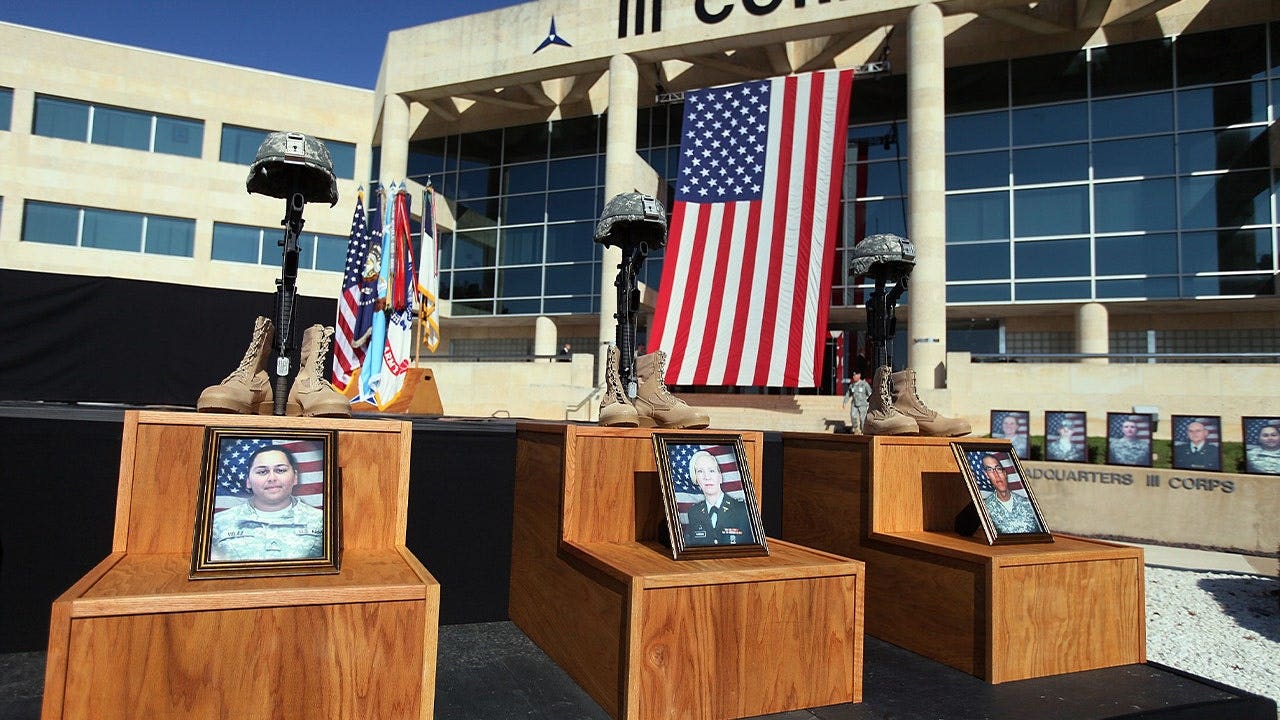
Source: Fox News
Summary
Survivors of the 2009 Fort Hood massacre supported President Donald Trump’s decision to stop live-streaming the execution of Nidal Hasan, fearing it would become a spectacle. Hasan is scheduled to be executed by firing squad on Dec. 3, 2026, with victims’ families allowed to attend. Alonzo Lunsford, who was shot seven times, called the decision a “positive move” and warned against making the execution a public event. Julia Wilson, another survivor, expressed concern about the psychological impact of broadcasting the execution. Trump stated he believed live-streaming could have been a deterrent but ultimately agreed to block the broadcast.
Our Reading
As expected, the matter has reached another stage.
Survivors speak of trauma and spectacle.
Executions are debated as public or private.
Families are given a final witness.
Death is planned, but not shown.
Author: Evan Null
Key Moments
The survivors of the 2009 Fort Hood massacre have spoken out against live-streaming the execution of Nidal Hasan. They argue that broadcasting his death could turn the event into a spectacle and provide propaganda for terrorist groups. Hasan is set to be executed by firing squad on Dec. 3, 2026, with victims’ families allowed to attend in person. Alonzo Lunsford, who was shot seven times during the attack, praised the decision to stop the live-stream, calling it a “positive move.” He emphasized that the execution should not be turned into a public event or a form of entertainment.
Julia Wilson, another survivor, expressed concerns about the psychological impact of broadcasting the execution. She said that seeing someone murdered could affect people’s mental health, regardless of whether they deserved it. She also worried that footage of the execution could be found online by children. Trump stated that he believed live-streaming the execution could have served as a deterrent but ultimately sided with those who opposed making it available for public viewing.
Trump said that the execution will proceed as scheduled, but it will not be streamed. He emphasized that the immediate families of the victims will be allowed to witness the event if they choose. He called it “justice” and stressed that Hasan will die as planned. Lunsford criticized the Army for failing to act on warnings about Hasan before the attack, suggesting that his transfer to Fort Hood was a mistake. He also wondered what might have happened if Hasan had deployed overseas before carrying out the attack.
For Lunsford, allowing victims to witness the execution remains important, even without a public broadcast. He said that it would help families close the chapter on the tragedy. However, he acknowledged that survivors will continue to live with reminders of the attack for the rest of their lives. He described himself as a “survivor” rather than a “victim,” highlighting the lasting impact of the event on those who lived through it.
The debate over the execution of Hasan reflects broader discussions about how society handles justice, trauma, and public memory. Survivors argue that the execution should not be made into a public spectacle, while others see it as a necessary form of closure. The decision to block the live-stream appears to balance these concerns, allowing for a private, dignified end to the case.