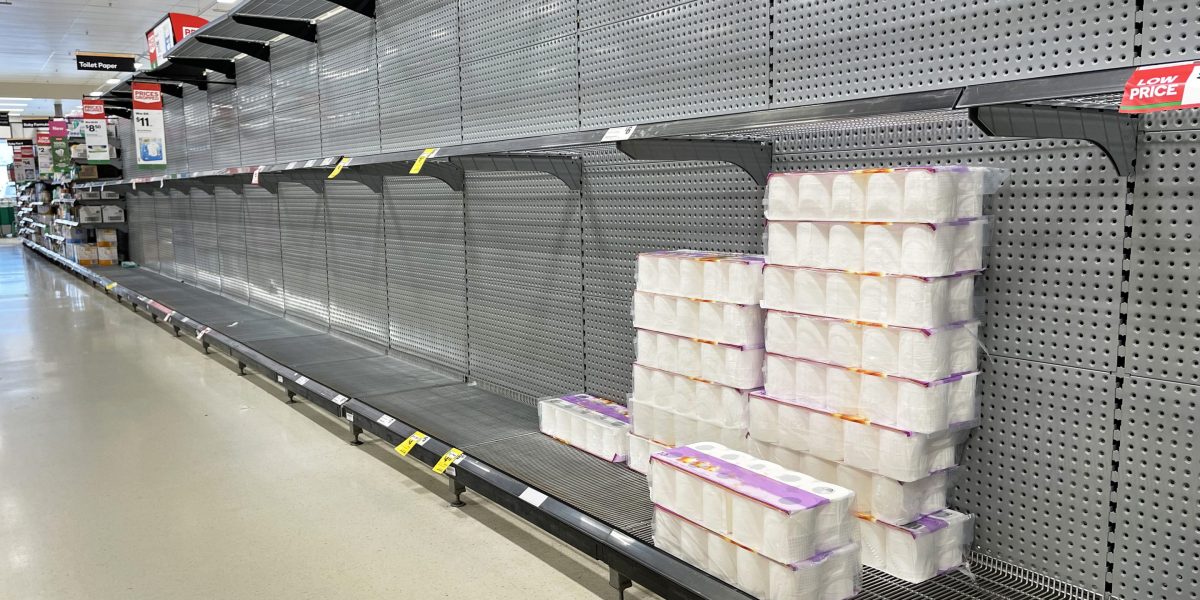
Source: Fortune
Summary
Japanese consumers are stockpiling toilet paper due to concerns over the U.S.-Israeli-Iran conflict, despite no actual supply chain disruptions. This is not the first time Japan has experienced toilet paper panic, with previous instances occurring in 1973 and 2011. Researchers have found that panic buying is often driven by social media and rumors, rather than actual shortages. The phenomenon is not limited to Japan, with some reports of stockpiling in neighboring Australia.
Our Reading
The numbers tell one story.
Panic buying is back in Japan, with toilet paper sales surging despite no connection to the conflict. The Japanese government has urged citizens to stop buying ahead of time, but social media posts continue to fuel the panic. This is not the first time Japan has experienced toilet paper panic, with a deep history of stockpiling during times of uncertainty. The phenomenon is driven by a fear of instability and a desire for control.
The announcement sounds familiar.
Japan’s history with toilet paper panics dates back to 1973, triggered by turmoil in the Middle East over oil. The cycle has repeated itself during times of crisis, including the devastating earthquake and tsunami of 2011. The current panic is driven by the same underlying fears and anxieties.
The strategy enters a familiar phase.
As the panic buying continues, it’s clear that toilet paper has become a symbol of long-term stability and responsibility. The importance of toilet paper “runs deep into the soul of modern culture,” according to anthropologist Grant Jun Otsuki. The panic is driven by a desire to secure supplies and maintain control in times of uncertainty.
The current panic is just the latest iteration of a familiar pattern.
Author: Evan Null