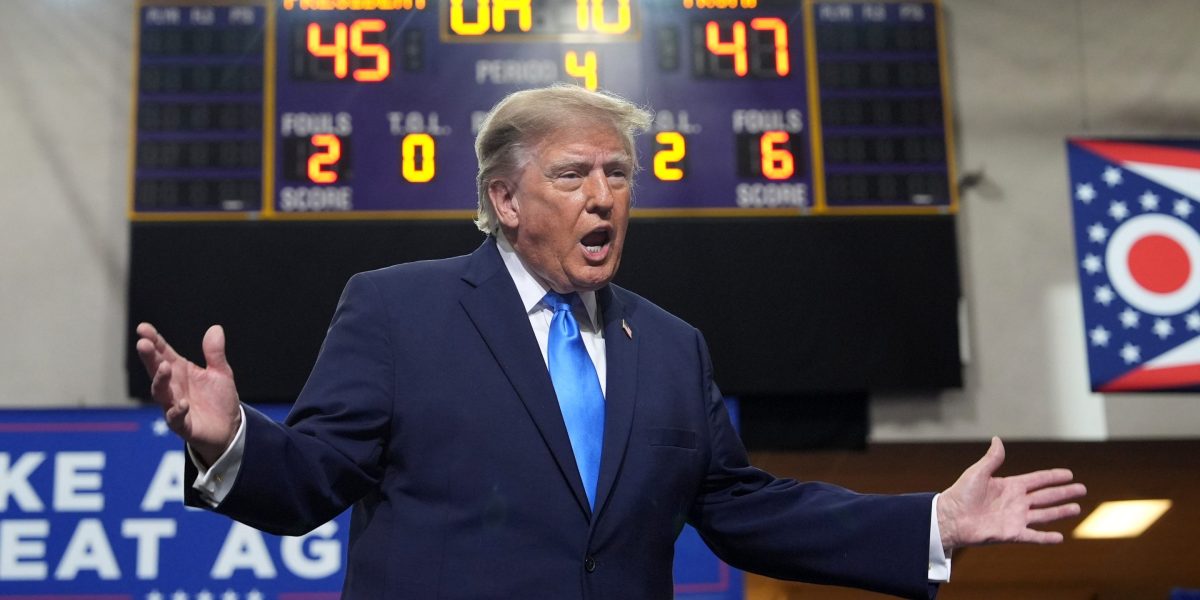
Source: Fortune.com
Summary
President Donald Trump defended data centers during a rally in Ohio, where he claimed they benefit local communities and warned that shutting them down would allow China to take over AI development. The remarks drew a muted response from the crowd. Data centers have become a contentious issue in Ohio, with bipartisan opposition over their impact on energy costs and resources. Trump is campaigning ahead of the November elections, focusing on states like Ohio, where the Senate race is critical for both parties.
Our Reading
The numbers tell one story.
Trump pushed data centers as a key issue, but the crowd was quiet.
Ohio’s Senate race hinges on data center politics, with Husted under fire.
Democrats highlight Husted’s ties to Big Tech and Epstein-linked donors.
The crowd’s reaction shows the issue is a political liability for Republicans.
Author: Evan Null
Trump’s Data Center Defense
During a rally in Ohio, President Donald Trump defended data centers, arguing they are vital for AI development and economic growth. He claimed that shutting them down would allow China to take the lead in technology. The remarks, however, were met with a subdued reaction from the crowd, suggesting that the issue is not resonating with voters.
Trump’s focus on data centers comes as the issue has become a divisive topic in Ohio and across the country. Voters are concerned about the impact of data centers on electricity prices, farmland, and water supplies, leading to bipartisan opposition. Despite this, Trump continues to champion the industry, framing it as a national security issue.
The data center debate is particularly significant in Ohio, where Republican Senator Jon Husted has faced criticism for his role in attracting data centers to the state. Husted, who is running for Senate, has been targeted by Democrats for his ties to Big Tech and for allegedly prioritizing corporate interests over local concerns.
Trump’s remarks highlight the growing political tensions surrounding data centers, which have become a key issue in the upcoming midterm elections. As both parties try to win over voters, the debate over data centers is shaping the campaign narratives in states like Ohio.
Despite the controversy, Trump remains a vocal supporter of data centers, emphasizing their importance to the U.S. economy and national security. His stance reflects a broader strategy to position himself as a leader in the AI race, even as the issue continues to divide voters and lawmakers.
Data Centers as a Political Liability
Data centers have become a polarizing issue in Ohio, with both Democrats and Republicans expressing concerns over their environmental and economic impact. The debate has intensified as the state prepares for the November elections, with candidates using the issue to rally support and attack opponents.
Republican Senator Jon Husted has been a central figure in the data center debate, facing criticism for his role in attracting tech companies to Ohio. Democrats have accused him of prioritizing corporate interests over the needs of local communities, while Republicans have defended his efforts to boost the state’s economy.
The controversy has also drawn attention to Husted’s connections with powerful donors, including retail magnate Les Wexner, who has ties to the late Jeffrey Epstein. These associations have further complicated Husted’s campaign, adding another layer of scrutiny to his political career.
As the election approaches, the data center issue is likely to remain a key talking point in Ohio. Both parties are using it to shape their messages, with Republicans emphasizing economic growth and Democrats highlighting environmental and social concerns.
The debate over data centers reflects broader tensions in American politics, as voters grapple with the costs and benefits of technological advancement. For now, the issue remains a contentious and unresolved challenge for candidates in Ohio and beyond.
Trump’s Midterm Strategy
President Donald Trump is embarking on a 32-day campaign tour ahead of the November elections, focusing on key battleground states like Ohio. His strategy includes rallying support in Republican-leaning areas while trying to sway undecided voters in competitive districts.
During his rally in Ohio, Trump emphasized the economic benefits of data centers, arguing that they are essential for the country’s technological future. However, the crowd’s muted reaction suggested that the issue is not resonating with all voters, particularly those concerned about rising energy costs and environmental impacts.
Trump’s campaign is also focused on maintaining Republican control of Congress, despite challenges from Democratic candidates who are capitalizing on voter dissatisfaction with the economy and energy prices. The president’s rhetoric often contrasts with the realities faced by everyday Americans, creating a disconnect that could affect his re-election prospects.
As the campaign progresses, Trump’s ability to connect with voters on key issues like data centers and energy costs will be crucial. His team is working to frame these issues in a way that aligns with his broader narrative of economic strength and national security.
With the midterm elections approaching, the focus on data centers and other policy issues will continue to shape the political landscape in Ohio and across the country.
Ohio’s Senate Race
The Senate race in Ohio is a critical battleground for both parties, with Republican Jon Husted facing off against Democrat Sherrod Brown. Husted’s campaign has been shaped by the controversy surrounding data centers, which have become a major issue in the state.
Brown has been vocal in his criticism of Husted, accusing him of prioritizing corporate interests over the needs of Ohioans. He has highlighted the impact of data centers on energy costs and local communities, using the issue to rally support among voters.
Despite the challenges, Husted has maintained a strong base of support among Republicans, who see him as a key figure in the state’s political landscape. His campaign has focused on economic growth and job creation, positioning him as a leader who can bring prosperity to Ohio.
The race has also been influenced by broader political trends, with both parties using the issue of data centers to shape their messaging. As the election approaches, the debate over data centers is likely to remain a central theme in the race.
With the outcome of the Senate race hanging in the balance, the issue of data centers will continue to play a significant role in shaping the political landscape in Ohio.
Republican Challenges in the Midterms
Republicans are facing significant challenges in the upcoming midterm elections, with concerns over the economy, energy costs, and voter dissatisfaction threatening their chances of maintaining control of Congress. Despite these challenges, the party remains focused on key battleground states like Ohio, where the outcome of the Senate race could be decisive.
President Trump’s campaign has emphasized the importance of data centers, framing them as a critical component of the country’s economic and technological future. However, the issue has also become a source of controversy, with voters expressing concerns about the impact of data centers on local communities and the environment.
As the campaign progresses, Republicans are working to counter these concerns by highlighting the economic benefits of data centers and other policy issues. They are also focusing on voter turnout, hoping to mobilize their base and secure a strong showing in the November elections.
The challenges facing Republicans are compounded by the broader political climate, with many voters expressing frustration over the direction of the country. The party’s ability to address these concerns will be crucial in determining the outcome of the midterms.
With the election approaching, the focus on data centers and other key issues will continue to shape the political landscape, influencing the strategies and messaging of both parties as they prepare for the final stretch of the campaign.