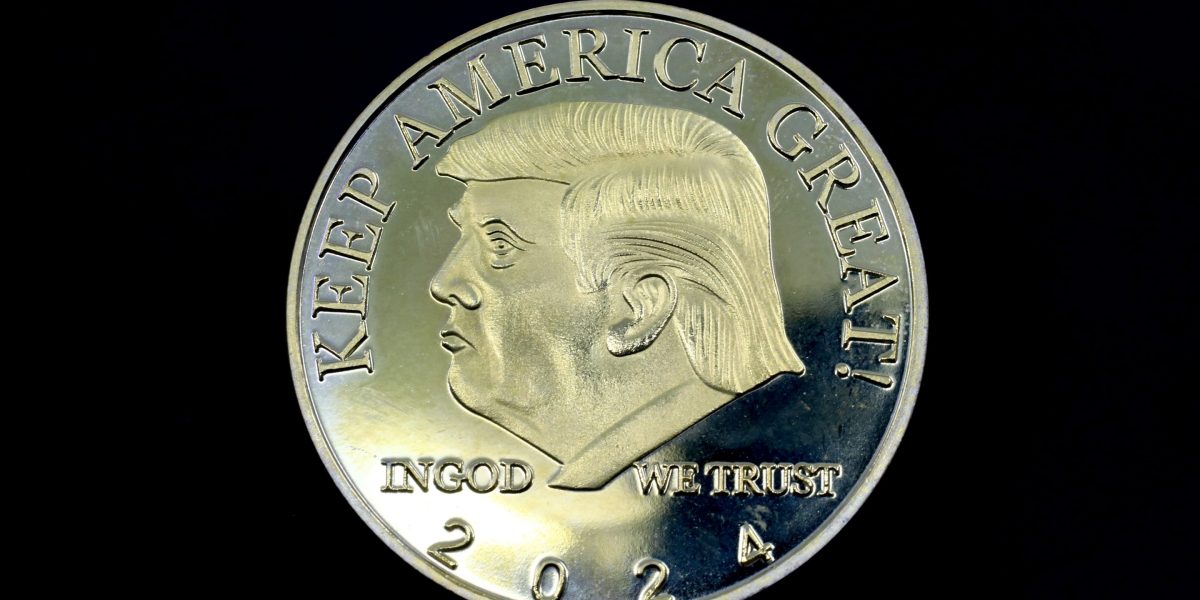
Source: Fortune.com
Summary
The U.S. Mint announced the release of a $1 coin featuring Donald Trump’s face, designed to celebrate America’s 250th anniversary. The coin, which includes the Great Seal of the United States on the reverse, was approved by the U.S. Commission of Fine Arts, a body Trump appointed members to. The coin’s design includes the phrase “1776 (tilde) 2026” and “E PLURIBUS UNUM.” The coins, which can be used as legal tender, will go on sale Wednesday. Prices range from $61 for a roll of 25 to $154.50 for a bag of 100, with some coins marked “July 4th.”
Our Reading
The numbers tell one story.
Trump’s face on a coin. A 250th anniversary. A legal gray area. The U.S. Mint says it’s about heritage.
Approval came from a commission Trump handpicked. Lawsuits and branding attempts have followed.
Critics called it unusual. The Mint says it’s legal. The coin is for sale. The story is not over.
The president’s legacy is being minted, one coin at a time.
Author: Evan Null
Trump’s Face on a Coin
The U.S. Mint is releasing a $1 coin featuring Donald Trump’s face, intended to celebrate the 250th anniversary of the United States. The coin, which will go on sale Wednesday, includes the Great Seal of the United States on the reverse side. The design was approved by the U.S. Commission of Fine Arts, a body that Trump appointed members to. The coin’s release has sparked debate, particularly over federal law that bars the depiction of a living president on U.S. currency.
The coin’s design includes the word “LIBERTY” above Trump’s face and the years “1776 (tilde) 2026” below it. On the reverse, the Great Seal features a bald eagle holding arrows in one claw and an olive branch in the other, with the phrase “E PLURIBUS UNUM” in a banner. The U.S. Mint said the coin is meant to honor 250 years of American heritage.
The coins can be used as legal tender, but their primary purpose is commemorative. The U.S. Mint said it will randomly hide some special-issue coins in rolls and bags, marked “July 4th” because they were struck on that day. Prices for the coins range from $61 for a roll of 25 to $154.50 for a bag of 100. Households are limited to two orders, but the cap will be lifted at 2 p.m. Eastern time on Thursday.
The release of the coin comes amid ongoing legal and political challenges to Trump’s efforts to leave a lasting legacy in Washington, D.C. Previous attempts to brand institutions with his name have faced legal hurdles. The U.S. Mint’s decision to proceed with the coin highlights the complex intersection of commemoration, law, and political influence.
While the Mint emphasizes the coin’s historical significance, critics argue it crosses a line by featuring a living president. The coin’s release is another step in Trump’s broader effort to shape his legacy through public and private institutions.
Approval and Controversy
The coin’s design was approved by the U.S. Commission of Fine Arts, a body that Trump has had significant influence over. The commission’s approval was a key step in the coin’s release, despite concerns about the depiction of a living president on U.S. currency. The U.S. Mint stated that the coin is authorized under specific circumstances, though the legality remains a point of contention.
Trump himself has spoken about the coin, calling the idea “very unusual” but expressing that he was “honored by it.” His comments reflect a broader pattern of using public and private institutions to reinforce his legacy. The coin is another example of this strategy, even as it faces legal and political scrutiny.
The U.S. Mint’s decision to proceed with the coin highlights the complex relationship between government agencies and political figures. While the Mint claims the coin is a commemorative effort, the involvement of Trump and his allies raises questions about the motivations behind the release.
The controversy surrounding the coin is not new. Trump has faced legal challenges over his attempts to brand institutions with his name, including the Kennedy Center and the U.S. Institute for Peace. The coin’s release continues this trend, blending commemoration with political branding.
Despite the criticism, the U.S. Mint has moved forward with the coin’s release, emphasizing its historical significance. The coin’s sale is a clear signal of the ongoing influence of Trump’s political legacy, even as it sparks debate about the boundaries of commemoration and political expression.
Legal and Political Implications
The release of the coin has raised legal questions about the depiction of a living president on U.S. currency. Federal law generally prohibits such depictions, but the Treasury Secretary has the authority to approve special coins under certain circumstances. The U.S. Mint’s decision to proceed with the coin highlights the flexibility of these rules, even as they remain controversial.
The coin’s design, featuring Trump’s face and the Great Seal, has drawn both support and criticism. Supporters argue that it is a legitimate way to honor American history, while critics see it as an overreach of political influence. The U.S. Mint has emphasized that the coin is not a regular circulation coin but a commemorative piece, which allows for more flexibility in its design.
Trump’s involvement in the coin’s approval process has also raised concerns about the role of political figures in shaping public commemoration. The U.S. Commission of Fine Arts, which approved the design, has been criticized for its close ties to the administration. This has led to questions about the impartiality of the approval process.
The coin’s release comes at a time when Trump is still actively involved in politics, despite being out of office. His efforts to leave a lasting legacy through public and private institutions continue to be a point of contention. The coin is another example of this strategy, even as it faces legal and political challenges.
While the U.S. Mint has framed the coin as a tribute to American heritage, the broader implications of its release remain unclear. The coin’s sale is a reflection of the complex interplay between commemoration, law, and political influence in the United States.
Public Reaction and Sales
The release of the coin has generated mixed reactions from the public. Some view it as a unique way to commemorate the 250th anniversary of the United States, while others see it as an unnecessary and controversial move. The U.S. Mint has reported strong interest in the coin, with many collectors and enthusiasts eager to acquire it.
The coin’s price points have also drawn attention. A roll of 25 coins costs $61, while a bag of 100 costs $154.50. The U.S. Mint has also included some special-issue coins marked “July 4th,” which were struck on the anniversary of the Declaration of Independence. These coins are expected to be particularly sought after by collectors.
The U.S. Mint has placed limits on the number of coins that can be purchased by individual households, with a cap of two orders. However, this limit will be lifted at 2 p.m. Eastern time on Thursday, allowing for more widespread availability. The decision to lift the cap reflects the high demand for the coin.
The public reaction to the coin has been influenced by broader political sentiments. Supporters of Trump see the coin as a symbol of his legacy, while critics view it as an attempt to elevate his image in a way that may not be appropriate. The U.S. Mint has not commented on the political implications of the release, focusing instead on the commemorative nature of the coin.
As the coin goes on sale, its reception will likely continue to be shaped by political and cultural factors. The U.S. Mint’s decision to proceed with the release highlights the complex relationship between commemoration and political influence in the United States.
Legacy and Influence
The release of the coin is part of a broader effort by Trump to shape his legacy through public and private institutions. His attempts to brand institutions with his name, including the Kennedy Center and the U.S. Institute for Peace, have faced legal challenges. The coin is another example of this strategy, even as it raises questions about the boundaries of commemoration and political influence.
The U.S. Mint’s decision to proceed with the coin highlights the complex relationship between government agencies and political figures. While the Mint claims the coin is a commemorative effort, the involvement of Trump and his allies raises concerns about the motivations behind the release. The coin’s design, featuring Trump’s face, has drawn both support and criticism.
The controversy surrounding the coin reflects broader debates about the role of political figures in shaping public commemoration. The U.S. Commission of Fine Arts, which approved the design, has been criticized for its close ties to the administration. This has led to questions about the impartiality of the approval process.
The coin’s release comes at a time when Trump is still actively involved in politics, despite being out of office. His efforts to leave a lasting legacy through public and private institutions continue to be a point of contention. The coin is another example of this strategy, even as it faces legal and political challenges.
While the U.S. Mint has framed the coin as a tribute to American heritage, the broader implications of its release remain unclear. The coin’s sale is a reflection of the complex interplay between commemoration, law, and political influence in the United States.