Source: Fortune.com
Summary
Steve Hanke, known as the “Money Doctor,” is advising Venezuela’s National Assembly on adopting the U.S. dollar to combat hyperinflation. He previously helped Montenegro, Ecuador, and Zimbabwe with currency transitions. Hanke believes dollarization would stabilize Venezuela’s economy, which is heavily dependent on oil. The country’s bolivar has lost 78% of its value against the dollar in the past year, with most Venezuelans already using dollars. Despite challenges, Hanke estimates a 50%-80% chance of official dollarization. He predicts the move would attract foreign investment and boost economic growth.
Our Reading
The numbers tell one story.
Steve Hanke, the “Money Doctor,” is back in Venezuela, pushing for dollarization.
He’s done it before, but this time the odds are better.
Most Venezuelans already use dollars, which helps.
But the central bank and monetary policy are still sticking points.
Author: Evan Null
Steve Hanke’s Role in Venezuela
Steve Hanke, a professor of applied economics at Johns Hopkins University, has earned the nickname “Money Doctor” for his work in helping countries control inflation through currency reforms. His latest effort is in Venezuela, where he has been named a special advisor to the National Assembly.
His solution for Venezuela’s 400% inflation is full adoption of the U.S. dollar. This would mean abandoning the bolivar and the central bank, which he says is the only way to stop the government from printing money to cover its debts, which fuels inflation.
Hanke has a history of advising countries on currency switches. He helped Montenegro and Ecuador adopt the U.S. dollar in the late 1990s and early 2000s. He also worked with Zimbabwe, which later abandoned the dollar and saw hyperinflation return.
This is his second attempt in Venezuela. His earlier plan for a currency board in the mid-1990s failed to gain support. Now, he believes there is a 50%-80% chance of dollarization being approved.
He says the move would be the largest switch from a domestic currency to an alternative since the euro’s introduction in 1999. But the challenge remains in giving up the central bank and handing over monetary policy to the Federal Reserve.
Spontaneous Dollarization in Venezuela
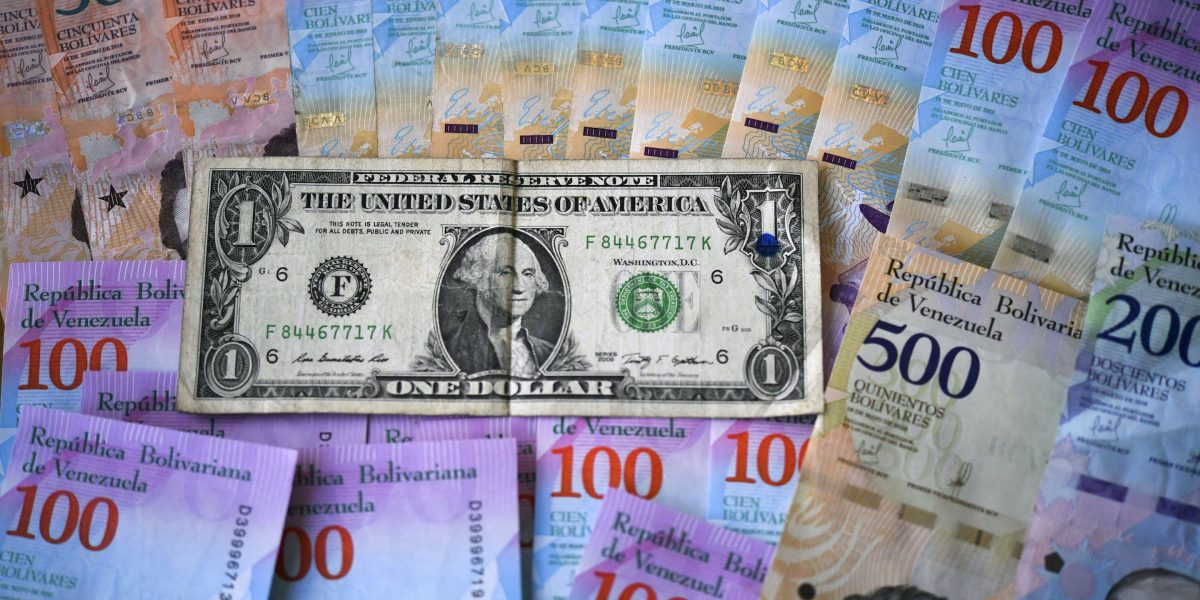
The U.S. dollar is already deeply embedded in the Venezuelan economy. The bolivar has lost 78% of its value against the dollar over the past year, leading most consumers to use dollars for purchases.
Almost everyone not working for the government or receiving state aid uses dollars. This “spontaneous dollarization” has made an official switch more likely, according to Hanke.
Despite this, the idea of abandoning the central bank and handing monetary policy to the Federal Reserve remains a major hurdle. The central bank has long been a key institution in Venezuela, acting as a lender of last resort.
Hanke argues that the benefits of dollarization outweigh the risks. He believes it would stabilize the economy, attract foreign investment, and unlock growth in the oil sector, which is vital to Venezuela’s economy.
He also points to the country’s $250 billion in debt, which is 150% of GDP. Increased oil production, he says, would generate the dollars needed to repay the debt.
Challenges and Past Examples
Despite the potential benefits, dollarization is not without challenges. Argentina’s president, Javier Milei, initially supported the idea but backed off after taking office. His administration managed to lower inflation by cutting subsidies and the budget deficit, but the annual rate remains high.
Argentina also faces the challenge of defending its peso, which is pegged to the dollar. Recent regional elections weakened Milei’s party, causing the peso to drop. The U.S. Treasury stepped in with a currency swap line to stabilize the situation.
Hanke says the key to Venezuela’s recovery is ending hyperinflation. He believes the move would lower interest rates, encourage borrowing, and boost the housing market and domestic investment.
He predicts that if dollarization happens soon, Venezuela could shift from negative to positive growth in the coming year. But the political and economic hurdles remain significant.
Still, Hanke remains confident in his approach, citing past successes in other countries as evidence that dollarization can work.
The Economic Impact of Dollarization
Dollarization would have a major impact on Venezuela’s economy. By adopting the U.S. dollar, the country would eliminate the risk of inflation caused by central bank money printing. This would stabilize prices and restore confidence in the economy.
Hanke argues that a stable currency would attract foreign investment, particularly in the oil sector, which is the backbone of Venezuela’s economy. Increased investment could lead to higher production and more revenue, which would help pay off the country’s $250 billion in debt.
Lower interest rates would also encourage borrowing by consumers and businesses. This could lead to a surge in the housing market and domestic investment, further stimulating economic growth.
However, the transition would require significant political will. The central bank would be abolished, and monetary policy would be controlled by the Federal Reserve. This is a major shift for a country that has long relied on its own currency and financial institutions.
Despite the challenges, Hanke believes the long-term benefits of dollarization outweigh the risks. He sees it as the only viable path to economic recovery in Venezuela.
Looking Ahead for Venezuela
With inflation at 400%, Venezuela’s economy is in crisis. The bolivar has lost most of its value, and the government is struggling to manage its debt. Steve Hanke’s plan for dollarization offers a potential solution, but it faces political and economic obstacles.
The National Assembly has not yet approved the move, and there are concerns about losing control of monetary policy. However, Hanke believes the odds of approval are now higher than ever before.
If approved, dollarization would be a major shift for Venezuela. It would mark the largest switch from a domestic currency to an alternative since the euro’s introduction in 1999. The move could stabilize the economy, attract investment, and restore growth.
But the road to dollarization is not without risks. The country would have to give up its central bank and rely on the Federal Reserve for monetary policy. This is a major change for a nation that has long been dependent on its own financial institutions.
Despite these challenges, Hanke remains optimistic. He believes that with the right policies, Venezuela can recover and return to economic stability. The question is whether the country is ready for such a bold move.