Source: Fortune.com
Summary
Albuquerque and Portland have implemented a traffic safety strategy called “rest in red,” where traffic signals default to red until a vehicle approaches. The system includes speed sensors that grant earlier green lights to drivers traveling at or below the speed limit. Officials reported a significant drop in crashes and injuries along the tested routes. Residents noted a noticeable change in driver behavior, with fewer high-speed incidents. The approach is being studied for broader application, though concerns remain about driver awareness and potential unintended consequences.
Our Reading
The numbers tell one story.
Albuquerque and Portland use rest in red to slow traffic.
Speed sensors help law-abiding drivers get green lights faster.
Crashes and injuries drop, but not everyone is convinced.
Driver behavior is key, and one speeder can disrupt the whole system.
The strategy enters a familiar phase.
Albuquerque’s Lead and Coal avenues see fewer accidents.
Portland’s Powell Boulevard gets a virtual speed bump.
Speeds drop from 39 mph to 30 mph.
Officials call it promising, but more research is needed.
Author: Evan Null
Virtual Speed Bumps: A New Approach to Traffic Safety
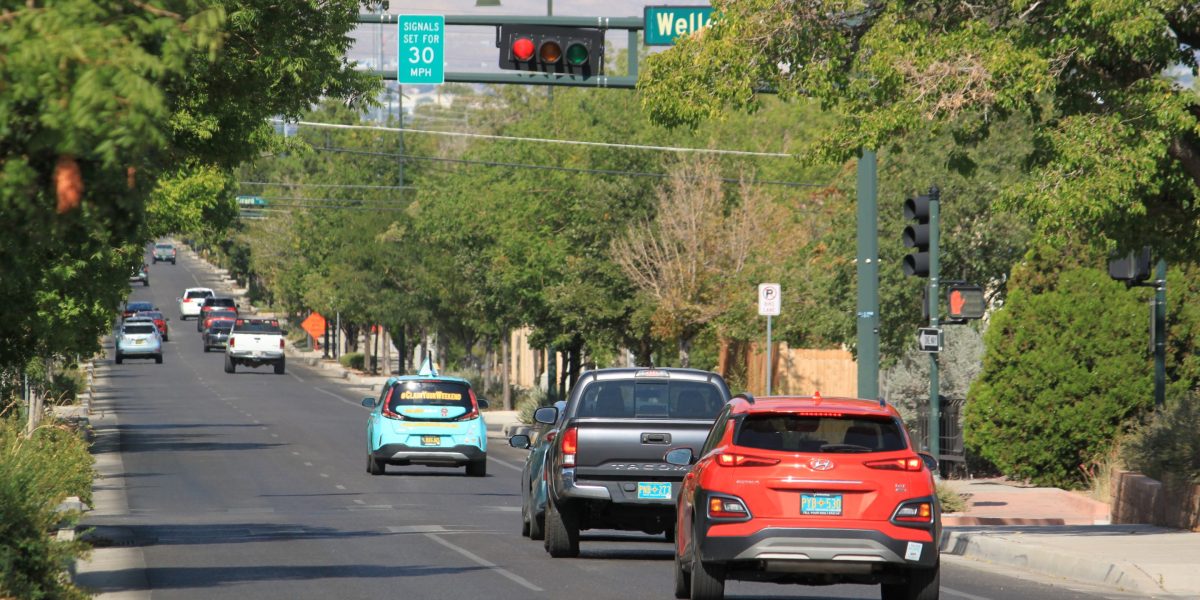
Cities like Albuquerque and Portland are trying a new method to reduce high-speed crashes. The approach, called “rest in red,” keeps traffic lights red until a vehicle approaches. If the driver is going at or below the speed limit, the light turns green earlier. This system has led to a noticeable drop in crashes and injuries along certain roads. Officials say it’s working, but not everyone is convinced. Some worry that drivers might not understand the system or get frustrated if they hit a red light.
The idea of “rest in red” isn’t new, but Albuquerque and Portland have added speed sensors to make it more effective. This means that drivers who follow the speed limit get a smoother ride, while those who speed face more red lights. Residents like Isaac Romero say they’ve seen a big difference. Before the system, he often heard cars speeding and even saw crashes. Now, the roads feel safer, and fewer people are flying through the area.
Portland has also tested the system on a busy highway with a history of crashes. Officials say the average speed dropped from 39 mph to 30 mph, which is the speed limit. A university is studying the system to see if the results are long-lasting. While the early signs are positive, researchers caution that more data is needed to ensure the system doesn’t lead to other problems, like more red-light runners.
Not everyone is a fan of the approach. Jay Beeber from the National Motorists Association says it’s too early to tell if the system will work long-term. He believes drivers need more education to understand how the system works. He also thinks there might be simpler ways to get drivers to slow down, like using speed cameras, which many cities already use successfully.
Despite the mixed reactions, some experts believe the system has potential. A study in North Carolina found a 43% drop in crashes after implementing a version of rest in red. However, most cities haven’t adopted the approach yet. Some, like Los Angeles, have tried it but only briefly. Officials say the system works best on roads that are busy during the day but less so at night, when speeding is more common.