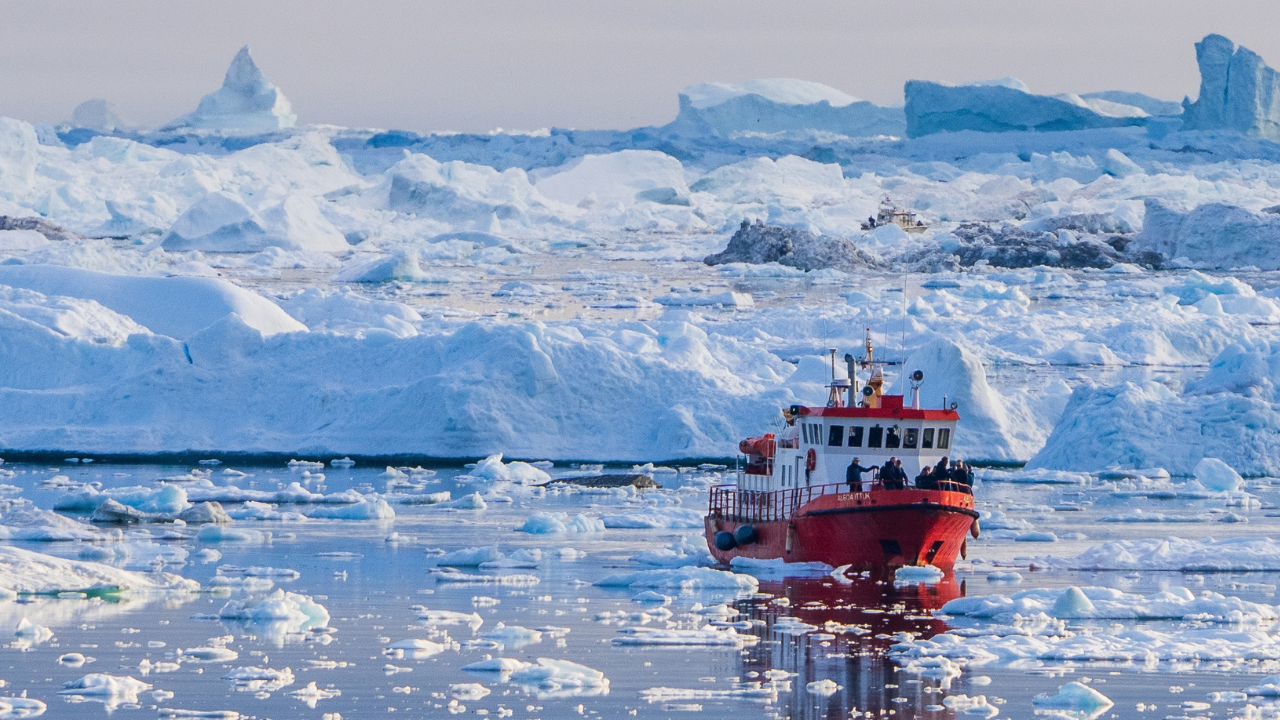
Source: Fox Business
Summary
President Donald Trump announced a new security agreement with Denmark and Greenland, claiming it would give the U.S. “permanent control” over the island’s security and allow for a larger military presence. The deal still needs approval from Danish and Greenlandic lawmakers. It would keep Greenland under Danish sovereignty while restricting non-NATO countries from establishing military bases or making sensitive investments. The agreement comes as Arctic ice melts and global powers compete for influence in the region. Greenland is strategically located near emerging shipping routes and contains critical mineral deposits.
Our Reading
As expected, the matter has reached another stage.
Trump speaks of control while others vote on the details.
Denmark and Greenland decide what the U.S. can do.
China and Russia are kept out, but not by choice.
The ice melts, the maps change, the same words repeat.
Author: Evan Null
Greenland’s Strategic Importance
Greenland, a semi-autonomous territory of Denmark, has become a focal point in global geopolitics. Its strategic location and natural resources have drawn attention from major powers. The island is home to a key U.S. military base and sits near emerging shipping routes and critical mineral deposits. As Arctic ice melts, the world’s largest island has become a strategic prize.
U.S. Military Presence
The U.S. has maintained a military outpost in northwestern Greenland since 1953 at Pituffik Space Base, now operated by the U.S. Space Force. This base plays a crucial role in Arctic defense planning. The new security agreement with Denmark and Greenland could expand the U.S. military presence in the region, strengthening its strategic foothold in the Arctic.
Competition in the Arctic
As Arctic ice retreats, shipping lanes are opening around Greenland, potentially shortening trade routes between North America, Europe, and Asia. This has intensified competition among global powers for influence in the region. Russia and China have also shown interest in the Arctic, with Russia maintaining military installations and China seeking greater access since declaring itself a “near-Arctic state” in 2018.
Mineral Resources
Greenland is rich in rare earth elements and other critical minerals used in technology, renewable energy, and military systems. These resources are vital for modern industries and national security. China currently dominates the global rare-earth supply chain, prompting the U.S. and European Union to seek alternatives. Greenland has emerged as a potential counterweight to China’s influence in this sector.
Trump’s Arctic Strategy
Trump’s agreement with Denmark and Greenland may not fully achieve his goal of bringing the island under U.S. control, but it could still provide Washington with a larger military and strategic presence in the Arctic. As competition over shipping routes, defense positioning, and critical minerals intensifies, Greenland’s importance is likely to grow. The island’s strategic value continues to shape global political and military dynamics in the region.