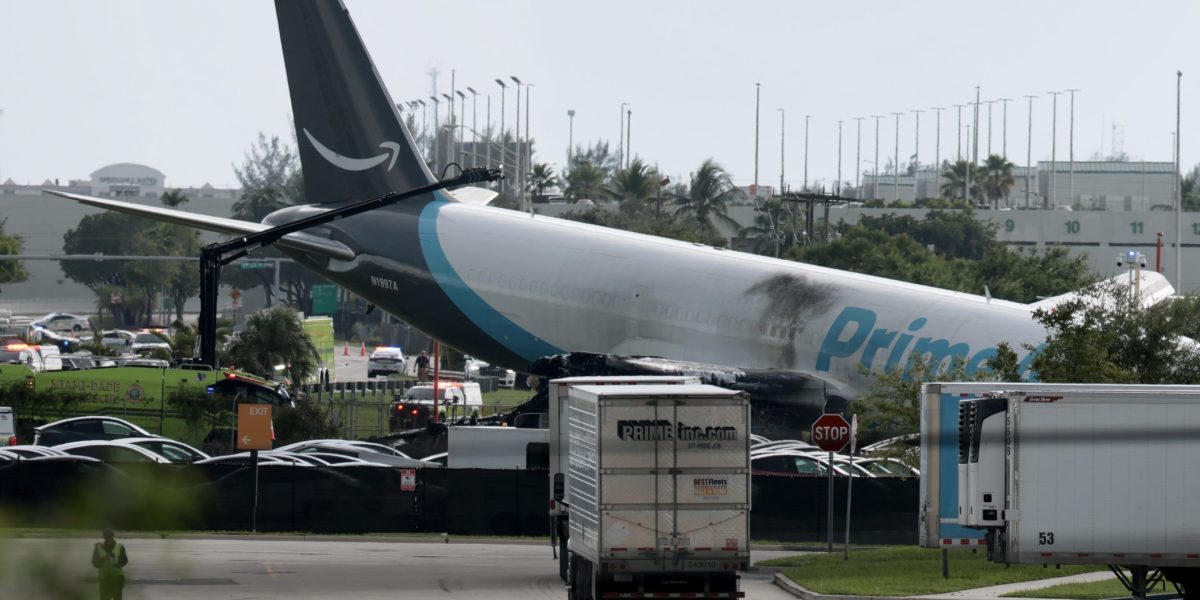
Source: Fortune.com
Summary
A cargo plane operated by Amazon Prime Air veered off a runway at Miami International Airport on Sunday, crashing into vehicles and catching fire. The Federal Aviation Administration reported the incident occurred after the plane arrived from San Juan, Puerto Rico. The National Transportation Safety Board is investigating. The crash led to the closure of all runways and a ground stop, halting all flights. No injuries were immediately reported, and Amazon did not comment on the incident.
Our Reading
The numbers tell one story.
An Amazon cargo plane overshot a runway in Miami.
It hit vehicles and caught fire, causing a major airport shutdown.
The NTSB is gathering info, but no injuries are confirmed.
Crashes happen, but the focus stays on operations, not blame.
Author: Evan Null
Amazon’s Cargo Plane Incident
An Amazon cargo plane crashed at Miami International Airport, overrunning the runway and catching fire. The incident occurred after the plane arrived from San Juan, Puerto Rico, and led to the closure of all runways at one of the busiest airports in the country.
Images from social media showed the plane on its belly, with two semi-trucks nearby. The National Transportation Safety Board is investigating the crash, but no official cause has been released yet.
Miami-Dade Fire Rescue responded to the scene, with 60 units working to put out the fire. The airport spokesperson confirmed that all runways and taxiways were closed, and a ground stop was in effect, halting all flights.
Amazon did not immediately respond to requests for comment. The FAA expects delays once the airport reopens, with a low rate of arrivals and departures.
The crash highlights the risks of air cargo operations, even for major companies like Amazon, which rely heavily on their logistics networks.
Runway Overrun and Airport Closure
The incident occurred around 2 p.m. local time, according to the Federal Aviation Administration. The plane, operated by Amazon Prime Air, was heading into Florida from San Juan, Puerto Rico, when it overran the runway.
The crash sent thick black smoke into the sky, forcing the airport to close all runways and taxiways. A ground stop was put in place, meaning all flights were put on hold until further notice.
The closure disrupted air traffic across the region, with the FAA warning of delays once the airport resumes operations. The low rate of arrivals and departures is expected to last for some time.
The crash also led to the destruction of multiple vehicles, as reported by Miami-Dade Fire Rescue. The agency said it sent 60 units to the scene to help extinguish the fire.
The incident is being closely monitored, with the NTSB gathering information to determine the cause of the crash.
Amazon’s Response and Public Reaction
Amazon has not yet issued a public statement or responded to requests for comment on the incident. The company typically avoids public commentary on operational issues unless required by law or regulatory bodies.
The crash has drawn attention from local and national media, with reports focusing on the scale of the incident and the impact on airport operations. Social media users shared images of the damaged plane and the fire.
While no injuries have been confirmed, the crash serves as a reminder of the risks involved in air cargo operations. Even with advanced safety protocols, accidents can still occur.
For Amazon, the incident could raise questions about the safety of its logistics network, particularly as the company continues to expand its air cargo operations.
Public reaction has been mixed, with some expressing concern over the safety of air travel and others focusing on the broader implications for the aviation industry.
Impact on Air Traffic and Logistics
The closure of all runways at Miami International Airport has had a significant impact on air traffic. Flights from around the country have been delayed or rerouted, affecting both commercial and cargo operations.
The FAA has warned that the airport will operate at a reduced capacity once it reopens, with a low rate of arrivals and departures. This could lead to further delays and disruptions for travelers and businesses relying on the airport.
For Amazon, the crash could disrupt its cargo operations, particularly if the airport remains closed for an extended period. The company’s logistics network depends on efficient air transport to move goods across the country.
The incident also raises concerns about the safety of cargo planes, which are often operated under different regulations than commercial passenger flights. While safety measures are in place, the crash highlights the potential for accidents in the industry.
As the investigation continues, the focus will be on determining the cause of the crash and whether any changes to safety protocols are needed to prevent similar incidents in the future.
Regulatory Response and Investigation
The National Transportation Safety Board has confirmed that it is investigating the crash. The agency is responsible for determining the cause of aviation accidents and making recommendations to prevent future incidents.
The NTSB’s involvement indicates that the crash is being treated as a significant event, even though no injuries have been reported. The agency typically conducts thorough investigations into such incidents, including reviewing flight data, maintenance records, and pilot reports.
The Federal Aviation Administration is also monitoring the situation, with officials expected to provide updates on the status of the airport and any changes to flight operations. The FAA has already warned of delays once the airport reopens, suggesting that the impact of the crash will be felt for some time.
While the cause of the crash is still unknown, the NTSB’s investigation will likely take several weeks or months to complete. The findings could have implications for the safety of air cargo operations and the regulations governing them.
The incident underscores the importance of ongoing safety reviews and the need for continuous improvements in aviation safety protocols, especially as companies like Amazon expand their air cargo networks.