Source: Fortune.com
Summary
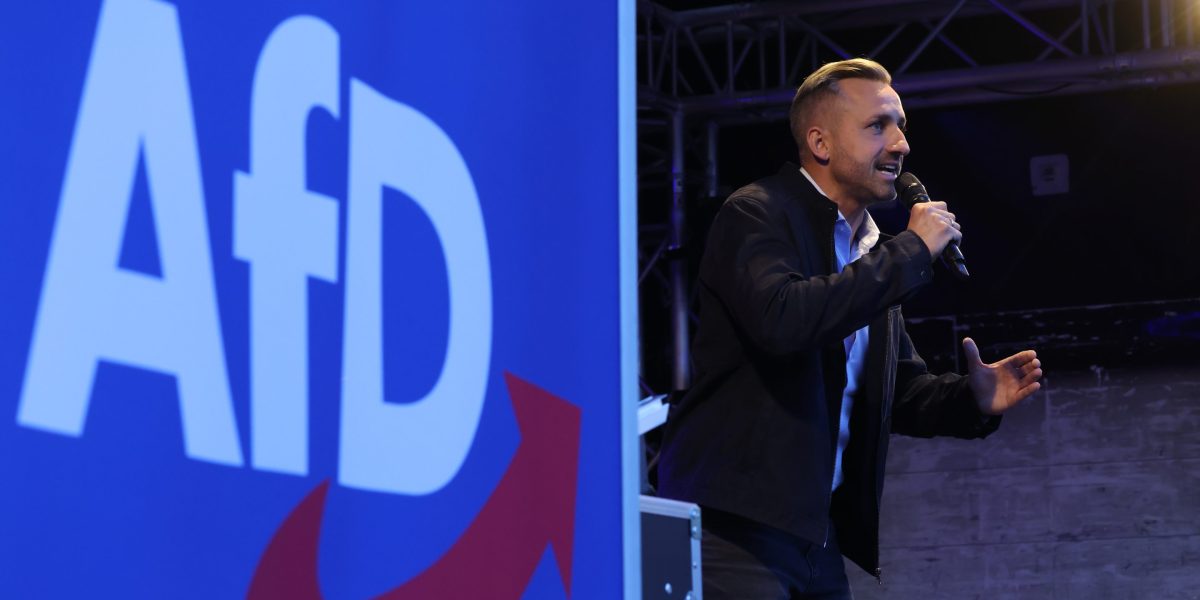
The Alternative for Germany (AfD) was projected to win a strong victory in Saxony-Anhalt’s regional election, potentially forming the country’s first far-right state government since World War II. The party aimed for an absolute majority to govern independently, but it was unclear if it would achieve that. The election was a blow to Chancellor Friedrich Merz’s center-right party, which lost significant support. AfD’s candidate, Ulrich Siegmund, said the result sent a message that “things cannot carry on like this.” The party faces challenges in forming a government due to the refusal of mainstream parties to work with it.
Our Reading
The numbers tell one story.
AfD won a strong regional victory, but not enough to govern alone.
Mainstream parties refused to work with the far-right party.
Chancellor Merz’s party lost support, signaling discontent.
The result shows a shift in German politics, but not a full takeover.
Author: Evan Null
Alternative for Germany’s Regional Election Victory
The Alternative for Germany (AfD) was projected to win a strong victory in Saxony-Anhalt’s regional election, but it was unclear if it would be able to form the country’s first far-right state government since World War II. The party, led by Ulrich Siegmund, aimed for an absolute majority to govern independently, but the results fell short of that goal. The election was a significant blow to Chancellor Friedrich Merz’s center-right party, which lost substantial support.
The AfD’s win was seen as a signal of widespread discontent with the national government, which has struggled to address economic issues. The party’s candidate, Siegmund, claimed the result was a message that “things cannot carry on like this.” However, mainstream parties, including Merz’s, refused to work with AfD, citing its far-right stance and policies.
The election results highlighted the growing influence of the AfD, which has become the biggest opposition party in Germany’s national parliament. The party’s regional branch in Saxony-Anhalt is classified as a right-wing extremist group by the domestic intelligence agency. Despite this, AfD denies accusations of extremism and claims they are politically motivated.
The AfD’s victory was a major milestone for the party, which has been active for 13 years. The party’s national co-leader, Alice Weidel, described the result as “sensational” and claimed it was a “clear mandate to govern.” However, the party’s ability to form a government remains uncertain, as mainstream parties have refused to collaborate with it.
The election outcome also reflected the challenges facing Germany’s national government, which has struggled to gain public trust. The AfD’s focus on anti-migration policies and its alignment with Russia have further complicated its relationship with mainstream parties. The result in Saxony-Anhalt could have broader implications for German politics and the future of the AfD.
Chancellor Merz’s Party Faces Major Setback
Chancellor Friedrich Merz’s center-right party, the Christian Democratic Union (CDU), faced a major setback in the Saxony-Anhalt regional election. Projections indicated that the CDU would receive around 18% of the vote, a significant drop from its previous support. This decline highlighted the growing dissatisfaction among voters with the national government’s handling of economic issues. The CDU had led Saxony-Anhalt for 24 years, but the election results signaled a shift in political power.
The AfD’s strong performance in the region was seen as a direct challenge to Merz’s leadership. The party’s candidate, Ulrich Siegmund, criticized Merz, stating that “every day this man is in the chancellery is one too many.” This sentiment reflected the broader discontent with the current government and its inability to address the concerns of voters. The CDU’s loss of support in Saxony-Anhalt was a significant blow to Merz’s political standing.
The CDU’s refusal to work with the AfD further complicated the political landscape. The party’s national general-secretary, Franziska Hoppermann, rejected the idea of collaborating with the far-right party, citing its extremist views and policies. This stance left the CDU in a difficult position, as it faced the challenge of dealing with the AfD’s rise without compromising its principles.
The election results also highlighted the challenges facing the CDU in the broader context of German politics. The party’s inability to regain public trust and address economic concerns has left it vulnerable to the growing influence of the AfD. The loss in Saxony-Anhalt could have long-term implications for the CDU’s position in the national political arena.
The CDU’s struggle in Saxony-Anhalt was part of a larger trend of declining support for mainstream parties across Germany. The AfD’s rise has forced traditional parties to re-evaluate their strategies and address the concerns of voters who feel disconnected from the political establishment. This shift in political power could have significant consequences for the future of German politics.
AfD’s Ambitions and Challenges
The AfD’s ambition to form the first far-right state government in Germany since World War II was a key focus of the Saxony-Anhalt election. The party sought an absolute majority in the state legislature to govern independently, which would have allowed it to bypass the so-called “firewall” of mainstream parties refusing to work with it. However, the projected results indicated that the AfD fell short of this goal, leaving its ability to form a government uncertain.
The AfD’s focus on anti-migration policies and its alignment with Russia were central to its campaign in Saxony-Anhalt. The party’s candidate, Ulrich Siegmund, emphasized the need for a “deportation offensive” and criticized the current government for allowing immigrants to “exploit our social system.” These policies reflected the party’s broader agenda of reducing immigration and strengthening national identity.
The AfD’s ability to form a government in Saxony-Anhalt was further complicated by the refusal of mainstream parties to collaborate with it. The CDU, which had led the state for 24 years, rejected any form of cooperation with the far-right party, citing its extremist views and policies. This stance left the AfD in a difficult position, as it would need to form an alliance with smaller parties to govern, which could be challenging given the political landscape.
The AfD’s focus on “remigration” and its use of politically charged language were part of its broader strategy to gain support among voters disillusioned with the current government. The party’s leader in a neighboring state had faced two convictions for using a Nazi slogan, which further complicated its image and ability to gain mainstream support.
The AfD’s rise in Saxony-Anhalt was a significant milestone for the party, but its ability to translate this success into a state government remained uncertain. The party’s challenges in forming a government highlighted the broader political tensions in Germany and the difficulty of integrating far-right parties into the mainstream political system.
Impact on German Politics and the National Government
The AfD’s strong performance in the Saxony-Anhalt election had significant implications for German politics and the national government. The result was seen as a direct challenge to Chancellor Friedrich Merz’s leadership, as his center-right party lost substantial support in the region. The election highlighted the growing dissatisfaction among voters with the current government’s handling of economic issues and its inability to address the concerns of the population.
The AfD’s rise in Saxony-Anhalt reflected a broader trend of declining support for mainstream parties across Germany. The party’s focus on anti-migration policies and its alignment with Russia resonated with voters who felt disconnected from the political establishment. This shift in political power could have long-term consequences for the future of German politics and the ability of mainstream parties to regain public trust.
The election result also raised questions about the future of the national government and its ability to address the concerns of voters. The AfD’s focus on “remigration” and its opposition to the current government’s policies highlighted the growing divide between the political establishment and the electorate. This divide could further complicate the government’s efforts to implement reforms and address economic challenges.
The AfD’s influence in Saxony-Anhalt could have broader implications for the national political landscape. The party’s growing support and its ability to challenge mainstream parties could force the government to re-evaluate its strategies and address the concerns of voters who feel marginalized. This shift in political power could reshape the future of German politics and the role of far-right parties in the country.
The election outcome in Saxony-Anhalt was a significant moment in German political history, reflecting the growing influence of the AfD and the challenges facing the national government. The result highlighted the need for the government to address the concerns of voters and regain public trust, as the political landscape continues to evolve.
Challenges for the AfD in Forming a Government
The AfD’s ability to form a government in Saxony-Anhalt faced significant challenges, despite its strong performance in the regional election. The party’s projected result of over 44% of the vote was far ahead of the Christian Democratic Union (CDU), which was seen polling 18%. However, the AfD fell short of an absolute majority, leaving its ability to govern independently uncertain. This gap in support meant that the party would need to form an alliance with smaller parties to gain a majority in the state legislature.
The refusal of mainstream parties to work with the AfD further complicated its efforts to form a government. The CDU, which had led Saxony-Anhalt for 24 years, rejected any collaboration with the far-right party, citing its extremist views and policies. This stance left the AfD in a difficult position, as it would need to find alternative partners to form a government, which could be challenging given the political landscape.
The AfD’s focus on anti-migration policies and its alignment with Russia were central to its campaign in Saxony-Anhalt. The party’s candidate, Ulrich Siegmund, emphasized the need for a “deportation offensive” and criticized the current government for allowing immigrants to “exploit our social system.” These policies reflected the party’s broader agenda of reducing immigration and strengthening national identity.
The AfD’s ability to form a government in Saxony-Anhalt was further complicated by the refusal of mainstream parties to collaborate with it. The CDU’s stance left the AfD in a difficult position, as it would need to form an alliance with smaller parties to govern, which could be challenging given the political landscape. This situation highlighted the challenges facing the AfD in integrating into the mainstream political system.
The election result in Saxony-Anhalt was a significant milestone for the AfD, but its ability to translate this success into a state government remained uncertain. The party’s challenges in forming a government reflected the broader political tensions in Germany and the difficulty of integrating far-right parties into the mainstream political system. The outcome of the election could have long-term implications for the future of the AfD and the political landscape in Germany.